Marine engines work harder than car engines. They run at high, steady loads for long periods and depend on seawater or a heat exchanger to stay cool. When cooling falters, the cylinder head is usually the first part to suffer. A blown head gasket, a warped head or a burned valve can make an otherwise healthy engine run badly or not at all. The good news is that many of these problems can be solved with top-end work rather than a complete engine or a repower.
Common Causes of Head Problems in Boats
- Overheating from a worn raw water pump impeller, a clogged strainer, a blocked heat exchanger or a failing thermostat. Heat warps aluminum heads and cracks cast iron.
- Corrosion in raw-water-cooled engines, where salt eats away at gasket surfaces and water passages.
- Water intrusion through failed exhaust elbows or risers, which rusts valves and seats and can hydro-lock a cylinder.
- Age and wear: guides, seals and seats wear with hours, especially on engines that idle a lot.
- Detonation from low-octane fuel, lean mixtures or overadvanced timing.
Symptoms to Watch For
Head gasket failure
Classic signs include white smoke with a sweet smell from the exhaust, coolant loss with no visible leak, milky oil, bubbles in the coolant reservoir or heat exchanger, and overheating that returns soon after the cooling system has been serviced. On raw-water-cooled engines, water in the oil or in a cylinder is a serious warning.
Valve problems
Burned or leaking valves cause a miss at idle, rough running, popping through the intake or exhaust and a steady loss of compression on one or more cylinders. Blue smoke at start-up or after idling points to worn valve stem seals letting oil run down the guides into the combustion chamber.
How the Problem Is Diagnosed
A technician starts with a compression test and a leak-down test. Compression shows which cylinders are weak; leak-down shows where the air escapes: past the rings into the crankcase, past the valves into the intake or exhaust, or across the gasket into the cooling system or a neighboring cylinder. A combustion gas test on the coolant confirms a gasket leak. Checking the exhaust elbows and risers at the same time is essential, because a failed elbow can cause water damage that looks like a head failure and will ruin new work if it is not fixed.
What a Top-End Rebuild Involves
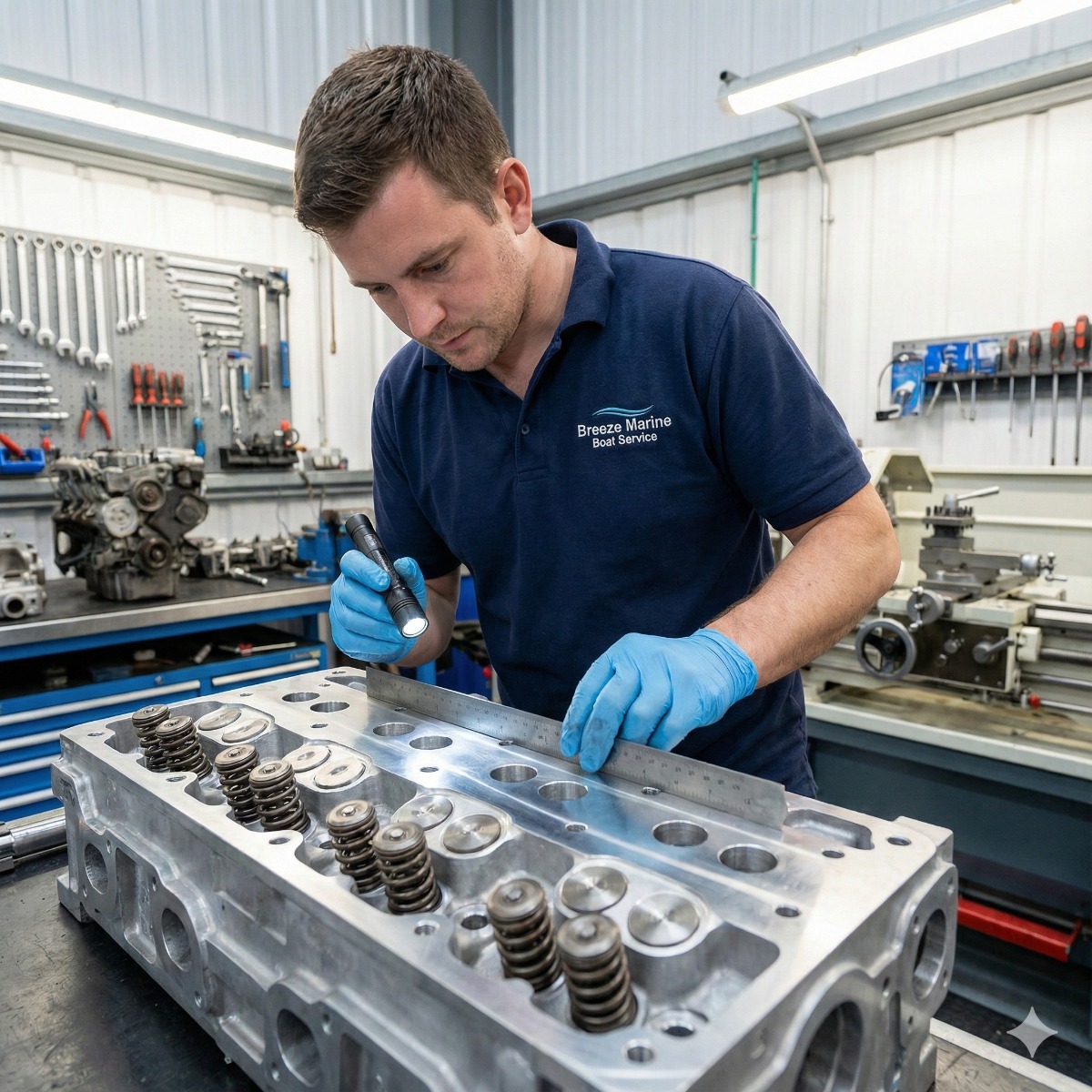
A top-end rebuild addresses the cylinder heads and valve train while leaving the bottom end in place. The heads are removed, cleaned and inspected before any machine work begins.
Crack inspection
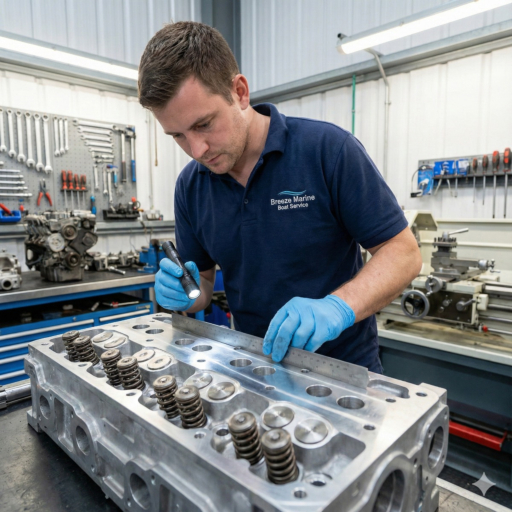
Cast-iron heads are checked with magnetic particle inspection, which reveals fine cracks invisible to the eye, typically between valve seats or around water jackets. Aluminum heads are pressure-tested or dye-checked. A cracked head is usually replaced rather than repaired.
Cylinder head resurfacing
Overheating often warps the gasket surface. Cylinder head resurfacing machines the deck flat again so the new gasket can seal combustion pressure and coolant. The block deck should be checked for flatness too.
Valve job
A valve job restores the seal between each valve and its seat. Valves are refaced or replaced, guides are measured and replaced if worn, and each valve seat is cut to the correct angles and width. New stem seals, springs checked for pressure and installed height, and careful assembly complete the job.
Reassembly Matters as Much as Machining
New head gaskets, new head bolts where the manufacturer calls for them, the correct torque sequence, clean threads and properly sealed manifolds are all essential. The cooling system should be fully serviced at the same time, with a new impeller, a new thermostat and a cleaned heat exchanger or water passages. Cylinder head machining can only restore what the rest of the system allows to last.
Is a Top-End Repair Worth It?
Marine cylinder head repair makes sense when the bottom end is sound, which a leak-down test and an oil pressure check can confirm. If compression is low because of worn rings, if the block is cracked, or if there are signs of bearing damage, a complete rebuild or repower may be the better choice. A technician should explain which path fits the engine's condition.
What Owners Can Do to Prevent It
- Replace the raw water pump impeller on schedule and carry a spare.
- Watch the temperature gauge, and fit an overheat alarm if the boat does not have one.
- Service exhaust elbows and risers at the intervals recommended for your engine.
- Flush raw-water-cooled engines with fresh water after use in salt water.
- Use the fuel grade the manufacturer specifies.
If you already see the warning signs, stop running the engine hard and arrange an inspection. Our cylinder head machining and valve job service covers testing, machine work and reassembly.
Head Gasket FAQ
Can I keep running a boat with a blown head gasket?
It is risky. Coolant or water entering the cylinders can hydro-lock the engine, and coolant in the oil destroys bearings. Stop and diagnose before further use.
Should both heads be done on a V engine?
Usually, yes. Both heads have the same hours and saw the same heat, so doing them together keeps compression even and avoids a second teardown later.
Why did the engine overheat after a new gasket?
The original cause, such as a clogged heat exchanger, a failing pump or a blocked elbow, may not have been fixed. Cooling system service should always accompany head work.