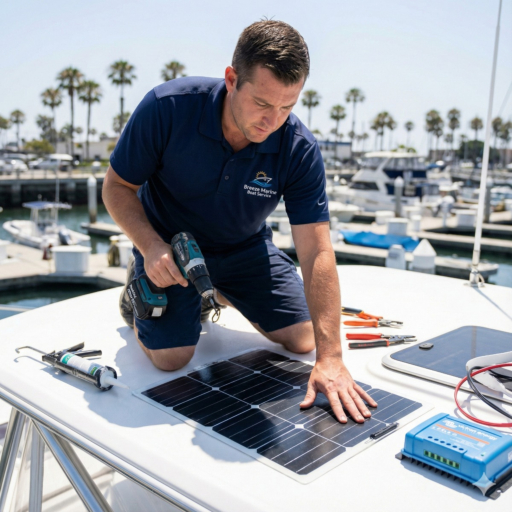
Solar on a boat that lives in a marina slip is a different project from solar on a cruising boat. The boat is plugged into shore power most of the time, it sits a few feet from its neighbors, and masts, flybridges and dock roofs throw shade across the deck for part of every day. The goal is usually modest: keep the batteries topped up, run the bilge pump and a small fridge, and stop the slow drain that leaves a dead battery after a quiet month. This guide covers what actually decides whether a slip-side solar setup works, and what an installer should check on the boat before anything is drilled.
Why Slip Boats Need a Different Plan
If you typed "marine solar panel installers near me" into a search bar, you probably already know roughly how many watts you want. The harder questions on a docked boat are where the panels can go, how much shade they will see, and how the solar charging will share the batteries with the shore power charger that is already on board.
A boat in a marina slip also has constraints a boat on a mooring does not. Many marinas have rules about anything that extends past the hull or changes the boat's profile, and some ask to be told about electrical work done in the slip. Check your slip agreement and ask the marina office before you order panels. A tidy solar installation marina neighbors barely notice is far less likely to cause friction than an overhanging array with cables draped across the dock.
Where Panels Can Go
Bimini tops
A bimini is often the largest flat-ish surface on a small cruiser or sailboat. Flexible panels can be sewn, zipped or attached with fabric-backed mounts. The trade-offs: the canvas flexes in wind, which stresses cables and connectors, and the frame has to carry the extra load. If the bimini is folded down while the boat is in the slip, the panels produce nothing, so be honest about how the boat is actually left.
Arches and stern rails
A stainless arch or a rail-mounted bracket keeps rigid panels up in clean air and allows tilting. Rail mounts must be backed properly and use marine-grade stainless hardware, because a panel acts like a sail in a Santa Ana wind.
Hardtops and cabin tops
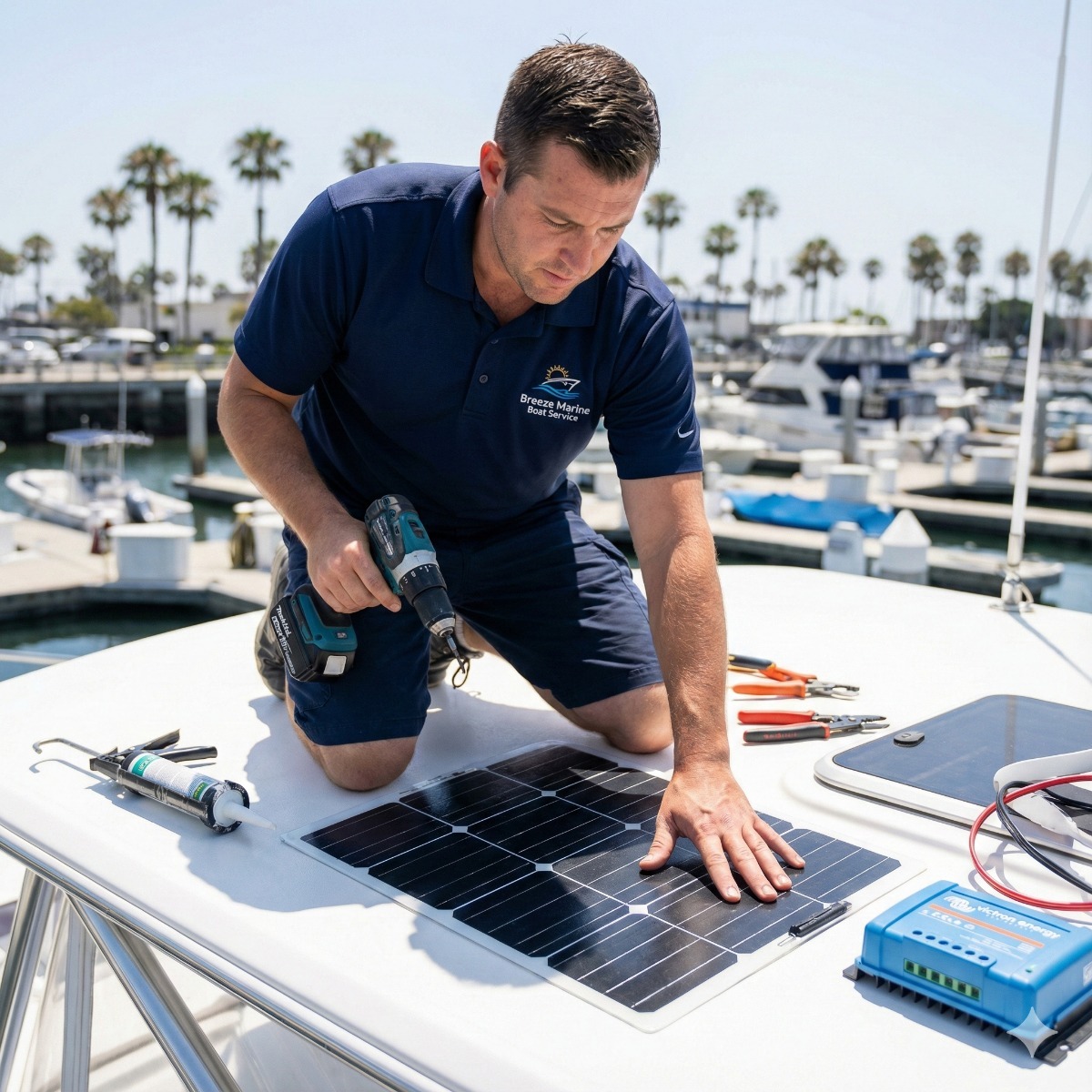
A fiberglass hardtop is the easiest place for a clean, permanent install. Rigid panels on low-profile mounts leave an air gap underneath for cooling, which helps output on hot SoCal afternoons.
Flexible vs Rigid Panels
- Flexible solar panels are light, low-profile and conform to curved canvas or decks. They run hotter when laid flat with no air gap, and they generally wear out sooner, especially where people step on them.
- Rigid panels in aluminum frames are heavier and need a solid mount, but they shed heat better and tend to last longer on an arch or hardtop.
On a slip boat that is rarely taken out, rigid panels on a hardtop or arch are often the durable choice. On a sailboat where weight aloft and windage matter, flexible panels on the bimini may be the only realistic option.
Shading in a Marina Slip
Shading is the problem most owners underestimate. A mast on the next boat, your own boom, a neighbor's flybridge or a covered dock can cast a moving shadow across the panels for hours. Because cells in a panel are wired in series, a small shadow can cut the output of a whole panel far more than its size suggests.
- Watch the slip at different times of day and note where shadows fall, including in winter when the sun is lower.
- Split the array so one shaded panel does not drag down the others; separate charge controllers or parallel wiring can help.
- Keep panels clear of your own rigging, antennas and radar where possible.
Controllers, Wiring and the Shore Power Charger
The charge controller should sit close to the batteries in a dry, ventilated spot, with fusing at the battery end and correctly sized tinned marine wire. Deck penetrations need proper cable glands or clamshell fittings bedded with sealant, because a leak at the cable entry can soak a headliner for months before anyone notices.
On a boat that is plugged in, the solar controller and the shore power charger will both try to charge the same bank. Their charging voltages and battery-type settings should match so they do not fight each other or overcharge the batteries. Many owners set things up so the batteries are carried by solar while the boat sits, and the shore charger does the heavy recovery after a weekend out.
What an Installer Checks on Site
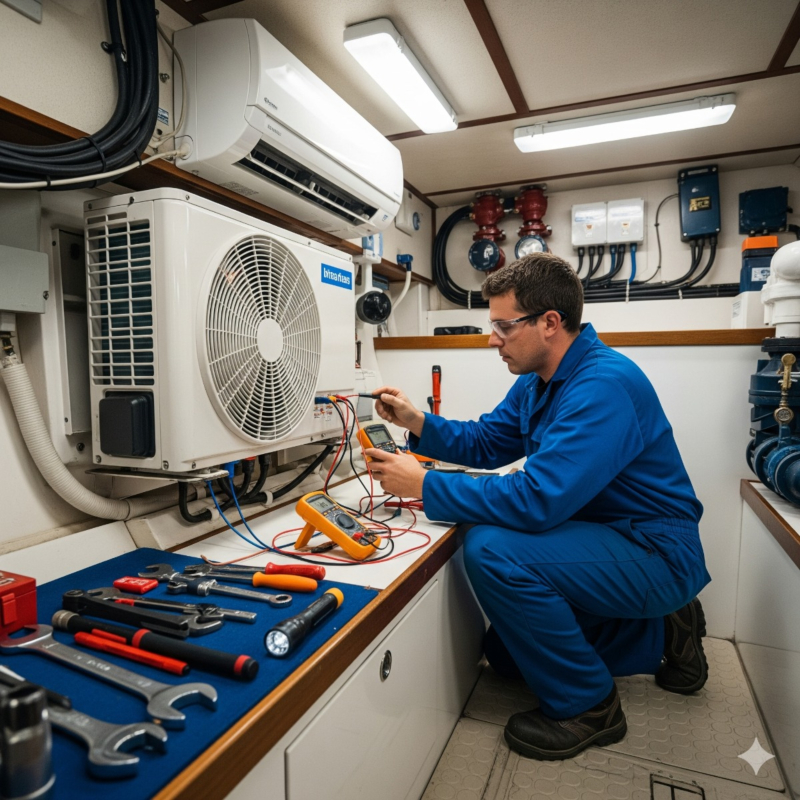
Good solar installers marina boaters are happy to recommend start with the boat, not the panel catalog. On a visit in Long Beach or San Pedro, a marine electrician should look at:
- The house battery bank: type, age, capacity and how it is currently charged.
- Existing electrical loads and any parasitic drain that solar would only be hiding.
- Mounting surfaces, backing plates and the condition of the bimini frame or arch.
- Cable routes from the panels to the controller and battery, and where deck penetrations will go.
- The shore power charger model and its settings.
- Shade patterns in your specific slip and any marina restrictions.
The best solar installation marina rules and your slip allow is one planned around that specific spot, not a generic drawing copied from a cruising boat.
If you want this done on the boat where it sits, see our marine solar panel installation in Long Beach page for how we approach mounting, wiring and charger integration for boats kept in a slip.
Marina Solar FAQ
Can I install solar on a boat while it stays in its slip?
Usually yes. Most solar work on a slip boat is done at the dock. The main things to confirm first are your marina's rules and whether the mount location will be shaded by nearby boats or structures.
Will solar replace my shore power connection?
For most slip boats, no. Solar keeps batteries topped up and covers small standing loads. Air conditioning, water heaters and heavy battery recovery still depend on shore power, so the two systems should be set up to work together.