
Adding solar is one of the most satisfying upgrades on a boat: batteries that stay charged at anchor, a fridge that keeps running on a mooring, and fewer hours listening to a generator. It is also easy to get wrong. An array that is too small, shaded for half the day or paired with the wrong controller can leave you with flat batteries and a false sense of security. This guide walks through how solar power for boats is sized, which panel types suit which spaces, and what a sound installation looks like.
Start With Your Loads, Not the Panels
Every good design begins with an energy audit: a list of what draws power when you are away from the dock and for how long. Typical loads include:
- Refrigeration, usually the biggest continuous draw on a cruising boat.
- Autopilot and navigation electronics while under way.
- Cabin and anchor lights, the water pump, fans and device charging.
- Standby draws from stereos, displays and chargers that are easy to forget.
Multiply each load's current by the hours it runs to get amp-hours per day, then add them up. That daily total is what the array has to put back. Panels rarely produce their rated output: sun angle, heat, haze and the coastal marine layer all cut into the harvest, so real production sits well below the label figure on most days. A sensible design allows a margin for this rather than matching the panel rating to the load one for one.
Where Panels Can Go
On most boats, available space decides the size of the array more than the budget does. Common locations are:
- Hardtops and arches. High, open and out of the way, they suit rigid solar panels on fabricated mounts.
- Davits. Popular on sailboats and cruisers because they sit aft of the rig.
- Biminis and canvas. Flexible bimini solar panels are zipped or attached to the fabric, adding output without new metalwork.
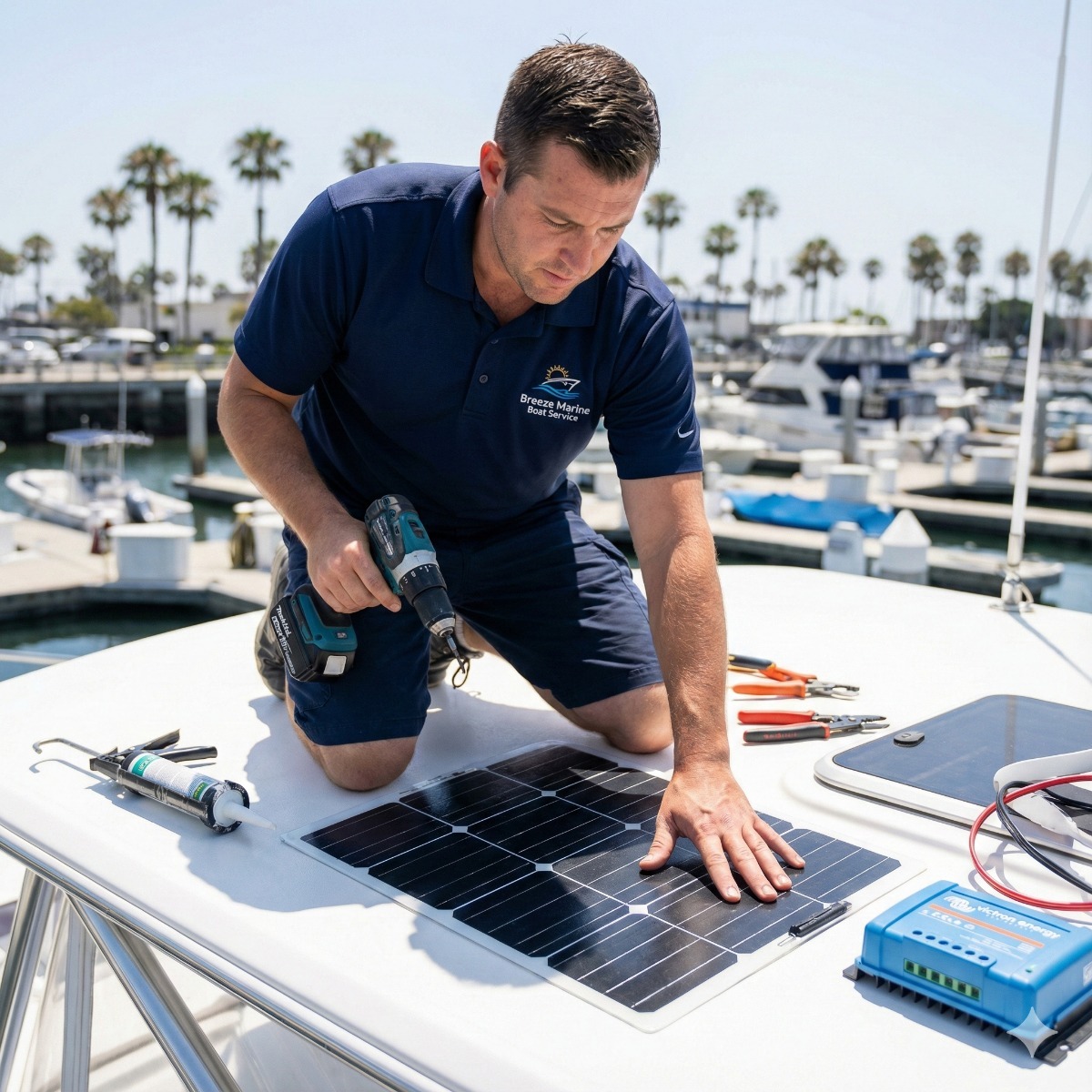
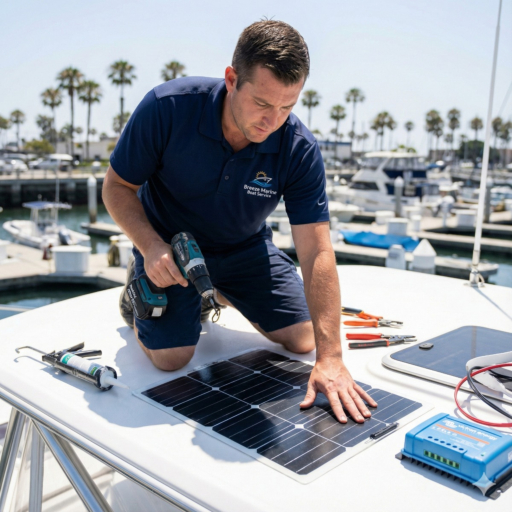
- Decks and cabin tops. Walkable flexible solar panels for boats can be bonded flush where there is no room for a frame.
Shading matters more than many owners expect. A shadow from a boom, antenna or halyard across part of a panel can cut its output sharply, because the cells are wired in series and the weakest cell limits the string. This is why sailboat solar panels are the hardest to place, and a site survey should consider how shadows move across each spot as the boat swings at anchor.
Rigid or Flexible Marine Solar Panels?
Rigid glass panels in aluminum frames are the most efficient and durable option, and they stay cooler because air can circulate beneath them. Flexible marine solar panels weigh less, follow curves and can be walked on with soft-soled shoes, but they run hotter when laid flat on a surface, heat reduces output, and they generally have a shorter service life. Many boats end up with a mix: rigid panels where there is a frame to carry them, flexible ones on canvas or deck.
Why the Charge Controller Matters
The controller sits between the panels and the batteries and decides how much of the harvest actually reaches the bank. An MPPT charge controller keeps adjusting to the panel's best operating point and converts surplus voltage into extra charging current, which makes a real difference in low light, heat or partial shade compared with older PWM designs. Just as important is the charging profile. AGM, gel and lithium batteries need different voltages, and a controller left on the wrong setting can undercharge or overcharge the bank. Controllers with Bluetooth monitoring show daily yield on your phone, which is the easiest way to confirm the system is meeting its target.
What a Good Boat Solar Installation Looks Like
Marine conditions punish shortcuts, and a boat solar installation is only as reliable as its weakest connection. Whoever does the work, check for these basics:
- Tinned, UV-resistant PV cable sized for the length of the run, so voltage is not lost between the panels and the controller.
- Watertight glands where cables pass through the deck, rather than holes filled with sealant.
- Crimped and heat-shrunk connections, with fuses or breakers protecting the wiring.
- A controller mounted close to the battery bank and programmed for its chemistry.
- Mounts fastened to structure that can handle wind load and people grabbing a frame.
If you would rather have the audit, mounting and wiring handled for you, Breeze Marine offers marine solar panel design and installation for boats in Long Beach, San Pedro, Marina del Rey and Newport Beach.
When to Call a Technician
A single panel on a bimini can be a reasonable weekend project, but get help if the batteries still fall behind despite sunny days, if the controller shows little or no yield, if connectors or glands show corrosion or water, or if you are combining solar with lithium batteries, an inverter or an existing charging system. Those situations call for a look at the whole charging system rather than just adding another panel.
Boat Solar FAQ
How many watts of solar does a boat need?
It depends on the daily amp-hour figure from your energy audit and on the space available. A weekend powerboat with a small fridge needs far less than a cruising sailboat living at anchor, so there is no single right number.
Can solar replace a generator completely?
For boats with modest loads that spend time in sunny anchorages, solar can cover most daily needs. Air conditioning and electric cooking draw far more than a typical boat array can supply, so boats with those loads usually still rely on shore power or a generator for them.
Do solar panels need maintenance?
Rinse off salt and bird droppings regularly, check mounts and fasteners for looseness, and inspect cable glands and connectors for corrosion once a season. A sudden drop in daily yield is often the first sign of a problem.