An ageing generator rarely fails all at once. It starts harder, smokes a little, runs louder, and needs parts more often, until every visit raises the same question: fix it again or replace it? If you are searching marine generator repair near me, this guide helps you frame that decision, then covers what matters if you choose a new unit: load-based sizing, mounting, exhaust, fuel and wiring.
Signs You Have Reached the Decision Point
A generator does not need replacing just because it is old. Many well-maintained sets run for a long time. The question usually comes up when several of these happen together:
- Repeated repairs to the same system, such as cooling or fuel, within a short span.
- Hard starting, surging, or voltage and frequency that wander under load.
- Excess smoke, oil consumption or low compression pointing to internal wear.
- Parts that are discontinued or take weeks to source.
- Noise and vibration that have become a problem for you or your dock neighbors.
Factors That Favor Repair
Repair is often the right call when the engine itself is sound and the problem is in a serviceable system: a raw water pump, a clogged heat exchanger, an exhaust elbow, a fuel lift pump, a starter or the voltage regulator. Look at:
- Hours and compression: a compression test and oil analysis tell you far more than the hour meter alone.
- Repair history: one major repair on an otherwise healthy set is different from a string of failures.
- Parts availability: common service parts for popular models remain easy to find, which keeps repair practical.
- Installation fit: the existing set already fits the space, exhaust and wiring, which a replacement may not.
Older Westerbeke Units
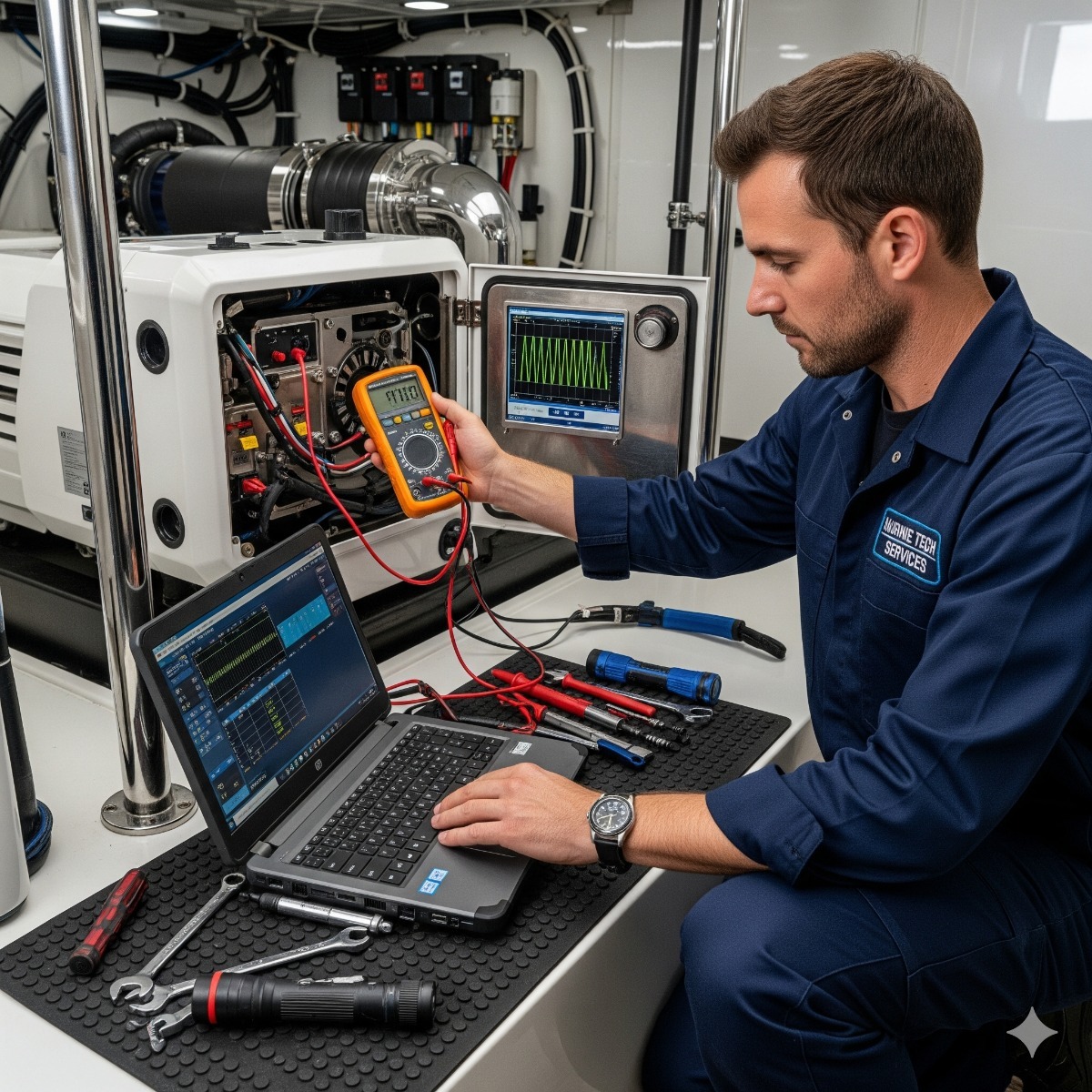
Many boats in Southern California carry older Westerbeke generators, and owners often search for westerbeke generator repair near me when one starts acting up. These sets are generally repairable, and common wear items are well documented. The deciding factor is usually the generator end and control components: if windings, the control board or model-specific parts are failing and hard to get, replacement becomes more attractive. People sometimes look for westerbeke generator repair experts specifically; what matters most is a technician who will test the engine and the generator end separately before recommending anything.
Sizing a Replacement by Load
Buying the same output as the old set is not always right. Size a new generator from what you actually run at the same time:
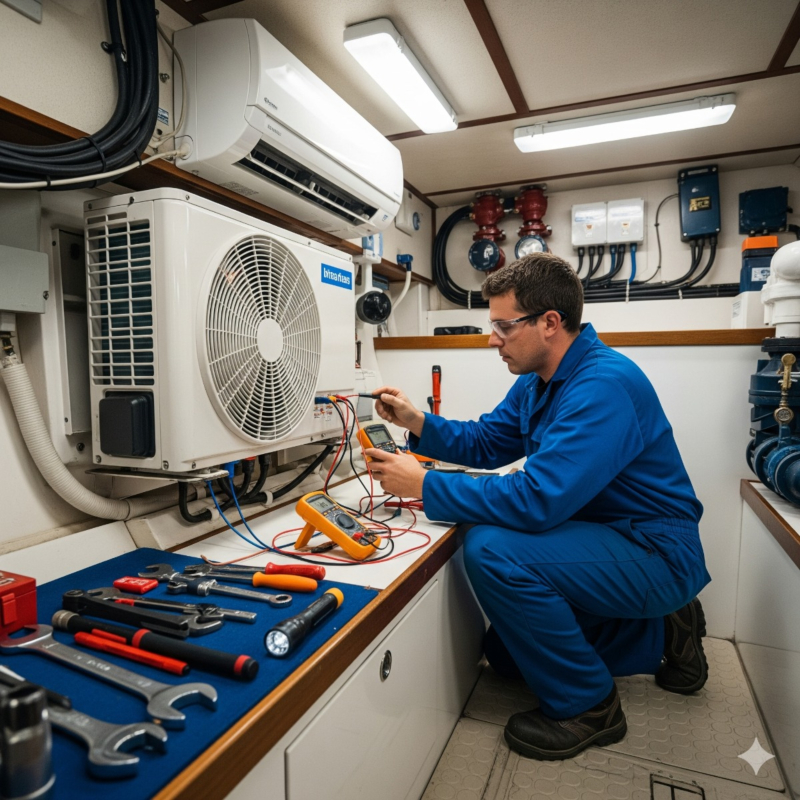
- Air conditioning, which is usually the largest load and has a high starting surge.
- Water heater, battery charger or inverter-charger.
- Galley appliances such as a microwave, cooktop or coffee maker.
- Refrigeration, watermaker and other pumps.
Add the running loads you expect together, then allow for the start-up surge of the largest motor. An undersized set will trip or stall on startup; an oversized diesel that runs lightly loaded most of the time can suffer carbon buildup and wet stacking. Soft-start devices on air conditioning units can reduce the surge and sometimes allow a smaller set.
Mounts and Sound Shields
A new generator needs a solid, level base with vibration mounts suited to its weight, and enough clearance around it for service: oil changes, impeller replacement and belt adjustment should not require pulling the whole unit. A sound shield reduces noise considerably, but it needs adequate ventilation and must not trap heat. Check that the shield panels can be removed in the space available.
Wet Exhaust and Water-Lift Routing
Most marine generators use wet exhaust, where cooling water is injected into the exhaust and carried out with the gases. Poor routing is a common cause of water flooding back into the engine. A proper installation includes a water-lift muffler below the injection point, a correct rise to a high point, a siphon break or vented loop where the engine sits near or below the waterline, and a hull outlet placed to avoid backflow. Some boats also add a water separator so the exhaust is quieter at the outlet.
Fuel Pickup and Transfer Switch Wiring
A diesel generator should have its own fuel pickup in the tank and its own primary filter, so it cannot starve the main engines or be starved by them. Return lines go back to the same tank. On the electrical side, a selector or transfer switch must make it impossible to connect shore power and the generator to the boat's AC panel at the same time. Grounding and bonding should follow marine standards, with wire sized for the load and routed away from heat and water.
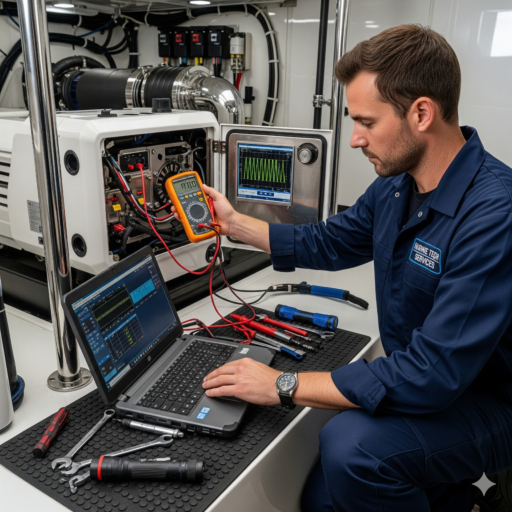
Owners planning a generator installation long beach ca slips often run into tight engine rooms and exhaust outlets close to the waterline, which makes careful planning important. For troubleshooting before you decide, our boat generator diagnostics and repair service tests the engine, cooling, fuel and generator end at your slip. If you found us through boat generator repair near me or marine generator repair near me, we work across Long Beach, San Pedro and LA County.
Generator FAQ
How many hours before a marine generator needs replacing?
There is no single number. Maintenance history, load patterns and compression matter more than hours. A well-kept diesel set with good compression can keep running long after a neglected one has failed.
Can a replacement generator reuse the old exhaust and wiring?
Sometimes, but it should be checked. Exhaust hose, the muffler and wiring may be aged or sized for a different set, and outlet positions often differ between models.
Should I buy a bigger generator than my old one?
Only if your load calculation calls for it. Running a large diesel lightly loaded causes its own problems, so match the size to what you actually use.