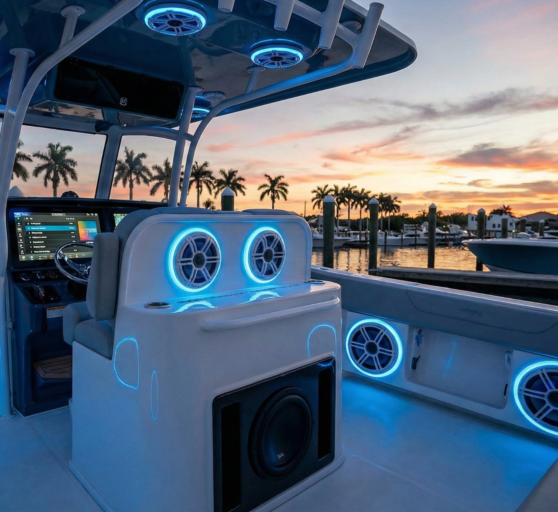
Plenty of boats leave the dock with a car stereo screwed into the dash. It sounds fine for a season, maybe two, and then the display fogs, the buttons stick, the speakers crackle and the amp dies. Car audio is not built for the mix of salt spray, direct sun, humidity and vibration that a boat throws at it. If you have been searching for marine audio near me because your current system is failing, it helps to understand what actually separates marine gear from automotive gear before you replace anything.
Why car audio fails on boats
A car interior is a sheltered space. Even a convertible is closed up most of the time, and the electronics sit behind dash panels away from direct water. On a boat, the head unit may be fully exposed at an open helm, speakers sit in cockpit sidewalls that get washed down, and the whole space fills with salt-laden air every day. The usual failure pattern looks like this:
- Moisture condenses inside the head unit overnight and corrodes the circuit board.
- Paper speaker cones absorb humidity, sag and eventually tear.
- UV light yellows and cracks plastic faceplates and speaker grilles.
- Bare copper wire turns green inside its insulation, raising resistance and causing crackling or dropouts.
- Plain steel screws and brackets rust and stain the gelcoat around them.
What makes marine audio gear different
Ingress protection ratings
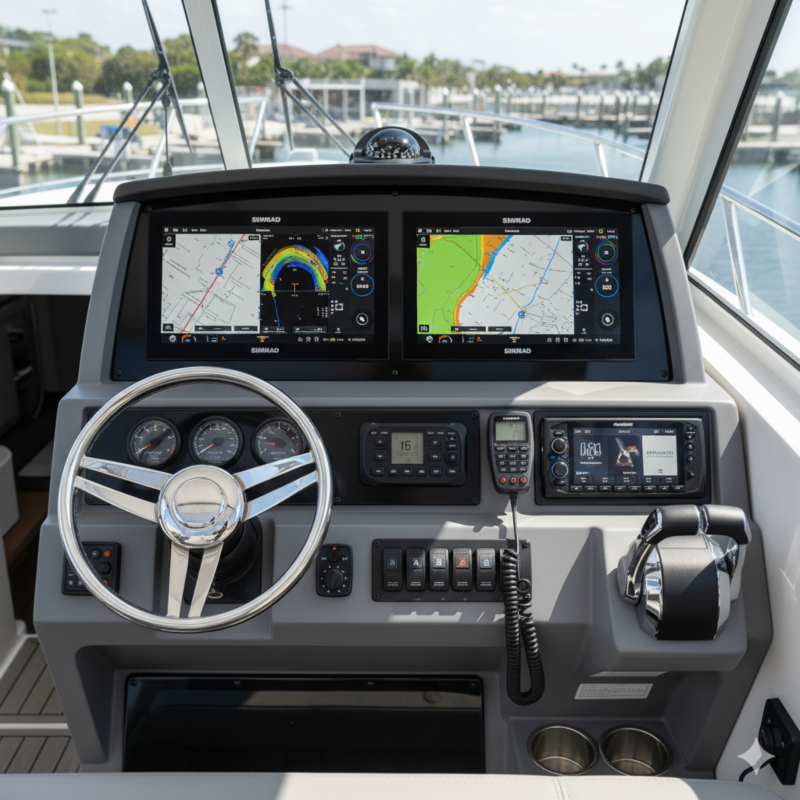
Marine head units and speakers are usually rated with an IP (ingress protection) code. The first digit covers solids such as dust, the second covers water. A front face rated IPX6 or IPX7 can handle heavy spray or brief immersion, which is what an open helm needs. Check whether the rating applies to the front face only or to the whole unit; most head units are sealed from the front, so the back still needs a dry location.
UV-stable materials
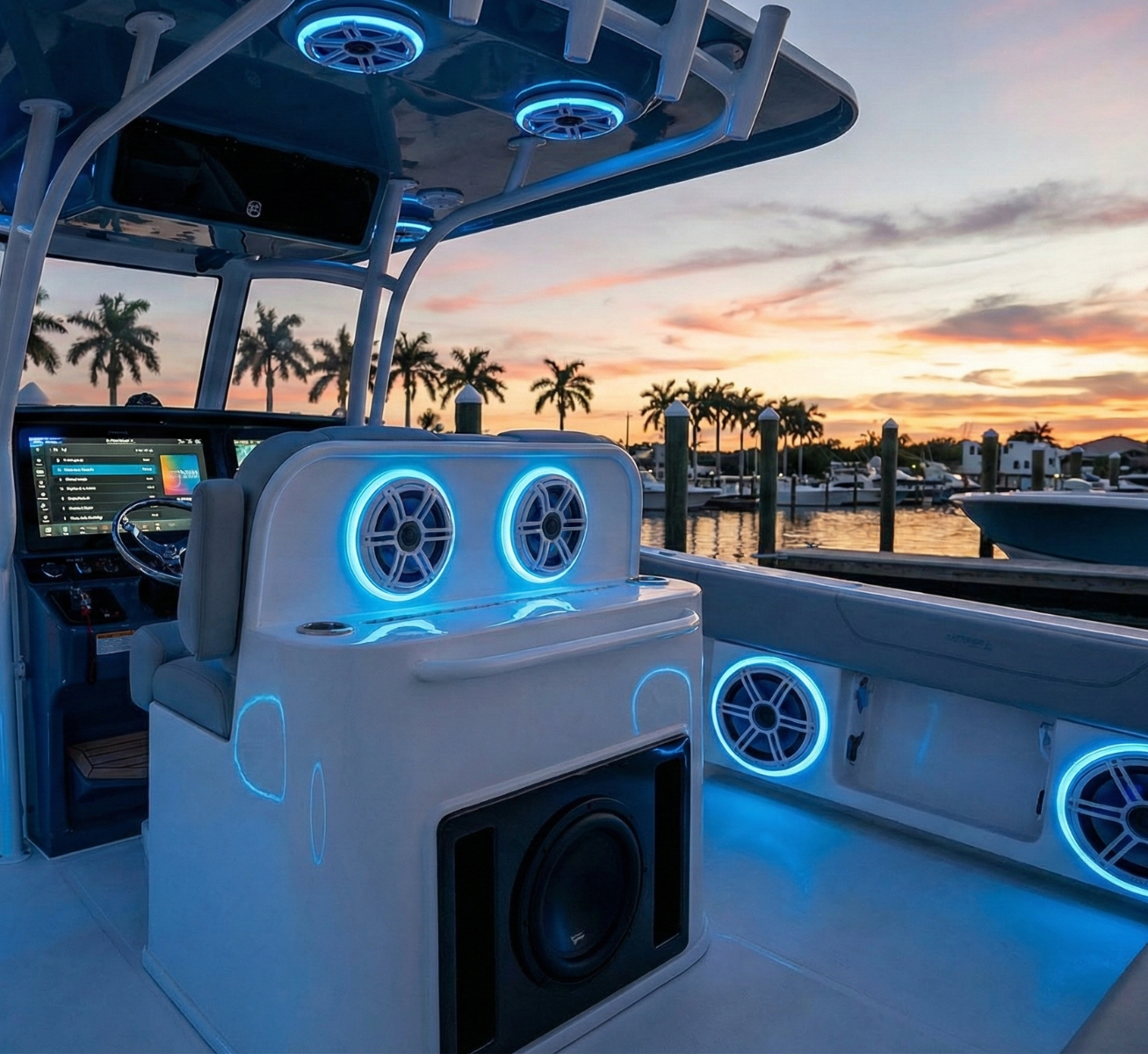
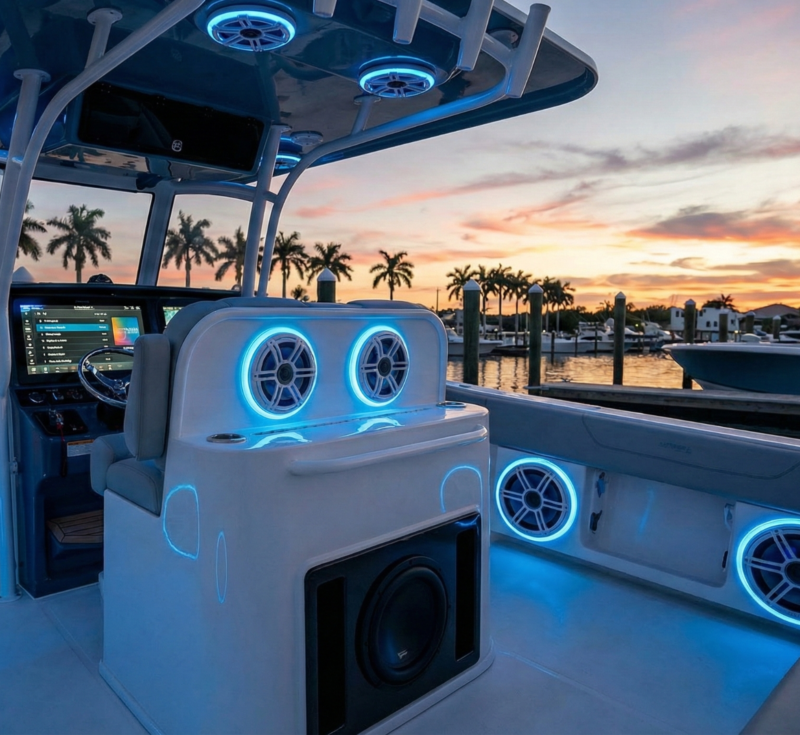
Marine speakers use polypropylene or treated composite cones instead of paper, rubber surrounds instead of foam, and UV-stabilized grilles. Faceplates are designed to stay readable in direct sun and are made from plastics that resist cracking.
Conformal-coated amplifiers
Quality marine amplifiers have their circuit boards covered with a thin protective layer, known as conformal coating, that keeps moisture and salt off the components. Stainless or coated hardware and sealed terminal covers are part of the same approach.
Tinned wire and sealed connectors
This is the part most people skip. Tinned copper wire resists corrosion along its whole length, while bare copper corrodes from any exposed end inward. Heat-shrink connectors with an adhesive lining seal each joint. A marine head unit wired with automotive wire and plain crimp connectors will still develop the same crackles and dropouts as a car stereo, just a little later.
What a proper installation visit includes
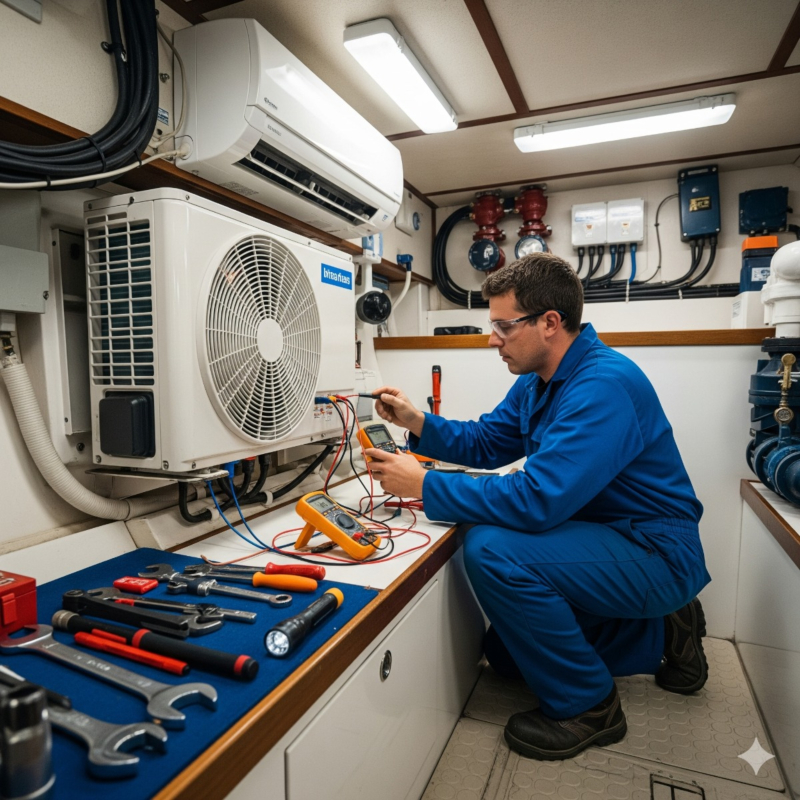
A good installation is about more than fitting boxes into holes. On a typical visit, a technician will:
- Inspect the existing wiring and decide whether it can be reused or should be replaced with tinned wire.
- Check the power feed, fusing and ground back to the battery or distribution panel.
- Confirm the mounting locations drain properly and that speaker backs have enough depth and ventilation.
- Seal every penetration through the liner or console with a suitable marine sealant.
- Route cables away from the compass and out of bilge water.
- Test every speaker, remote and source, then set basic levels.
If you are replacing a failed car unit, expect the installer to point out corroded wiring you did not know about. That is normal, and fixing it is what makes the new system last.
Choosing a local installer
When you search for marine audio near me or boat audio near me, you will find a mix of car audio shops, big-box installers and marine specialists. A few questions help sort them out:
- Do they install on the boat in its slip, or does the boat have to come to them?
- Do they use tinned wire and sealed connectors as standard?
- Will they look at the whole system, including power and grounds, rather than just swapping the head unit?
- Can they work around existing electronics without creating interference with the VHF or the compass?
Breeze Marine Boat Service LLC is a licensed and insured mobile boat repair company based in San Pedro. If your own search for boat audio installation near me, marine stereo near me or marine audio installation near me brought you here and your boat is in Long Beach, San Pedro or elsewhere in LA County, we come to the boat. We no longer sell parts, so you choose and buy the equipment, and we handle the installation and wiring. Details are on our marine audio and stereo installation page.
Keeping a marine system alive
Even marine-rated gear lasts longer with basic care. Fit a cover over the head unit when the boat is not in use, rinse speaker grilles with fresh water after a salty run instead of blasting them with a pressure washer, and switch the system off before starting the engine to spare it from voltage dips and spikes. Once a season, open the console and look at the wire ends behind the head unit. Green or black copper is the early warning sign.
Marine Audio FAQ
Can I use car speakers on a boat if they are under cover?
Under a hardtop they last longer, but humidity and salt air still reach them. Marine speakers are the better long-term choice anywhere on a boat.
What IP rating does a helm stereo need?
For an exposed helm, look for a front face rated IPX6 or higher, and mount the back of the unit where it stays dry.
Do I need to replace my wiring when I upgrade?
Not always, but corroded or untinned wire is a common cause of problems. An installer should inspect it and recommend replacement only where it is needed.