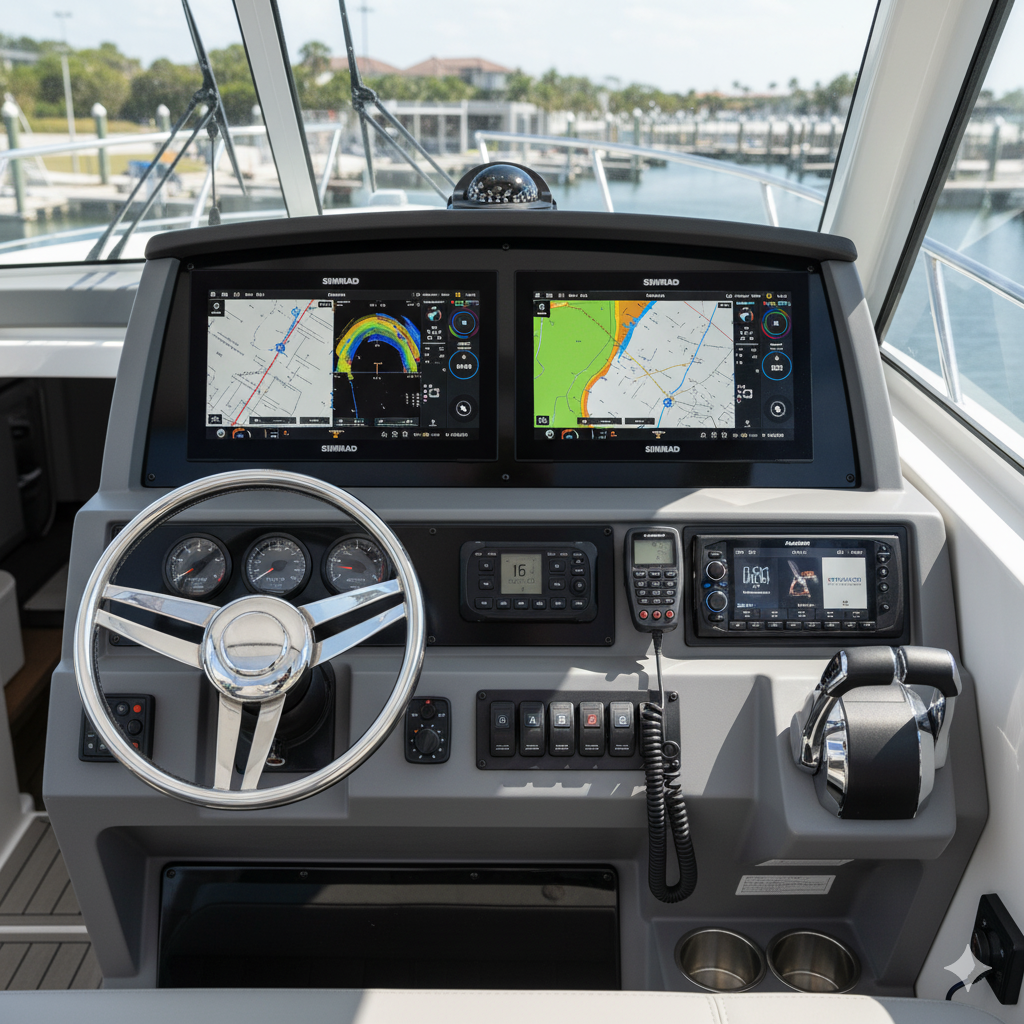
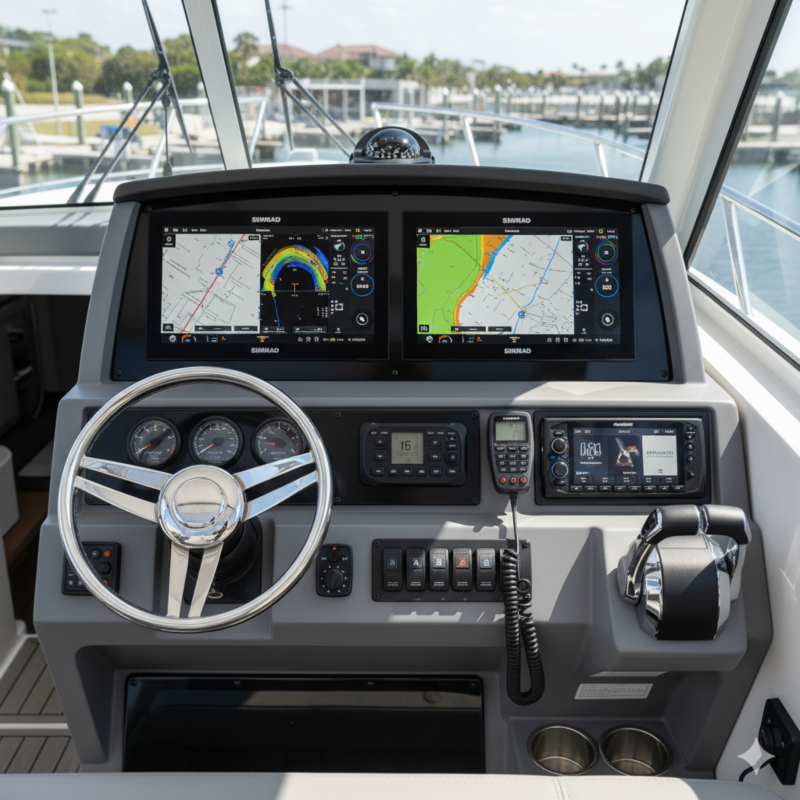


A modern helm can show position, depth, radar, AIS targets and engine data on one bright screen, which makes it easy to forget the two simplest pieces of navigation gear aboard: the antennas that feed those screens and the magnetic compass that keeps working when everything else goes dark. Both get ignored until they fail, and both are behind a surprising number of "my electronics stopped working" calls. This guide covers why marine compasses still matter, how to place and check them, and how antennas and their cabling cause most electronics headaches.
Why a magnetic compass is still the essential backup
A chartplotter depends on battery power, a GPS signal, a working display and intact wiring. Lose any one of them and the screen is useless. A magnetic compass needs none of that. On a foggy morning outside the San Pedro breakwater, or with a flat house bank on the way back to the harbor, a compass and a known heading can get you home. That is why experienced skippers treat marine compasses as essential equipment even on boats loaded with electronics, and why relying on a phone app alone is an unnecessary risk.
Types of boat compasses
- Binnacle mount. Sits on top of a pedestal or console, common on sailboats with wheel steering. Easy to read from behind the helm.
- Bracket mount. Attaches to a surface with a bracket and can be angled; useful on small boats and as a secondary compass.
- Flush mount. Set into a vertical or angled panel, typical on powerboat dashboards. Neat, but the panel is often crowded with electronics and wiring.
- Handheld bearing compass. Not a steering compass, but valuable for taking bearings and as a last-resort backup.
Good boat compasses are liquid-filled to damp the card, have lighting for night use, and include built-in compensators so the installer can correct for the boat's own magnetic field.
Placement: keeping magnetic interference away
The most common compass problem is not the compass itself; it is whatever was installed near it later. Speakers contain magnets. DC wiring carrying current creates a magnetic field, especially when positive and negative conductors are run separately rather than paired together. Steel tools, engine blocks, windlass motors, VHF handsets and even a phone left on the dash can pull the card several degrees.
When you add equipment to a console, keep it as far from the compass as practical, and run power leads as pairs. A simple test: with the boat still, note the compass reading, then switch on each piece of electronics, the wipers and the lights one at a time and watch for movement.
Deviation checks and compensation
Deviation is the error caused by the boat itself, and it changes with heading. To check it, run known headings, either between charted marks or against a steady GPS course over ground on a calm day with little current, and compare the compass reading on each. Compensation uses the small adjustment screws in the compass to reduce the error on the cardinal headings. Whatever error remains goes onto a deviation card kept at the helm. Recheck after any significant electronics work near the helm.
Antennas: the other half of the navigation picture
Every antenna for boat use has a specific job, and choosing the right one matters as much as the radio behind it.
VHF: height and gain
VHF range is mostly line of sight, so antenna height matters more than almost anything else. Gain describes how the signal is shaped. Higher-gain antennas squeeze the pattern into a flat disk, which extends range on a stable powerboat but can drop the signal when the boat rolls. Lower-gain antennas have a fatter pattern that suits sailboats at the masthead, where height already provides the range.
AIS and splitters
An AIS receiver or transponder needs a VHF antenna. You can fit a separate one, or use a suitable splitter so AIS and the VHF radio share a single maritime antenna. A splitter saves mast space, but it has to be the correct type for a transponder, and it adds one more connection that can fail.
GPS puck placement
External GPS antennas need a clear view of the sky. Avoid mounting them in a radar beam, right beside a VHF whip, or under the edge of a hardtop that blocks part of the sky.
Coax and PL-259 corrosion: the most common failure
When a VHF suddenly loses range or an AIS stops receiving targets, the radio is rarely the real culprit. Salt water wicks into coax through a poorly sealed connector and turns the braid black. PL-259 connectors at the mast base or antenna mount corrode, and badly soldered center pins crack. A marine electronics specialist will usually test the cable and connectors before condemning the radio: checking continuity, looking for water in the coax, measuring standing wave ratio with a meter, and inspecting every junction along the run.
Reliable marine electronics start with good connections: properly soldered or crimped connectors sealed with self-amalgamating tape, drip loops so water runs away from the fittings, and cable runs that are supported rather than left to chafe.
Getting help in Long Beach and San Pedro
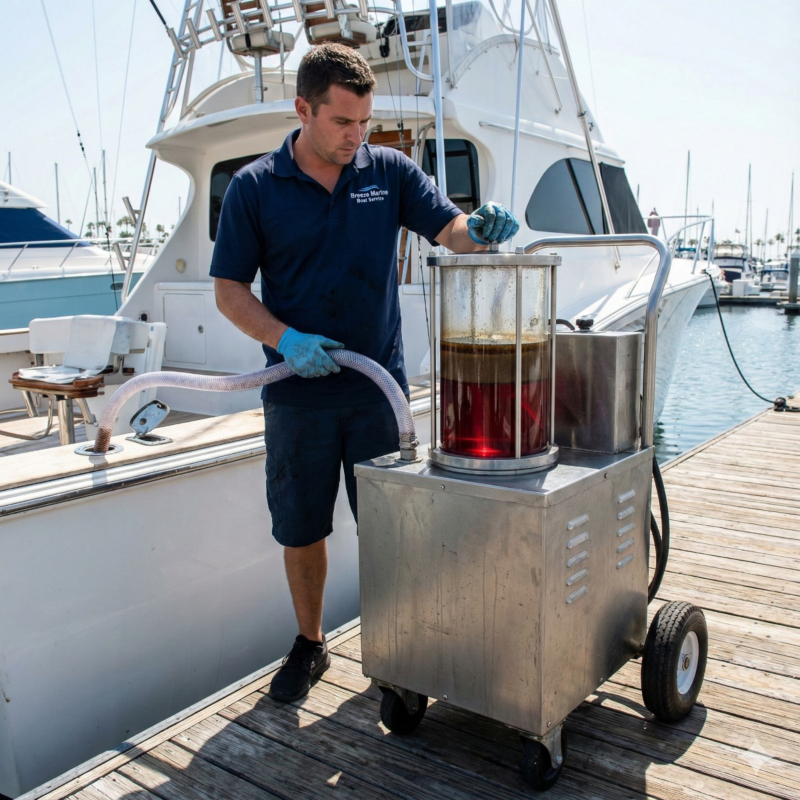
Breeze Marine Boat Service LLC is a licensed and insured mobile service based in San Pedro, working on boats in Long Beach, San Pedro and across LA County. For boat electronic repair, antenna and coax troubleshooting, or installing equipment you have already purchased, see our marine electronics installation and repair service in Long Beach. We no longer sell parts, so the compass, antenna or radio comes from you, and we handle the diagnosis, wiring and installation.
Compass and Antenna FAQ
How far should electronics be from a compass?
Follow the compass manufacturer's minimum distances, and test by switching each device on while watching the card. Speakers and unpaired DC wiring are the usual culprits.
Why did my VHF range drop suddenly?
Most often a corroded connector or water in the coax. Check the cable and fittings before replacing the radio.
Do I need a separate AIS antenna?
Not always. A suitable splitter lets AIS share the VHF antenna, although a dedicated antenna removes one more point of failure.