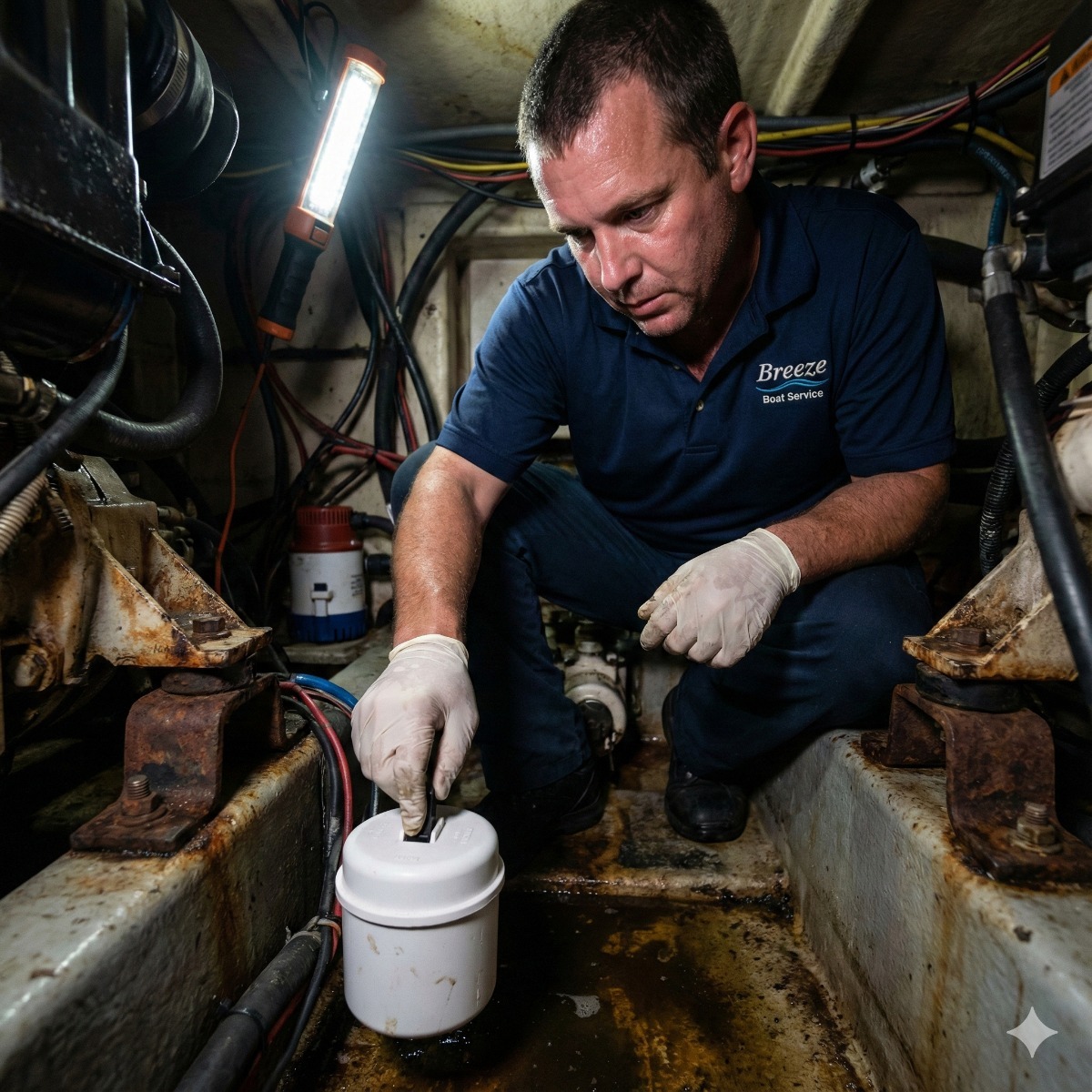
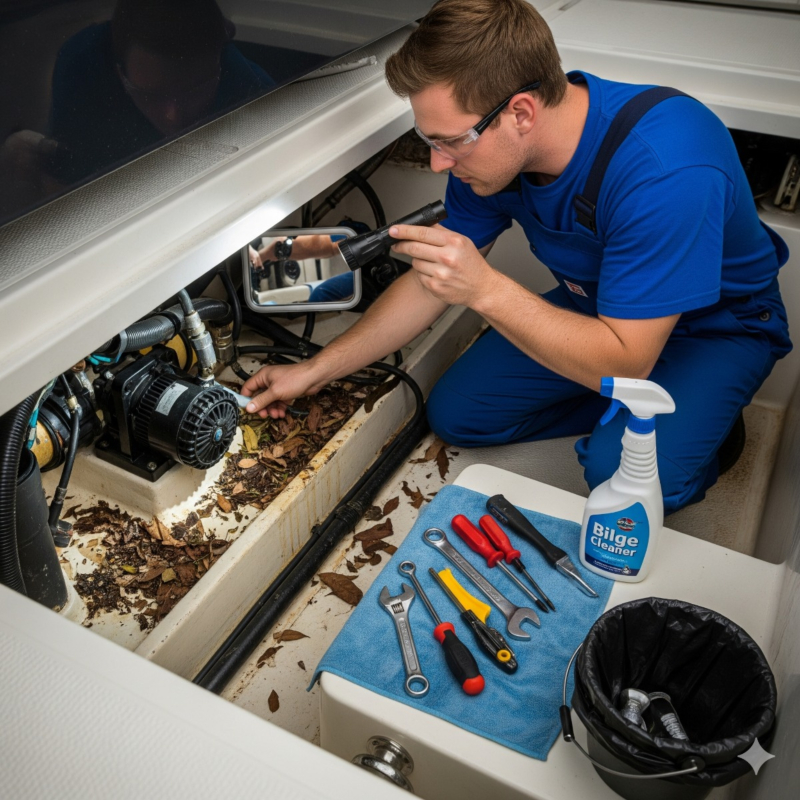

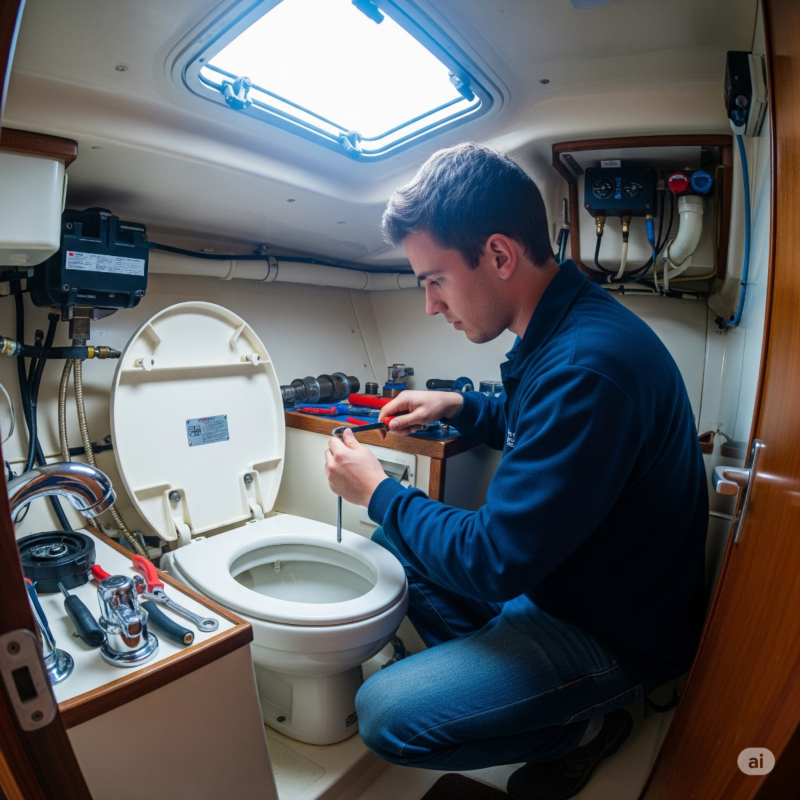

Every boat with a bilge pump has a single point of failure hiding under the floorboards. Pumps run quietly, often while nobody is aboard, and many owners only discover a problem when the waterline looks wrong or the engine compartment is already flooded. A boat high-water alarm is the extra layer that closes that gap: it tells you the pump has lost the race while there is still time to act. This guide covers why pumps fail, what a good alarm system includes, where it should go and how to keep it working.
How Bilge Pump Failure Happens
Pumps rarely fail in dramatic ways. The usual causes are ordinary and easy to miss:
- A stuck or fouled float: hair, zip-tie ends, oily sludge or a loose hose can pin the float down so the pump never starts, or hold it up so the pump runs until it burns out.
- Corroded connections: splices that sit in bilge water corrode, voltage drops and the pump runs weakly or not at all.
- A blown fuse or tripped breaker: a pump that has been cycling hard, or one with debris jammed in the impeller, can take out its own circuit.
- A flat battery: a slow leak on a boat left alone for days can run the battery down, and then the pump simply stops.
- A clogged strainer or intake: debris starves the pump even though the motor is running.
- A leak bigger than the pump: a split hose, a failed through-hull fitting or a shaft seal that lets go can outrun a small pump with ease.
Any one of these can leave a boat sinking at the dock over a quiet weekend with nobody around to notice. In most cases, bilge pump failure is not the first fault; it is the fault that turns a minor leak into a major one.
What a High-Water Alarm Does Differently
A high-water alarm is a separate sensor and warning circuit set above the normal bilge water level. In everyday use it stays silent, because the pump handles routine water. It sounds only when water rises past the point where the pump should already have removed it, which means something is wrong with the pump, its power supply or the size of the leak.
The key design rule is independence. If the alarm shares a fuse, a switch or a wire run with the bilge pump, one fault can silence both at once. A well-designed system has its own fused supply, its own sensor and its own warning devices.
Parts of a Good Alarm System
- Sensor: a high-water alarm float switch mounted above the pump's own bilge pump float switch, so it lifts only when the pump has not kept up. Electronic sensors with no moving parts are another option.
- Audible warning: a 100dB siren is loud enough to wake a sleeping crew and to be heard over wind and engine noise at the helm.
- Visual warning: a strobe or panel light helps on loud open boats where a siren can be missed.
- Test switch: a panel test button lets you confirm the siren and light before each trip.
- Remote alerts: remote boat monitoring devices can send a text or app notification when the alarm trips while the boat is unattended.
Placement and Wiring Basics
In any high-water alarm installation, placement matters as much as hardware. The sensor should sit clear of normal bilge water, typically a couple of inches above the pump's switch, at a point where the boat's resting trim will not leave it permanently dry or permanently submerged. On boats with separate compartments, such as an engine room and a forward bilge, each space that can flood deserves its own sensor.
Wiring should use tinned marine wire, sealed connections kept above the waterline of the bilge, and a supply that stays live when the battery switch is turned off, fused close to the battery. A float-type alarm draws essentially nothing while it waits, so wiring it this way does not drain a healthy battery.
Testing and Care an Owner Can Handle
- Press the test button at the start of every trip.
- Once a month, lift the float by hand or pour water into the bilge to prove the sensor itself triggers the siren, not just the test circuit.
- Keep the area around both floats free of debris and oily residue.
- Check that connections are dry, tight and free of green corrosion.
- If the alarm ever sounds, find the cause before resetting it. A pump that cycles more often than usual is an early warning as well.
When to Call a Technician
Consider professional bilge alarm installation if your boat has no alarm, if the existing alarm shares a circuit with the pump, if the float sits at the wrong height, or if the system fails the lift test. The same goes for a bilge pump float switch that sticks again and again, or a pump that runs but moves little water. When you are ready to add an independent warning, book a high-water alarm installation and testing visit so the sensor, siren and wiring end up in the right places.
High-Water Alarm FAQ
Is a high-water alarm the same as an automatic bilge pump?
No. The automatic pump removes water, while the alarm only warns you that water has risen higher than it should. That is exactly why it needs its own sensor and its own circuit.
Where should the siren be mounted?
Wherever people will hear it, usually at the helm and in the cabin or sleeping area. For a boat left on a mooring or in a slip, remote boat monitoring adds an alert on your phone.
How often should the alarm be tested?
Use the test button before each trip and lift the float by hand about once a month to prove the whole chain works, from sensor to siren.