

High-Water Alarm Safety Systems
Labor estimate Usually 2–4 hours
Book sends us a ticket; nothing is charged online. Before any work you get a written estimate for labor, parts and the trip fee, and nothing is done without your OK.
Trip fee By distance, one way: $30 in San Pedro, $50 in Long Beach
- San Pedro$30
- Wilmington, Terminal Island$40
- Long Beach: Shoreline, Rainbow Harbor$50
- Long Beach Marina, Alamitos Bay$60
- Redondo Beach$60
- Seal Beach, Huntington Harbour$75
- Marina del Rey$85
- Newport Beach$110
Farther away: $25 plus $2.50 a mile, one way from our San Pedro shop. No trip fee when the boat comes to our shop, or for plan members. The work of a visit is at least $150; the trip fee is on top.
- Registered in California
- Breeze Marine Boat Service LLC, San Pedro
- Where we work
- At your slip from Marina del Rey to Newport Beach, or in our San Pedro shop
- Questions first
- (213) 693-0224 or submit a ticket
About this service
Sleep Soundly.
Your Alarm Watches the Water.
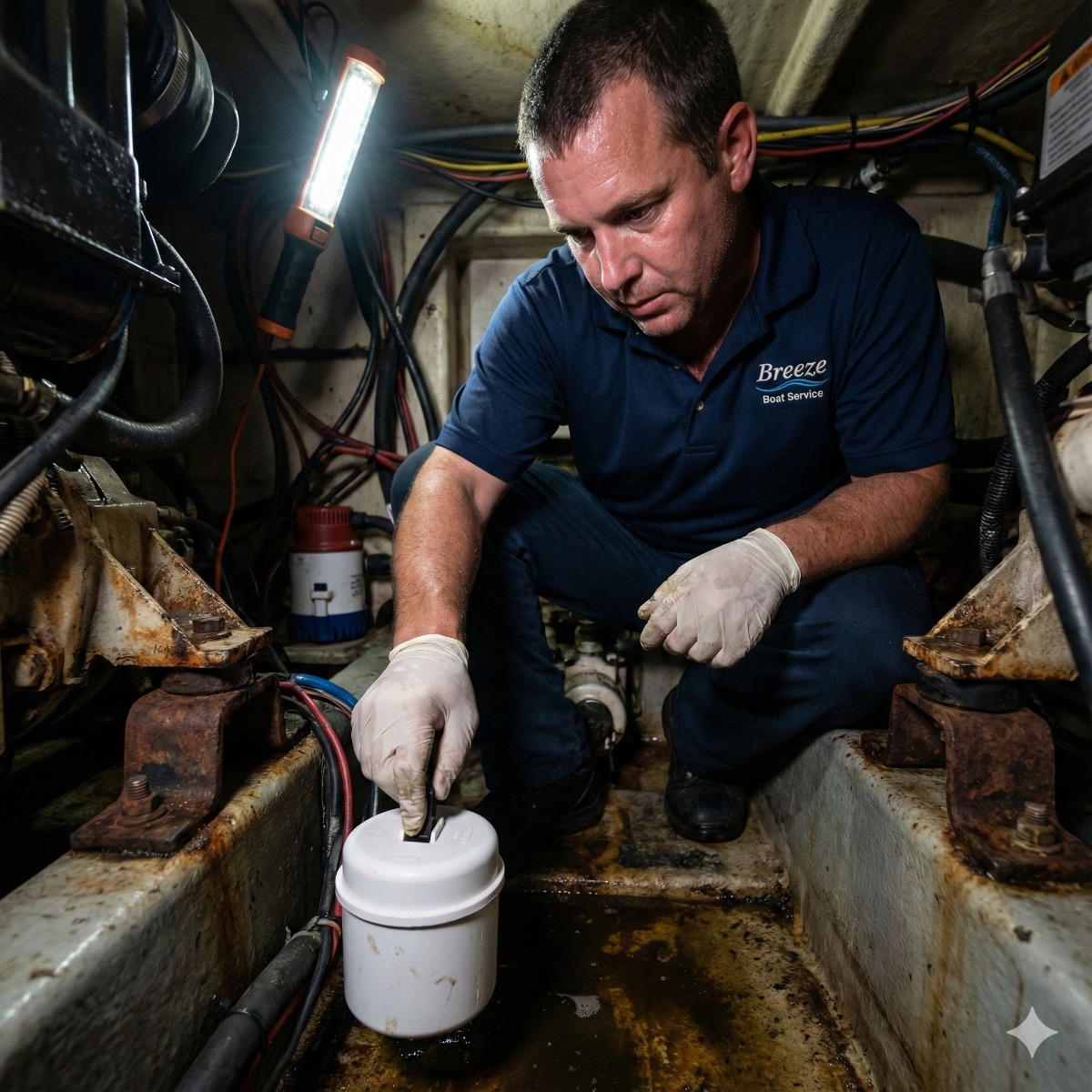
Bilge pumps operate silently, but if they fail or are overwhelmed, you need to know right away. We install independent High-Water Alarm systems that trigger a 100dB siren and visual strobes the moment water rises above safe levels.
100dB Audible Alert
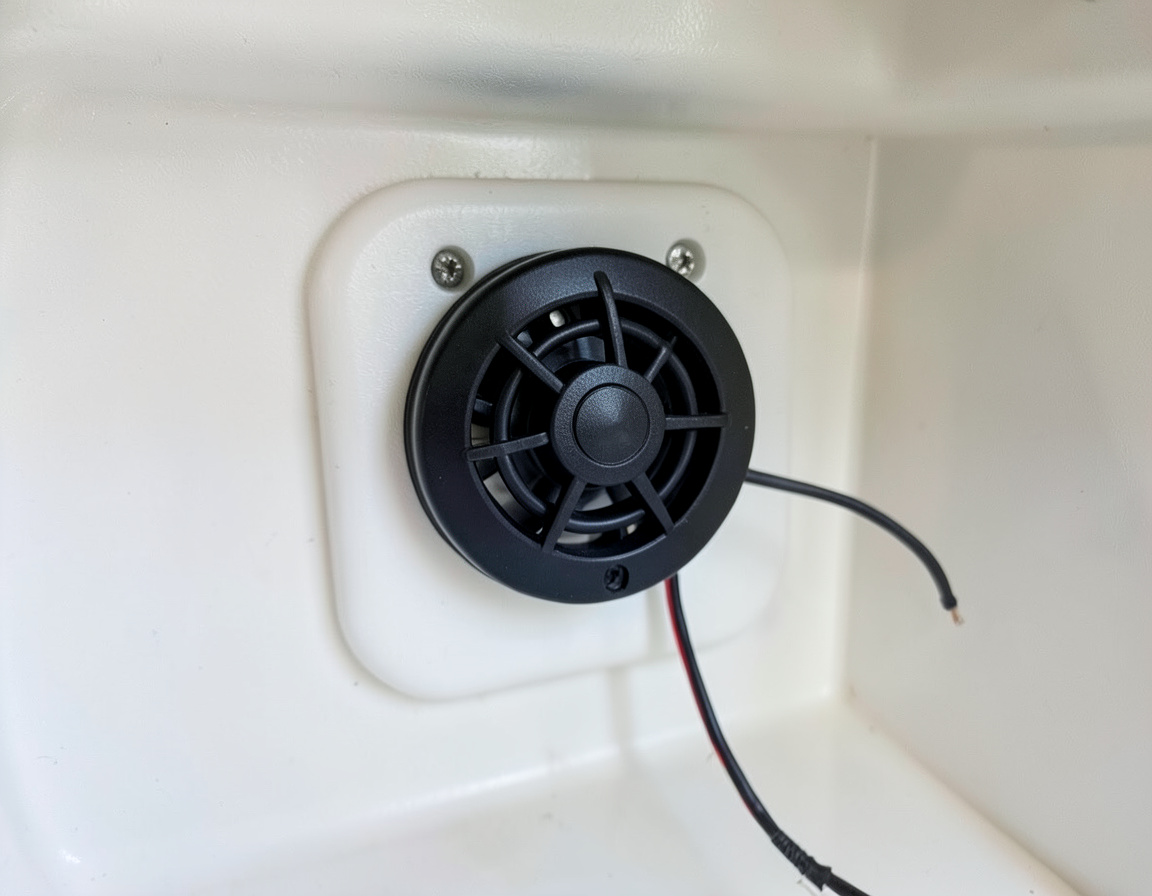
You can't ignore it. We install piezo-electric sirens at the helm and in the cabin. If water breaches the safety threshold, the piercing 100-decibel alarm sounds right away, loud enough to wake you if you are aboard and give you time to act.
Visual Strobe Light
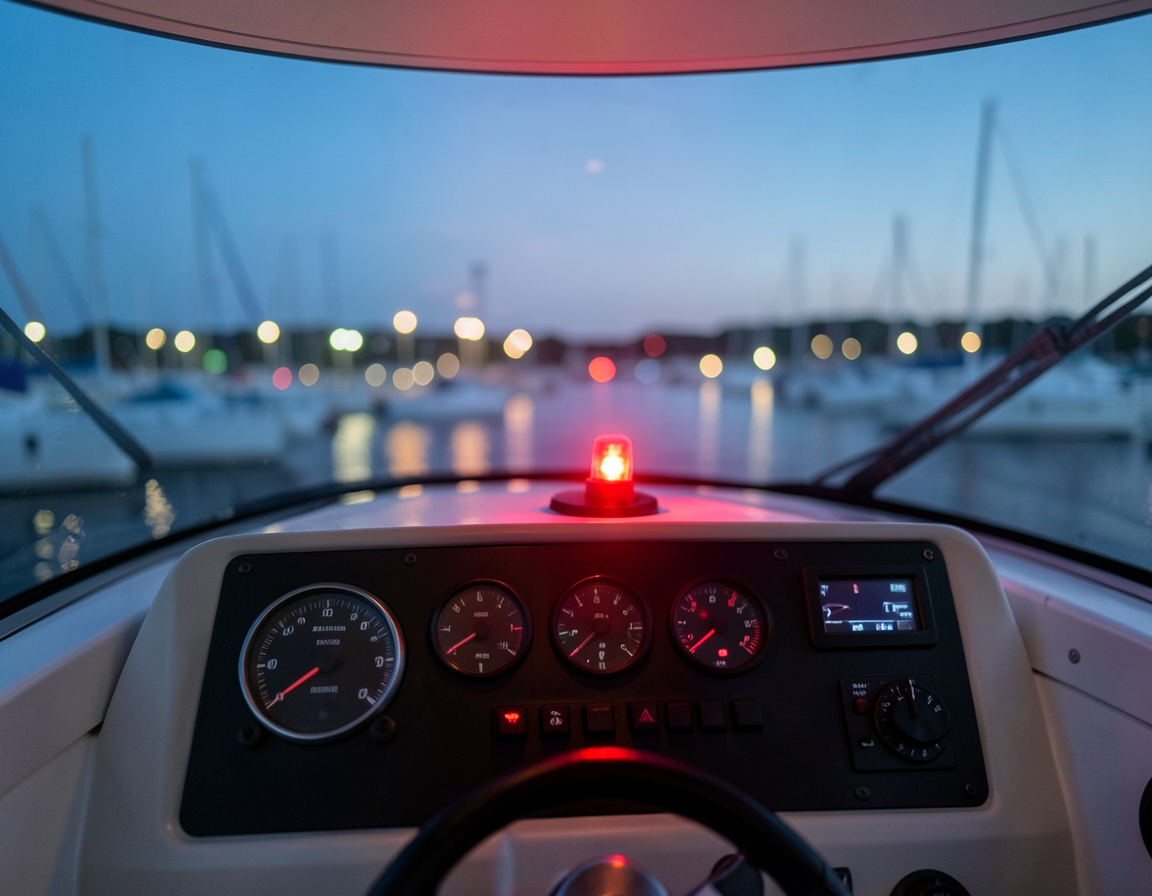
Engine rooms are noisy. For center consoles or flybridge cruisers, we add a bright red visual strobe or LED indicator on the dashboard, alerting you to bilge issues even when the engine is roaring.
Redundant Circuit
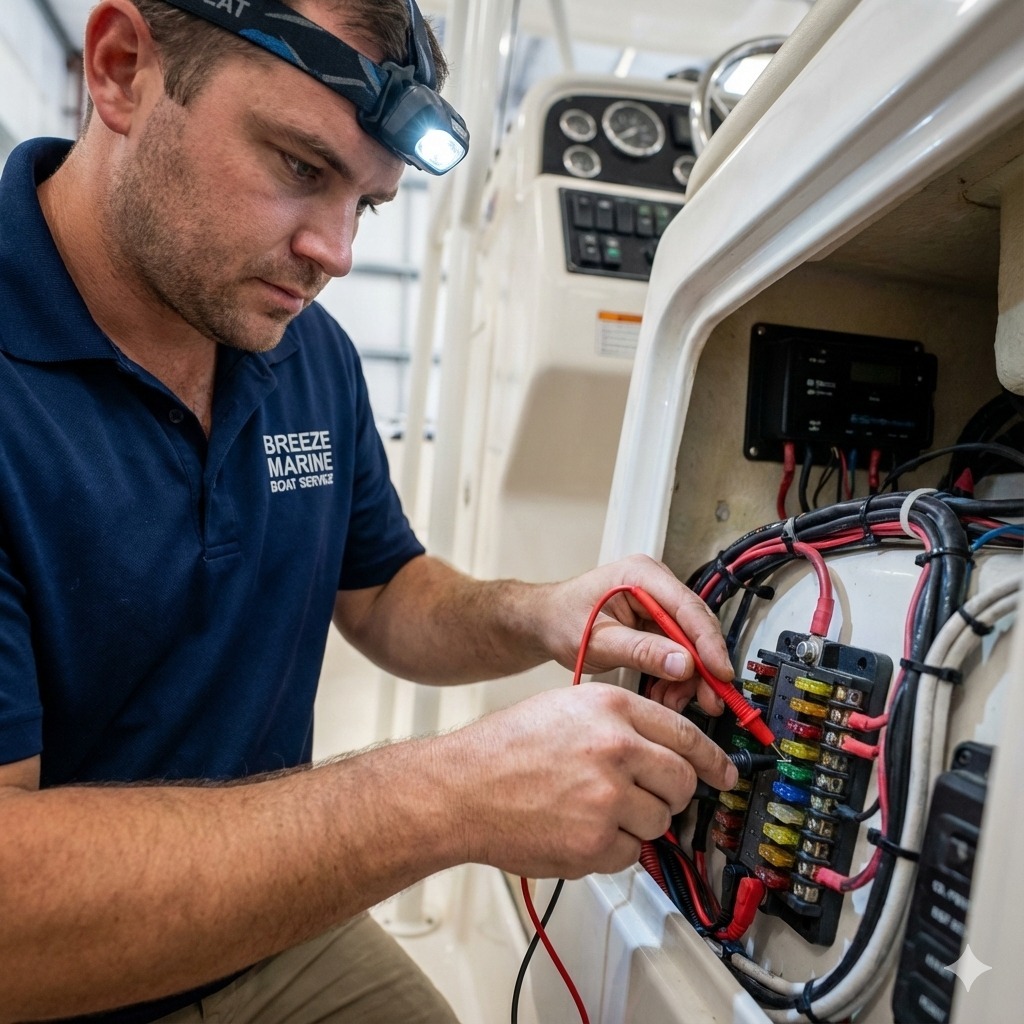
The alarm must work when everything else fails. We wire the system on its own fused circuit, completely independent of your main bilge pump, so a blown pump fuse doesn't kill your warning system.
Installation Protocol.
Strategic placement.
Height Calibration
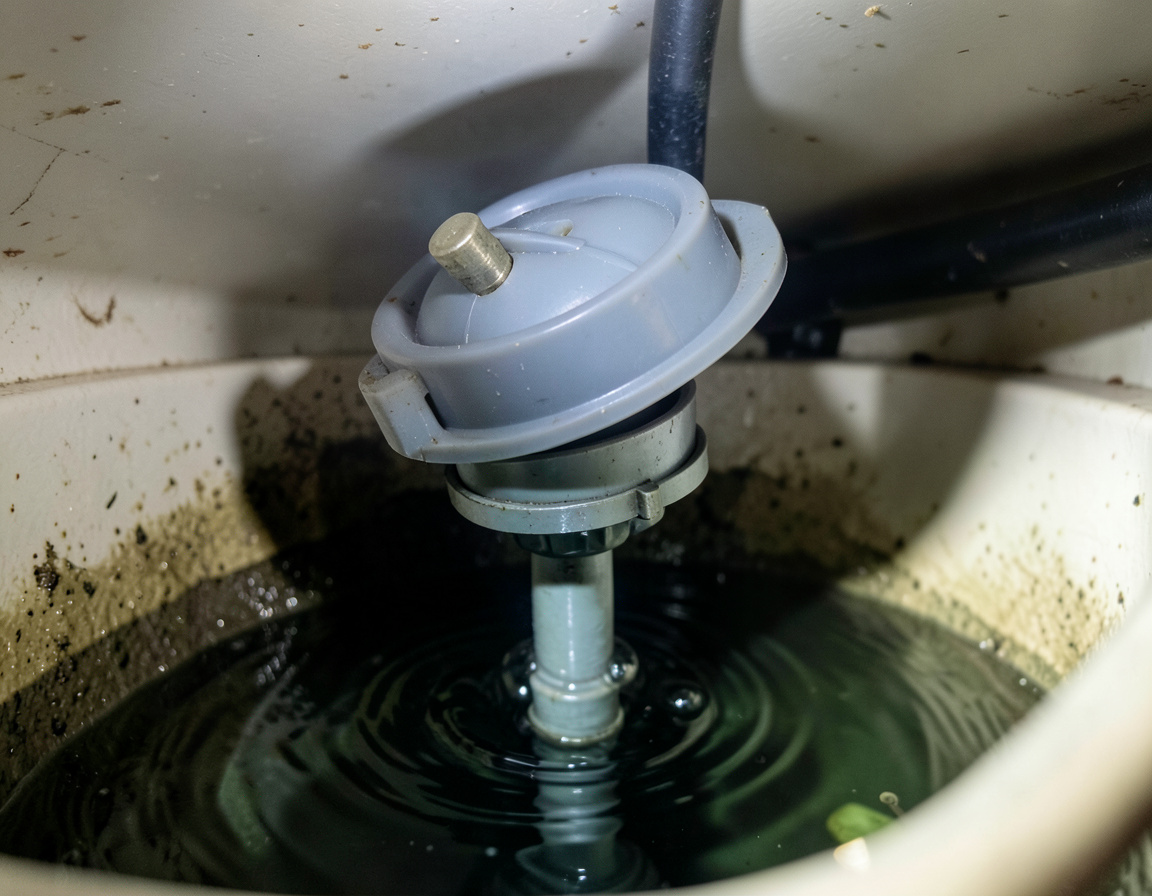
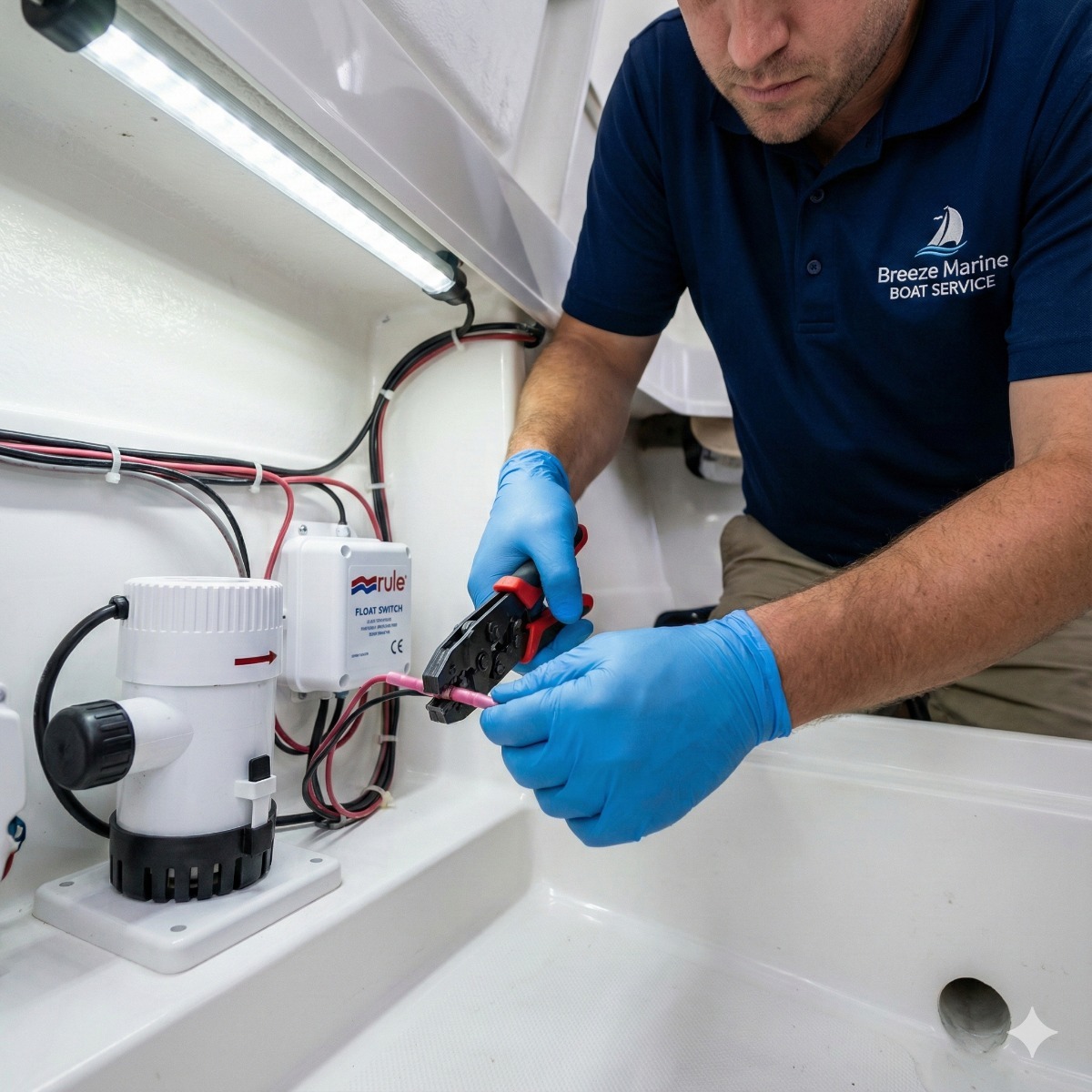
We mount the high-water alarm float switch 2 inches higher than your primary bilge pump float switch. It only triggers if the main pump has failed or cannot keep up with the leak.
Helm Integration
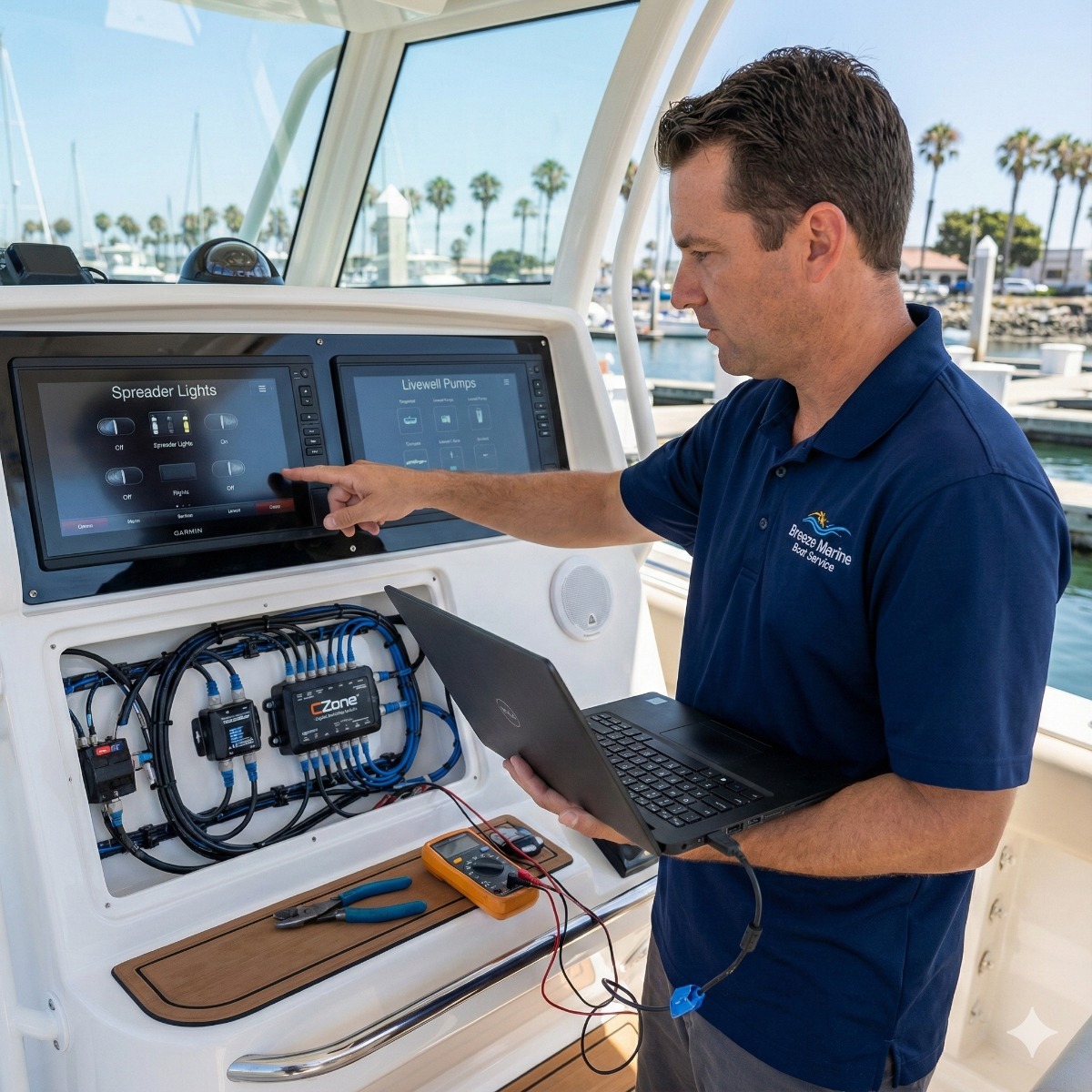
As part of this marine electrical service, we run marine-grade tinned copper wire from the bilge to the dashboard, cutting a precise flush-mount hole for the indicator light and siren rocker switch.
Testing
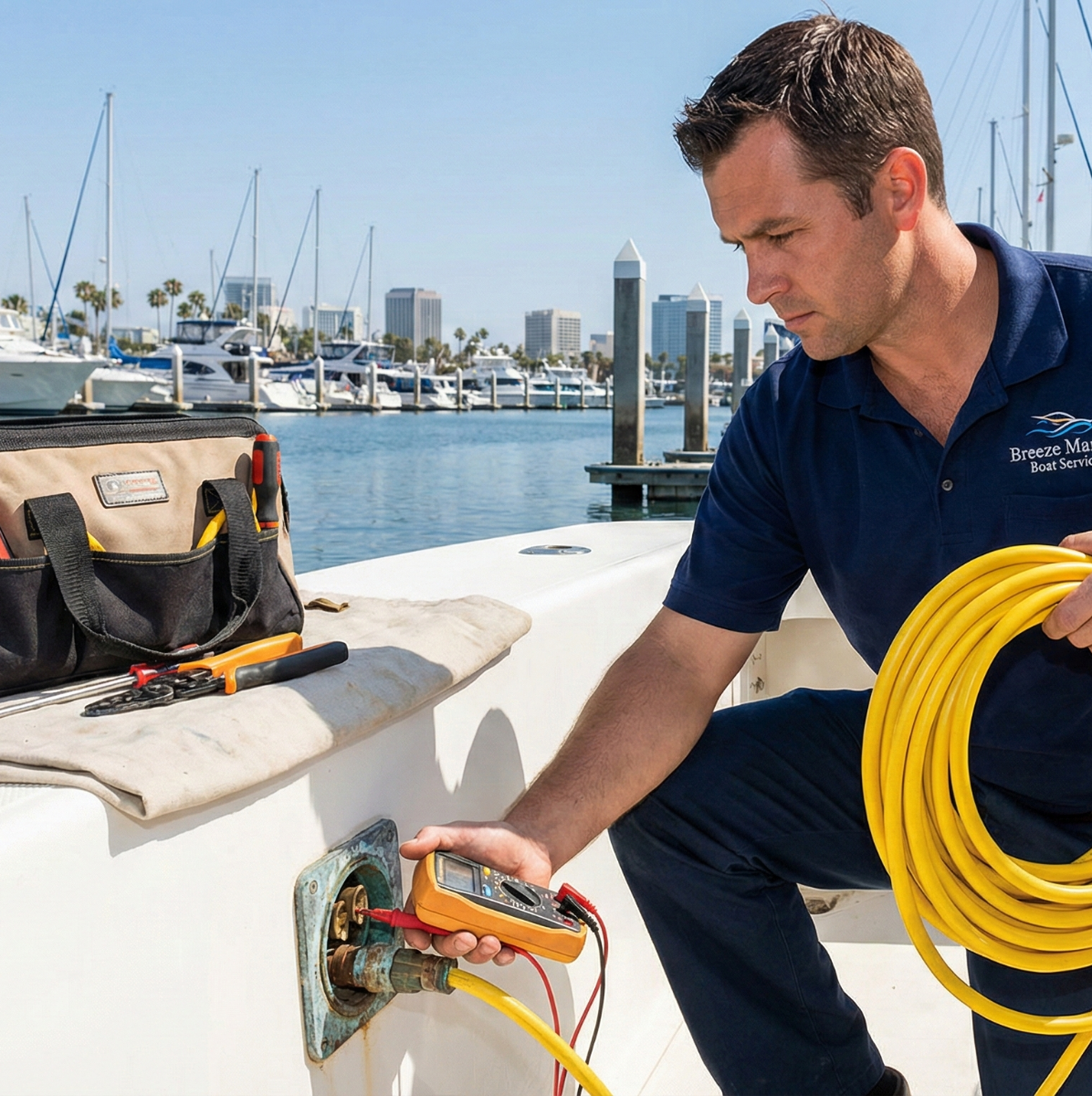
We don't guess. We manually flood the bilge or lift the float switch to verify the alarm screams and the light flashes. We verify the "Test" button functionality.
Smart Options
(Optional) We can integrate the alarm with "Smart Boat" systems (Siren Marine/Nautic Alert) for remote boat monitoring, sending a text message to your phone if the alarm trips while you are away.
System Components.
Premium safety hardware.
Alarm Specs.
Loud and clear.
Common Questions
Will it drain my battery?
No. With a mechanical float switch, the alarm draws no power until it is triggered. Electronic sensors and remote-monitoring units draw a small standby current.
Where is the siren mounted?
On a typical high-water alarm installation we mount one at the helm (driver's station) and one in the main cabin/sleeping quarters to ensure you hear it regardless of where you are on the boat.
Keeping the Alarm Ready
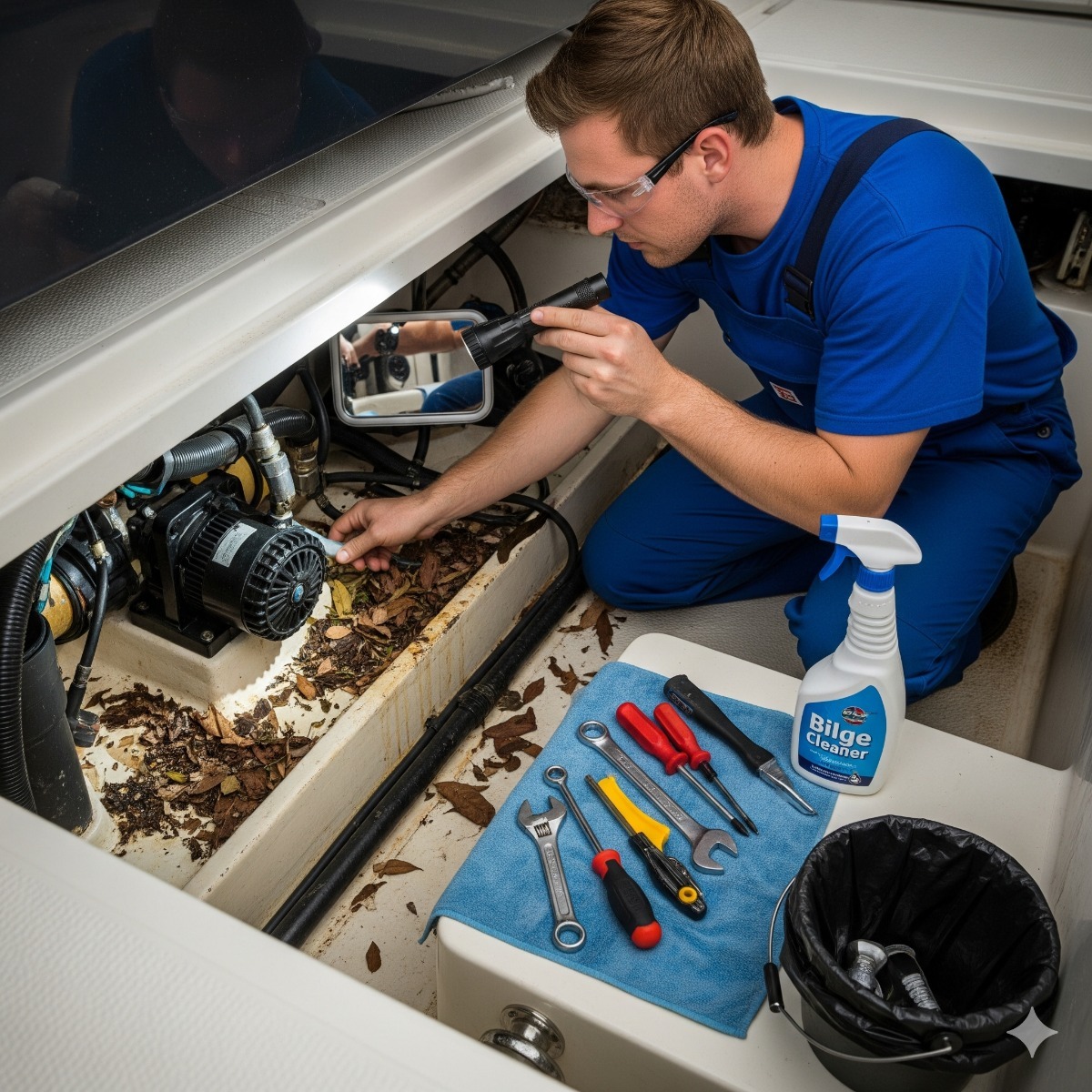
Press the test button before each trip, and every few weeks lift the float by hand to prove the whole chain works, from sensor to siren. Keep the float area clear of debris and oily sludge, the same things that jam a bilge pump float switch and lead to bilge pump failure in the first place.
Reviews 4
Questions 6
Related Posts
-
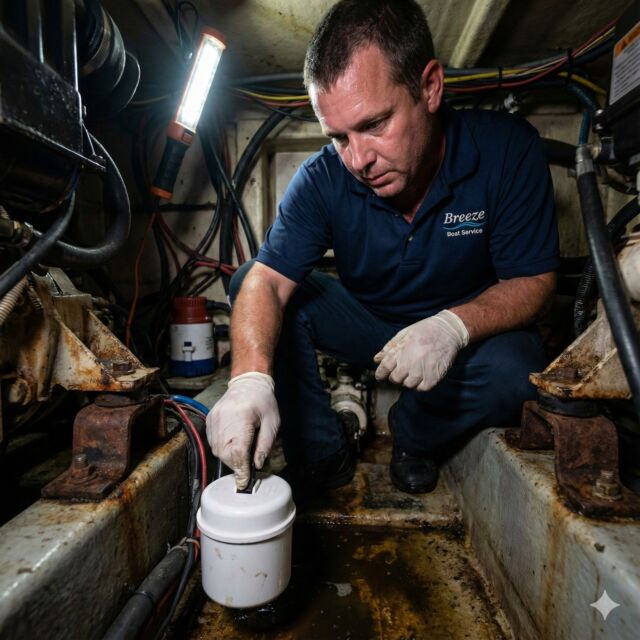


 Why bilge pumps fail, how an independent high-water alarm warns you in time, where to place the float switch and siren, and simple tests every boat owner can do.
-
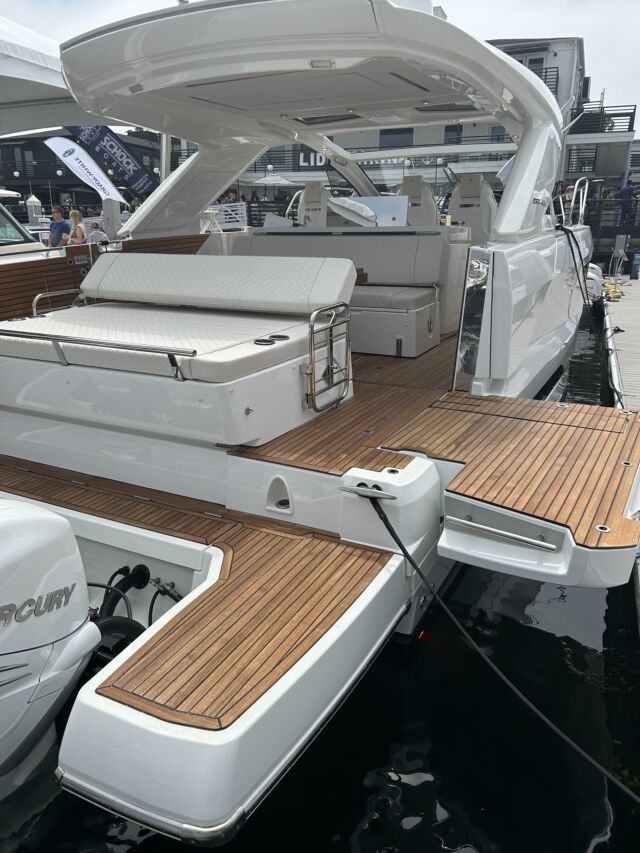 Safety and Mistakes to Avoid: Smart Boating Starts with the Right Habits Boating offers freedom, fun, and connection with nature — but even small mistakes on the water can lead to serious risks....