An engine that starts, idles and revs smoothly in the slip can still fail twenty minutes offshore. The reason is simple: at the dock the engine is barely working. Revving in neutral places almost no load on it, the propeller is not pushing against water and the cooling system is never asked to shed real heat. Many of the problems that matter most only appear when the boat is running hard, which is why a sea trial is such an important diagnostic and verification step.
Why Load Changes Everything
Under way, the propeller pushes against the water and the engine has to make real power to turn it. That raises cylinder pressure, exhaust temperature, fuel demand and cooling load all at once. Weaknesses that stay hidden at idle, such as a partly clogged heat exchanger, a weak fuel pump or a bent prop blade, suddenly have consequences. An engine load test on the water is the only way to see how the whole system behaves together.
Problems That Often Only Show Under Load
- Overheating: boat engine overheating often starts only at cruise or full throttle, when a worn impeller or scaled cooler cannot keep up.
- Fuel starvation: a restricted filter, pickup, anti-siphon valve or tank vent may supply enough fuel at idle but not at high demand. The engine surges, loses RPM or dies after a few minutes of hard running.
- Vibration: a bent shaft, damaged propeller or misalignment may feel fine at low speed and become severe as RPM rises.
- Wrong propeller: an engine that cannot reach its rated RPM range at full throttle is overloaded; one that over-revs is underpropped.
- Turbo and boost issues: on diesels, low boost and black smoke only appear under load.
- Transmission slip or overheating: clutch and cooling problems surface when the gearbox carries real torque.
What a Structured Sea Trial Covers
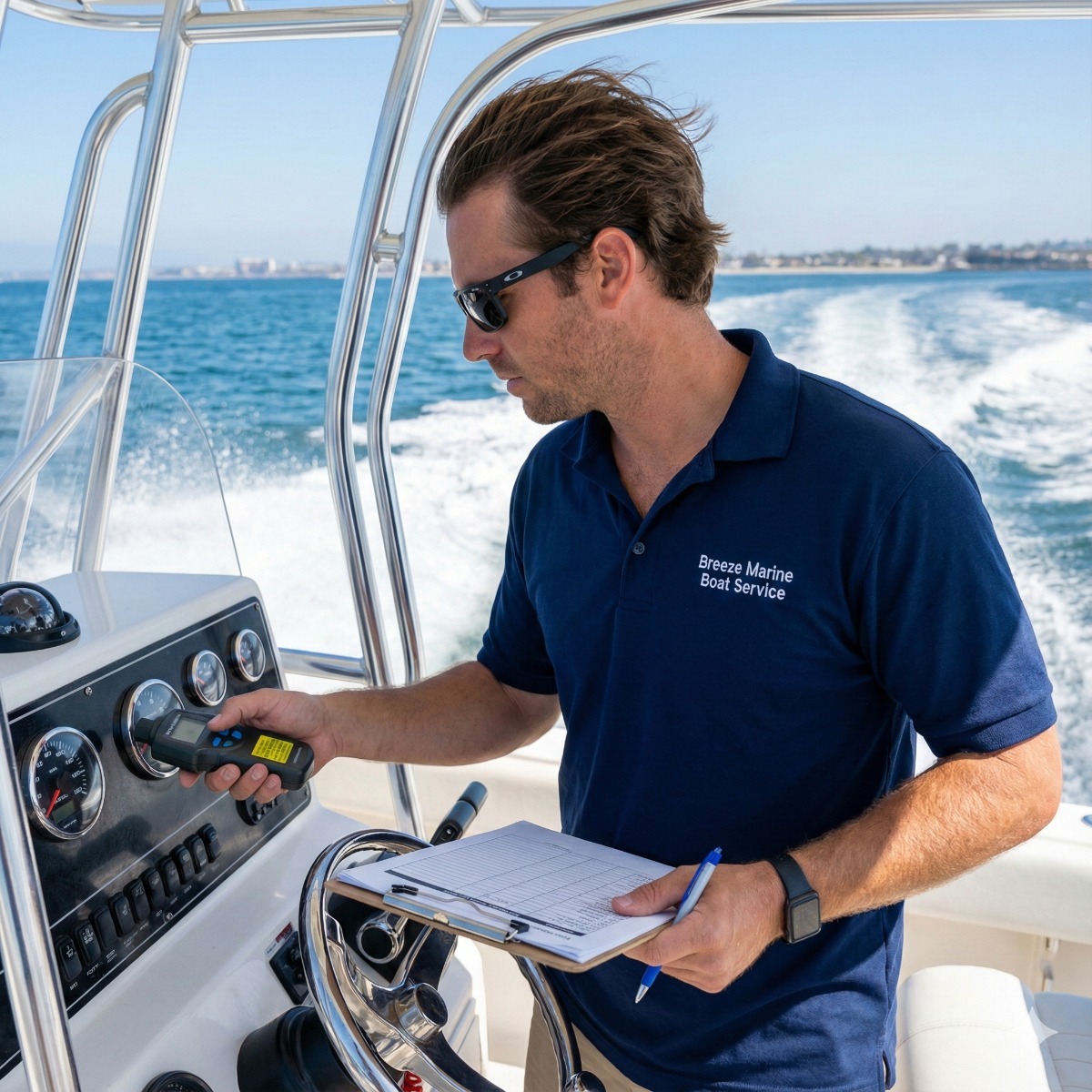
A professional sea trial follows a plan rather than a quick spin around the harbor. Typical stages include:
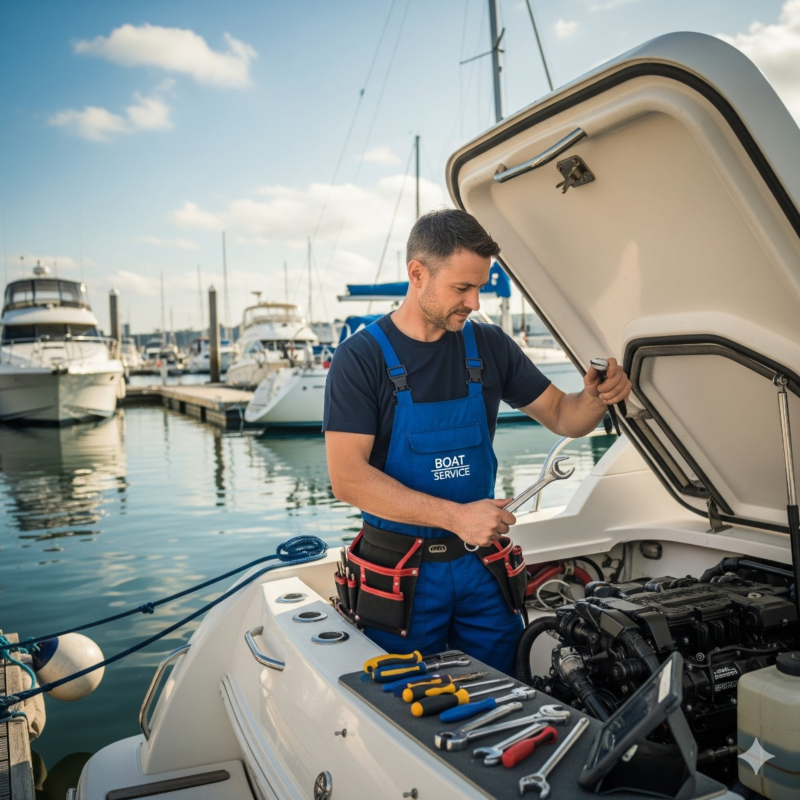
- Pre-check: fluid levels, belts, sea strainers, bilge condition and safety gear before leaving the dock.
- Warm-up: running at low and mid RPM to bring the engine to temperature and watch thermostat behavior.
- Cruise run: sustained running at normal cruise to check temperature stability, oil pressure, charging voltage and fuel delivery.
- Wide open throttle test: a controlled run at full throttle, in safe conditions, to confirm maximum RPM against the manufacturer's range and to stress the cooling system.
- Maneuvering: shifting, steering, trim and response checks at various speeds.
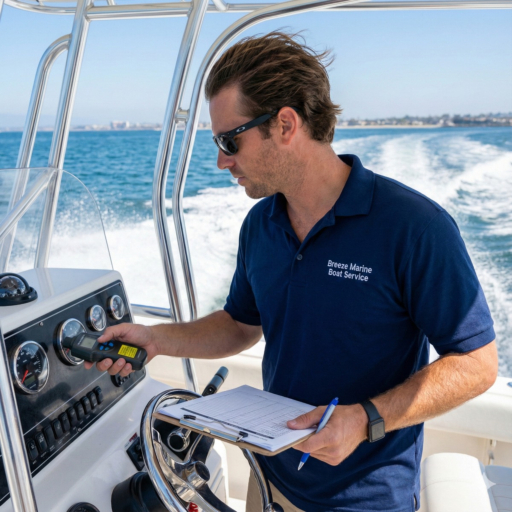
Readings are recorded at each step, ideally with independent instruments rather than relying only on dash gauges, which can be inaccurate.
Key Measurements and What They Tell You
Sea trial performance testing produces numbers that can be compared over time:
- Maximum RPM: tells you whether the propeller and engine are properly matched.
- Speed at given RPM: GPS speed at set RPM points, useful for spotting bottom fouling or drive problems later.
- Propeller slip: the difference between the theoretical distance the prop should travel and actual speed. Unusually high propeller slip can point to a damaged or wrong prop, ventilation or setup issues.
- Temperatures and pressures: coolant, exhaust and oil readings at each load step.
When vibration appears, vibration analysis on the water helps isolate whether it comes from the engine, the shaft or the propeller by noting at which RPM it starts and whether it changes in gear or neutral.
When a Sea Trial Makes Sense
- After major repairs, to verify the fix under real conditions.
- At the start of the season, before longer trips.
- When a problem is intermittent or only happens under way.
- After a propeller change or repower.
- As part of a pre-purchase inspection when buying a used boat.
Is Full Throttle Safe?
Some owners worry that WOT testing will harm the engine. A healthy engine is designed to reach its rated RPM, and short controlled runs at full throttle are a normal part of testing. If something fails during a supervised test, it would likely have failed on the next long trip, and it is better found with a technician aboard. For a structured, documented boat sea trial, see the page on sea trial performance testing and verification.
Sea Trial FAQ
How long does a sea trial take?
Most take one to two hours including warm-up, cruise and full throttle runs, depending on the boat and what is being checked.
Should the owner be aboard?
It helps. The owner can point out symptoms and see the readings first hand.
What conditions are best?
Calm water and light wind give the most comparable results, and full throttle runs should only be done where it is safe and legal.