

Sea Trial Performance Testing & Verification
The Truth at
Wide Open Throttle.
Dock diagnostics are limited. Real issues—overheating, vibration, fuel starvation—only reveal themselves under load. We take your vessel to its limit to prove it's ready for the season.
The "WOT" Test
Wide Open Throttle. It's the only way to test the cooling system's capacity and the propeller's pitch. If your engine overheats at WOT, it's not ready for offshore travel.
Vibration Analysis
A bent shaft or damaged prop can feel fine at idle but shake the fillings out of your teeth at 20 knots. We isolate vibrations to the engine, shaft, or prop while underway.
Verification Report
We don't just say "it's good." You get a data log including max RPM, GPS top speed, temperature stability, and oil pressure readings at various load steps.
The Sea Trial Run.
A systematic approach to performance.
Pre-Check
Before untying, we check fluid levels, belt tension, and sea strainers. We don't leave the dock unless the vessel is safe to push hard.
Warm-Up & Cruise
We run at cruise RPM to check thermostat cycling. This is where most fuel delivery issues (starvation) begin to show.
The Load Test
We push to Wide Open Throttle for a sustained period (typically 5-10 minutes) to stress-test the cooling system and verify max RPM.
Laser Verification
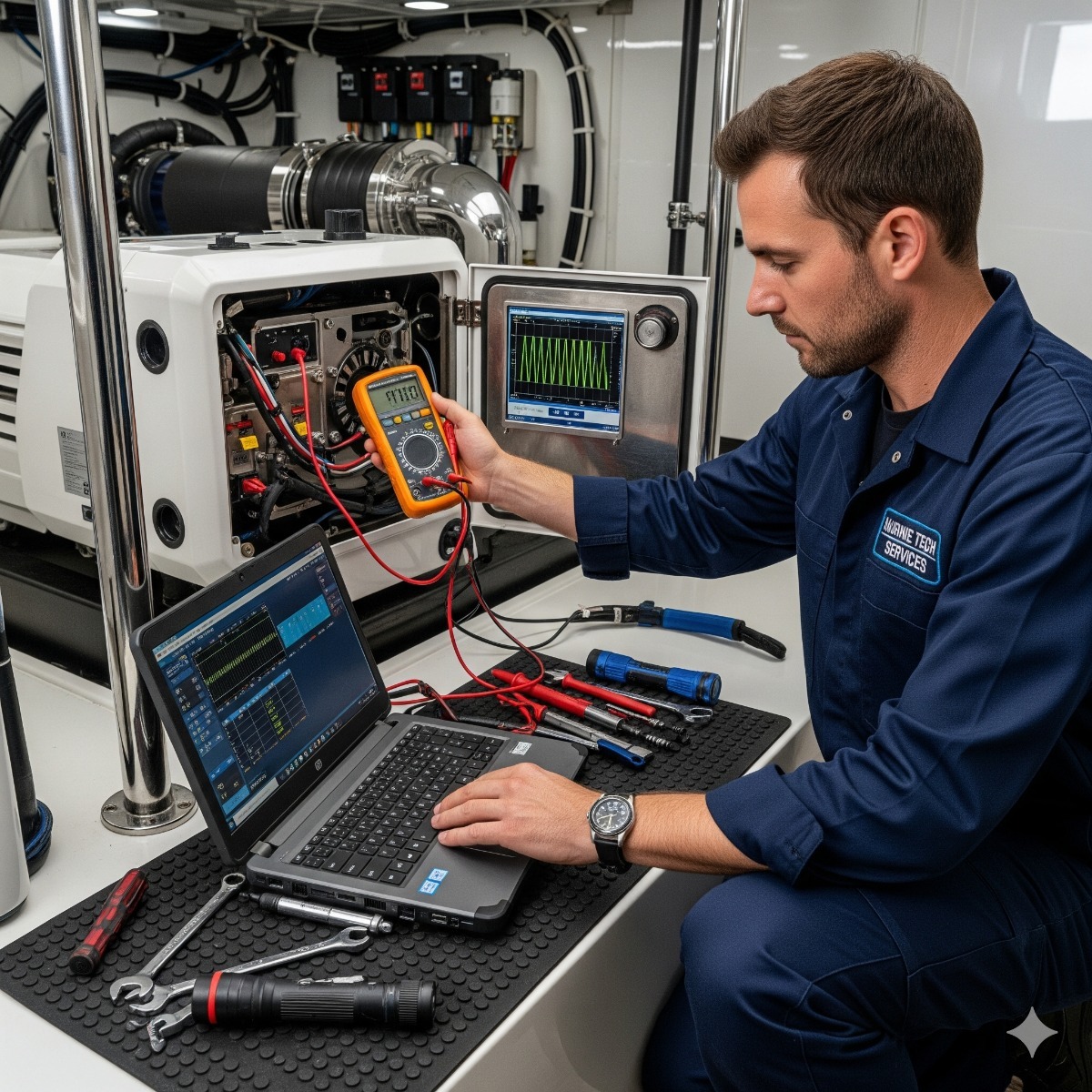
We verify your dashboard gauges against our calibrated digital laser tachometers and infrared heat guns.
Data You Can Trust.
Eliminating the guesswork from repairs.
What We Measure.
Key performance indicators for a healthy boat.
Common Questions
Why can't you test at the dock?
Revving an engine in neutral places almost zero load on it. You cannot diagnose overheating, turbo boost issues, or drivetrain vibrations without the resistance of water against the prop.
Is WOT testing safe?
If an engine is healthy, it is designed to run at WOT. If it fails during our test, it was going to fail on your next trip anyway. We find the weak link while a mechanic is onboard.
| Manufacturer | Breeze Marine Boat Service |
|---|



-
 Boat Service$150.00
 -
 Marine Boat Service$150.00