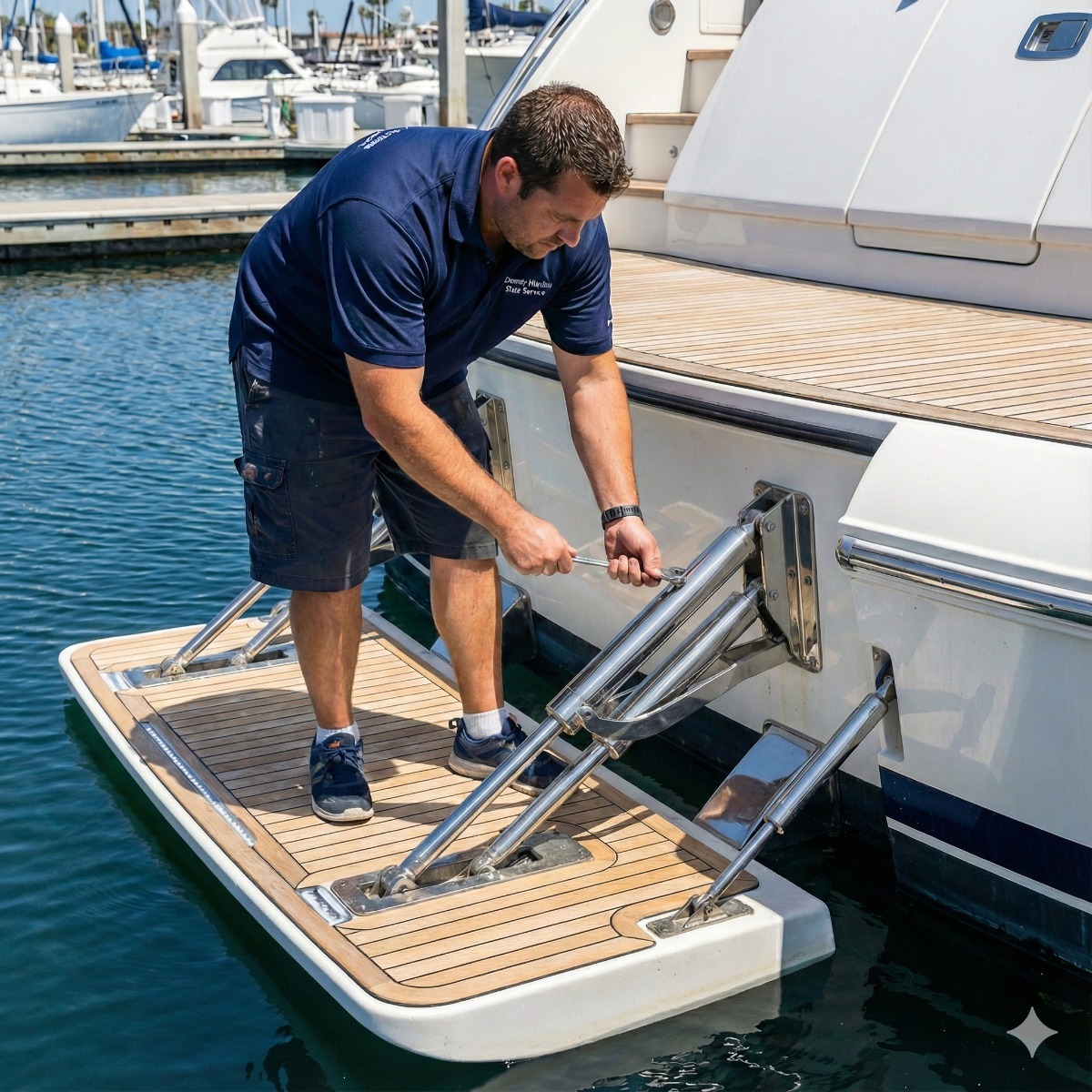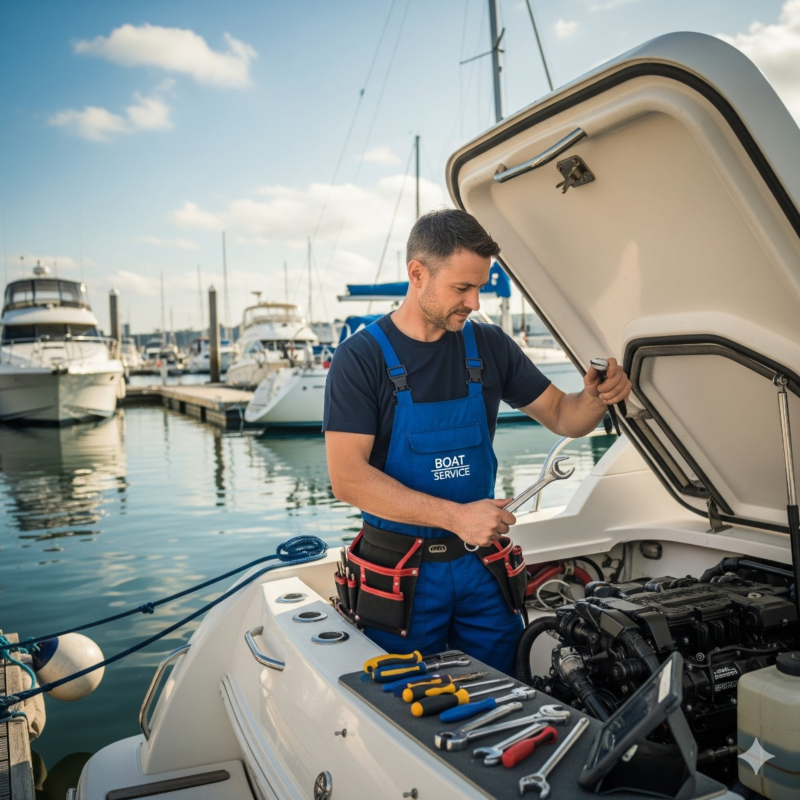
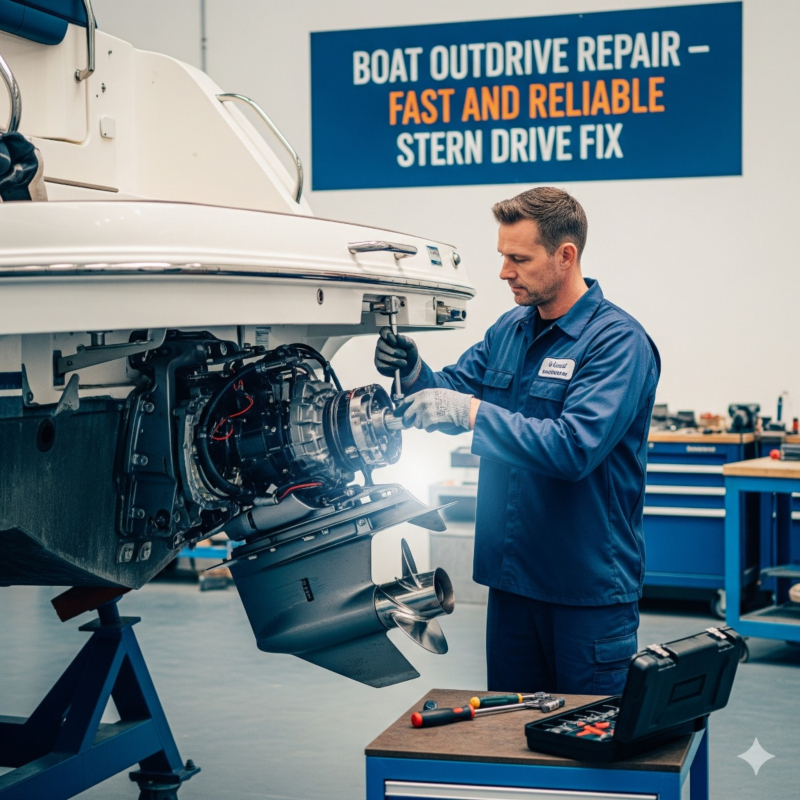
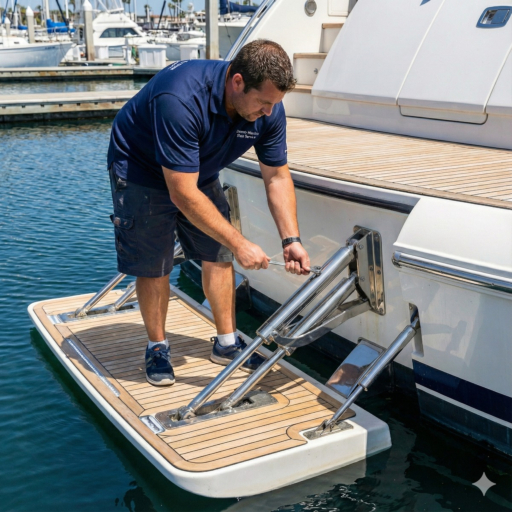
A hydraulic swim platform lift makes launching a tender, boarding from the water and storing toys far easier. It also lives in one of the harshest spots on the boat: at the transom, soaked in salt water, under heavy load and exposed to sun. When a platform starts drifting down, leaking oil or refusing to move, the fault can be hydraulic, electrical or mechanical. Understanding the system helps you spot trouble early and explain it clearly.
How a Hydraulic Platform Works
A small electric motor drives a hydraulic pump, often in a power unit inside the lazarette or engine room. Valves direct fluid through hoses to cylinders at the transom, which raise and lower the platform. Check valves and the cylinders' internal seals hold the platform in position. Controls may be a switch panel, a wireless remote or both. Manufacturers vary, and owners of a TNT hydraulic swim platform, for example, will find specific components and procedures, but the principles are the same.
Cylinder Creep
Cylinder creep means the platform slowly sinks or lifts on its own when it should hold position. Common causes include:
- Worn internal piston seals letting fluid bypass inside the cylinder
- Leaking check valves or control valves in the power unit
- External leaks at rod seals or fittings
- Air in the system making the platform feel soft
Creep is more than an annoyance. A platform carrying a tender that drifts down while underway, or one that shifts unexpectedly with someone standing on it, is a safety concern.
Seals and Rods
Cylinder rods slide through seals at the gland. Wiper seals scrape salt and grit off the rod as it retracts, protecting the pressure seals behind them. When wiper seals fail, crystallized salt and debris are dragged inside, scoring the seals and eventually the rod. Pitted or corroded rods destroy new seals quickly, so a hydraulic cylinder rebuild includes inspecting and, where needed, polishing or replacing the rod along with installing new seals and O-rings.
Hoses and Fittings
Marine hydraulic hoses at the transom flex every time the platform moves and are exposed to sun and salt. Look for cracking, abrasion where hoses rub, swelling and weeping at crimped fittings. A burst hose can drop the platform suddenly. Hose fabrication allows replacement hoses to be built to the correct length and pressure rating with corrosion-resistant fittings, rather than waiting on factory parts.
Electrical and Control Faults
If the platform does not move at all, the problem may be electrical: a tripped breaker, a failed relay or solenoid, a corroded connection at the pump motor, a failed remote or a faulty control board. Low battery voltage can also cause the pump to struggle. A pump that runs but does not move the platform points to low fluid, a failed pump or a valve problem.
Symptoms and Likely Causes
- Slow sinking at rest: internal cylinder seals or check valves
- Oil on the transom or platform: rod seals, hoses or fittings
- Jerky or noisy movement: air in the system or low fluid
- Pump runs, no movement: low fluid, pump or valve fault
- Nothing happens: breaker, relay, remote or wiring
- One side moving faster than the other: uneven cylinder wear or flow restriction
What Owners Can Check
- Fluid level in the power unit reservoir
- Visible leaks on cylinders, hoses and fittings
- Breaker or fuse for the pump motor
- Remote batteries and whether the panel switch also works
- Rod condition: smooth and shiny versus pitted or crusted with salt
Rinse cylinders and rods with fresh water after use, and keep the platform retracted when not in use if the design allows, to reduce rod exposure.
Safety First
Hydraulic platforms are heavy and hold stored energy. Never work under a raised platform unless it is mechanically supported with straps or blocks, and never loosen a hydraulic fitting under pressure. A proper hydraulic lift service always starts by securing the platform before anything is opened.
When to Call a Technician
Creep, visible leaks, a platform that will not move or any sudden drop are reasons to book hydraulic swim platform repair. Tender lift repair is also worth scheduling before the busy summer season. Our hydraulic swim platform and tender lift repair service covers San Pedro, Long Beach and Los Angeles County.
Swim Platform Lift FAQ
Why does my swim platform sink overnight?
Usually internal cylinder seals or check valves are letting fluid bypass. A pressure hold test helps pinpoint which.
Can a leaking cylinder be rebuilt?
In many cases, yes. New seals and a sound or refinished rod can restore it. Severely pitted rods or damaged bores may require replacement.
What fluid does my lift use?
Check the manufacturer's specification. Mixing incompatible fluids can damage seals.