


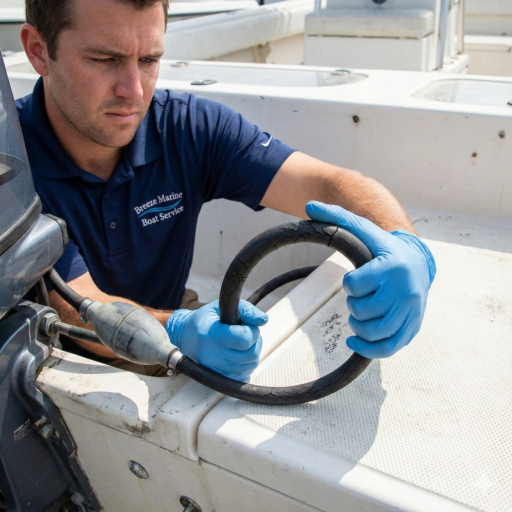
An outboard that starts well, runs for ten or fifteen minutes and then slows down and dies is one of the most common problems on a summer weekend. Before you blame the carburetor or the fuel pump, check the simplest part of the fuel system: the outboard tank cap and the way the tank breathes. A fuel tank has to let air in as fuel is drawn out, and when that path is blocked the engine starves. This guide explains how venting works on older vented tanks and on modern EPA-compliant sealed tanks, and how to track down a venting problem.
Why a fuel tank needs to breathe
As the engine draws fuel, the space left behind must fill with air. If air cannot get in, a vacuum builds inside the tank. The fuel pump has to pull harder and harder until it cannot keep up, and the engine runs lean, loses power and stops. Typical signs of fuel starvation from a venting problem:
- the engine runs normally at first, then loses power after several minutes, often at higher speed;
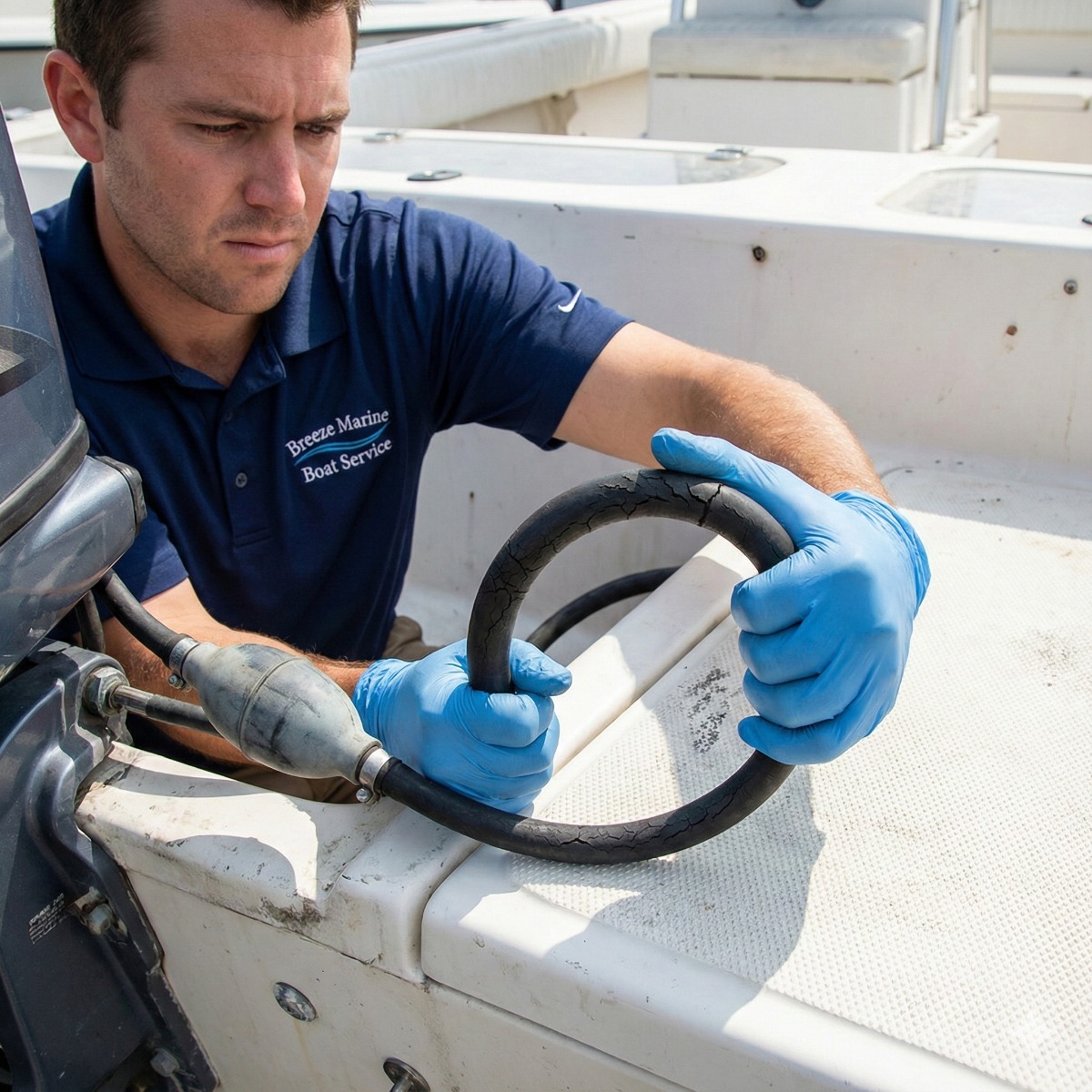
- the primer bulb goes soft or collapses flat;
- a plastic portable fuel tank pulls in at the sides;
- air rushes into the tank when you open the cap, and the engine runs again for a while.
Outboard tank cap types: vented caps vs EPA-compliant sealed tanks
Older portable tanks usually have a manual vent screw on the cap. It must be opened before running the engine and closed for transport, and forgetting to open it is a classic cause of an engine that dies a few minutes after leaving the dock.
Newer portable tanks sold as EPA-compliant are built to limit fuel vapor emissions, so each one is designed as a sealed fuel tank. Instead of an open vent, they typically use valves that stay closed in normal use, hold some pressure as the fuel warms and open automatically to let air in as the engine draws fuel. On many models the fuel connector on the tank is also designed to seal when the hose is disconnected. Details vary by maker, so read the instructions on the tank or in its manual.
Because these tanks are sealed, two things are normal: the tank may swell slightly on a hot day, and you may hear pressure escape when you open the cap. Open it slowly, away from any ignition source, and let a hot tank cool before refilling.
When a sealed tank causes problems
- Stuck or dirty vacuum valve: if the valve that lets air in sticks closed, the tank behaves as if the vent were blocked.
- Wrong or worn outboard tank cap: a replacement cap that does not match the tank, or a cap with a damaged gasket or valve, may not vent correctly or may leak.
- Damaged connector or hose fittings: a leaking connector lets air into the fuel line, which can look like a venting problem.
Do not drill a hole in the cap or remove valves to cure a venting problem. That lets water and dirt in, lets fumes out and defeats the way the tank was designed. Replace the cap or valve with the part specified for that tank.
Built-in tanks: the boat gas tank vent
Boats with a permanently installed tank breathe through a vent line that runs from the tank to a fitting on the hull side or deck. A blocked boat gas tank vent causes the same starvation symptoms as a stuck cap. Common causes include:
- insects, spiders or mud-dauber wasps nesting in the vent screen;
- salt crust or paint closing the screen;
- a vent hose that sags into a low loop where fuel or water collects;
- on many newer boats, a carbon canister in the vent line. Overfilling can push liquid fuel into the vent system, which some manufacturers warn can damage the canister or restrict flow, so follow the builder's fueling instructions.
An anti-siphon valve at the tank outlet can also stick or restrict flow and mimic a venting problem. A vacuum test on the inlet side of the fuel pump helps show whether the restriction is in the fuel tank vent, the anti-siphon valve or a filter.
Vapor lock or venting?
Vapor lock happens when fuel turns to vapor in the fuel line or pump, usually on hot days after hard running or when the engine has been sitting hot. The pump then moves vapor instead of liquid fuel. Restrictions on the suction side make it more likely, because lower pressure lets fuel vaporize more easily, so a blocked vent, a clogged filter, a kinked hose or a failing primer bulb can all contribute. If opening the cap brings the engine back, suspect the venting. If the engine only stalls when hot and restarts after cooling down, vapor lock is a possible cause and the fuel system should be checked.
Quick checks you can do
- On older caps, confirm the manual vent is open, and make sure the cap is the correct one for the tank.
- Squeeze the primer bulb: it should become firm and stay firm. A bulb that stays soft points to an air leak, a failing bulb or a restriction.
- Check the fuel hose for kinks and the connectors for cracked or missing O-rings.
- On built-in tanks, look at the vent fitting and make sure the screen is clear.
- As a diagnostic step only, loosening the cap slightly on a portable tank can show whether venting is the problem. Tighten it again afterwards and fix the cause.
Frequently asked questions: outboard tank cap
Why does my outboard die after running for a few minutes?
A blocked vent or a stuck cap valve is a common cause, along with a failing primer bulb, a clogged filter or a weak fuel pump. If opening the cap brings it back to life, start with the venting.
Is it normal for an EPA tank to hiss when I open it?
Yes. Sealed tanks can hold some pressure when the fuel warms up. Open the cap slowly and away from ignition sources. A tank that swells badly or a cap that will not release pressure should be checked.
Can I use any cap on my portable fuel tank?
No. Use the cap made for that tank model, because threads, gaskets and venting valves differ between tanks and makers.
If these checks do not find the problem, the cause may be further along the fuel run. Our fuel line and primer bulb inspection follows the whole run from the tank fitting to the engine, and our fuel pump diagnostics include a vacuum check that shows whether an anti-siphon valve or fuel tank vent is blocked. Contact us to book a check.