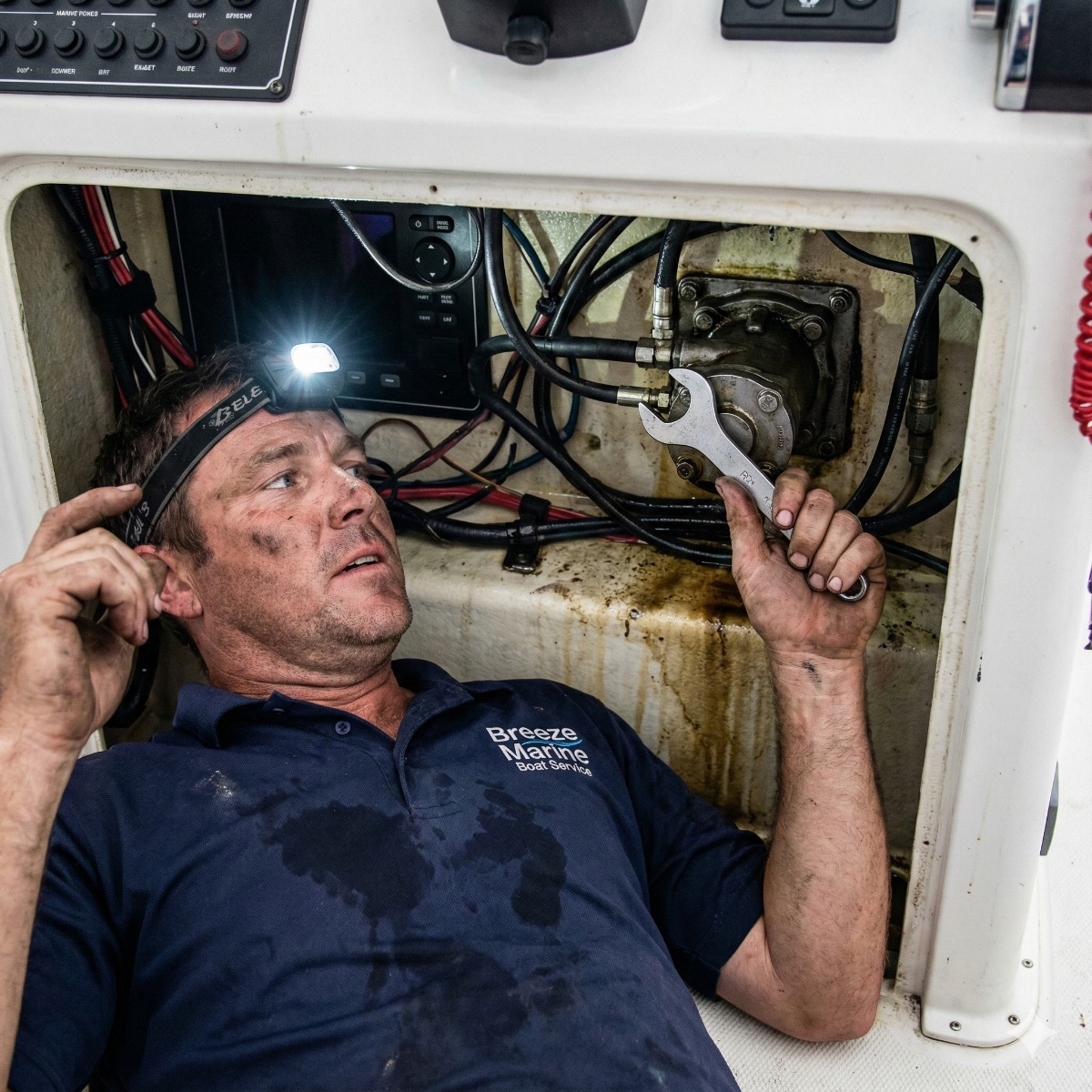
A hydraulic steering system is simple in principle: turning the wheel drives a small pump in the helm, which pushes fluid through two hoses to a cylinder that moves the engine or rudder. Because the system is sealed, it should never lose fluid. When it does, the leak is almost always at a seal, and finding which seal is failing is the first step in any hydraulic steering leak repair.
Warning Signs
- Oil drips or a film under the dash, or a boat steering wheel leaking fluid down the shaft
- Oily residue on the transom, bilge or around the steering ram
- More turns lock to lock than before, or the wheel feels spongy
- The wheel slowly drifts or does not return to the same position for straight ahead
- Clunking or play before the engine responds
- Fluid level dropping in the helm reservoir
Sponginess and extra turns often mean air has entered the system, usually through the same failing seal that is letting fluid out.
Helm Leaks
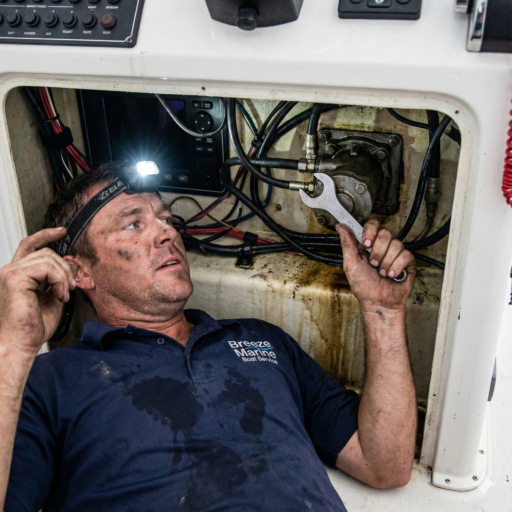
The helm pump has a shaft seal where the steering wheel shaft enters the housing. Over time the seal hardens and wears, and fluid seeps out behind the wheel. You may notice oil on the dash, on your knees or pooling in the console. Helm pumps also have O-rings on the fittings and fill plug. SeaStar is the most common brand of hydraulic helm on recreational boats, which is why owners often search for seastar helm seal replacement. Seal kits are available for most models; the helm is removed, disassembled, cleaned, fitted with new seals and reinstalled, then the system is filled and bled.
Cylinder Leaks
The steering cylinder lives in a harsh place, at the transom, exposed to salt spray, sun and sometimes submersion. The rod slides in and out through seals at each end. A wiper seal keeps grit and salt off the inner pressure seals, and once the wiper fails, the rod picks up contamination that quickly damages the main seals. A leaking steering ram usually shows oil on the rod and dripping from the end glands. Scratches or pitting on the rod will destroy new seals quickly, so rods are inspected carefully during any steering cylinder rebuild.
Hoses and Fittings
Not every leak is a seal. Hoses can chafe where they pass through bulkheads, and fittings can loosen or corrode. Tracing the hose run with a clean rag often finds a weeping fitting that just needs attention. Old hoses that are cracked or swollen should be replaced rather than patched.
What a Reseal Involves
A hydraulic steering reseal follows a sequence:
- Identify the leak source by cleaning everything and watching where fresh fluid appears
- Remove the helm or cylinder and disassemble it on a clean bench
- Inspect bores, rods and shafts for scoring, pitting or corrosion
- Install new seals, O-rings and a new wiper seal, using the correct kit
- Reinstall, fill with the specified hydraulic fluid and bleed all air from the system
- Check turns lock to lock, feel and leak-free operation
Bleeding is critical. Air in the system causes vague, spongy steering and can make the wheel drift. Different systems have specific fill and bleed procedures, and the right fluid must be used, since mixing fluids can damage seals.
What Owners Can Check
- Fluid level at the helm fill plug, following your system's instructions
- Oil on the dash, behind the wheel or along hose runs
- Condition of the cylinder rod: shiny and smooth is good, pitted or scratched is not
- Tightness of cylinder mounting bolts and hose fittings
- Any play between the wheel and the engine movement
Topping up fluid buys time but does not fix anything. If you are adding fluid regularly, a seal is failing.
When to Stop Using the Boat
Steering is a safety system. If the wheel becomes very spongy, the engine does not follow the wheel reliably or you see active dripping rather than slight seepage, do not take the boat out. Losing steering in a crowded harbor or near a breakwater can quickly become dangerous. Professional boat steering system repair is the safe route, and our steering helm and cylinder seal replacement service covers boats in San Pedro, Long Beach and Los Angeles County.
Hydraulic Steering FAQ
Can I just keep topping up the fluid?
Only as a very short-term measure. Leaks usually get worse, air enters the system, and steering becomes unreliable.
Should I reseal or replace the cylinder?
If the rod and bore are smooth, resealing is usually practical. A deeply pitted rod or corroded body may make replacement the better option.
Why is my steering spongy after refilling?
Air is trapped in the system. It needs to be bled properly following the manufacturer's procedure.