
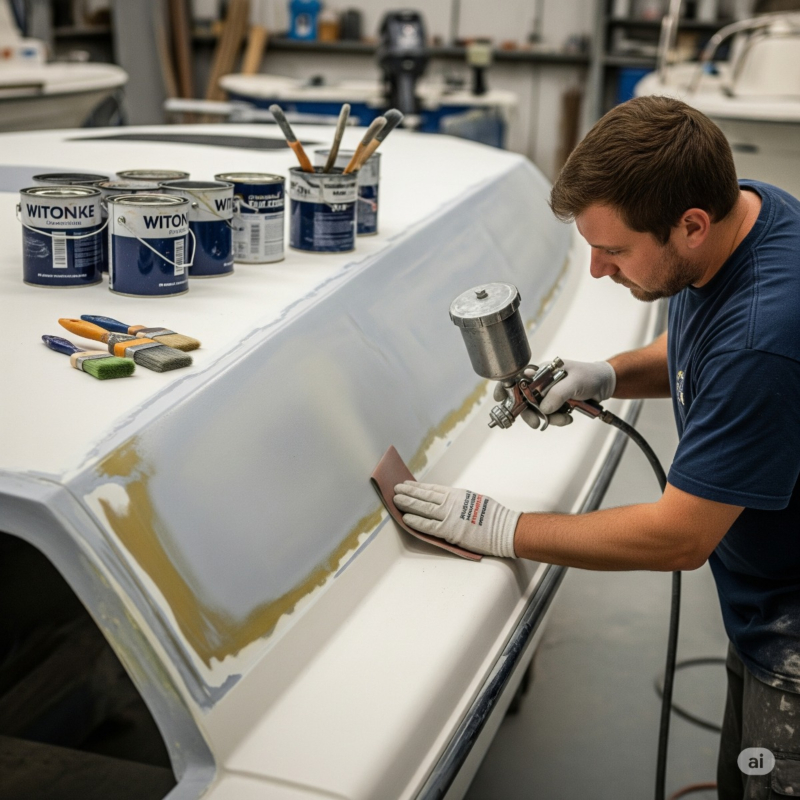
A few chips on the bow, a dull patch on the transom, a scuff where a fender rubbed all season: paint damage on a boat usually starts small. Left alone, a chip lets water, salt and sunlight reach the layers underneath, and a small job turns into a large one. This guide explains why marine paint breaks down, how to tell which finish you have, what a proper repair involves and when a full marine refinish is the smarter choice.
Why boat paint chips, fades and chalks
Marine paint lives in a harsh place. Ultraviolet light breaks down the resin that binds the pigment, which is why dark hulls and horizontal surfaces lose their gloss first. Salt crystals left to dry on the surface act like fine sandpaper every time the boat is wiped down, and constant wet and dry cycles stress the film at edges and seams.
Mechanical wear does the rest. Fenders that trap grit, dock lines rubbing the rail and trailer bunks or rollers all wear through the coating. Chips also appear where the hull flexes or where hardware was bedded without a good seal, letting moisture creep under the edge and lift the paint.
Paint or gelcoat: know what you are fixing
Most production fiberglass boats leave the factory with gelcoat rather than paint. Older boats, custom builds and many larger yachts have a painted topside, often a two-part polyurethane system over primer and fairing compound. Gelcoat is repaired with gelcoat, while a painted surface needs primer and paint compatible with the existing system. If you are not sure, look inside a chip: a thin colored layer over grey or white primer points to paint, and a thicker colored layer directly on fiberglass suggests gelcoat.
Symptoms worth checking on a walk-around
- Chipped boat paint at the bow, rub rail, transom corners and around cleats.
- Chalky residue that comes off on your hand, a sign that the top of the film is breaking down.
- Faded boat paint that looks lighter or patchy next to areas shaded by covers or hardware.
- Blisters or bubbles, which usually mean moisture or poor adhesion under the coating.
- Cracks or crazing in a spider-web pattern, often over a stress point or an old filler repair.
- Peeling edges where the paint lifts like tape instead of staying bonded.
Blisters, cracks that keep coming back and paint that peels in sheets point to a problem underneath that a surface repair will not solve.
What a proper touch-up involves
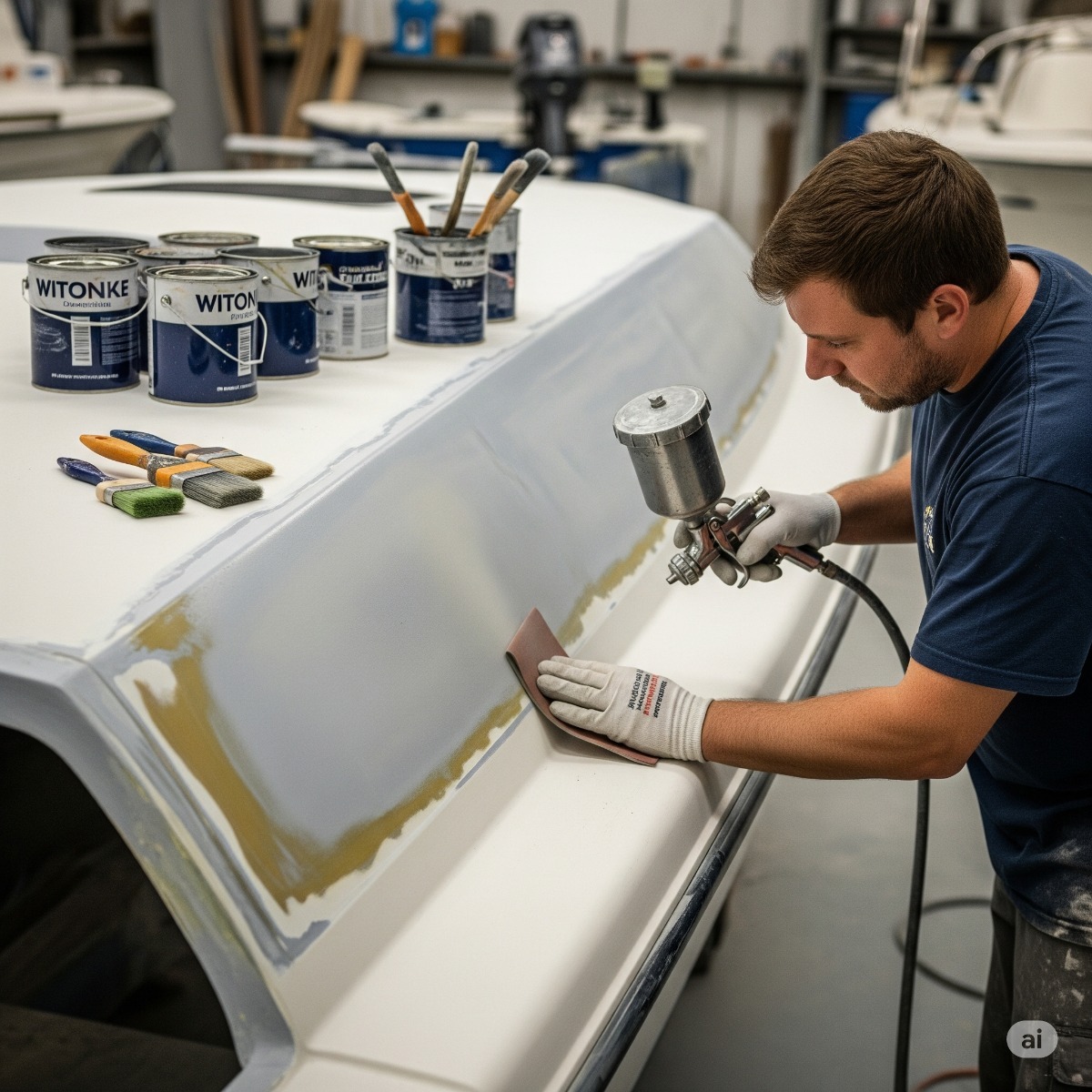
A durable touch-up is mostly preparation. The area is washed to remove salt, then wiped with a solvent to take off wax and silicone, which would stop new paint from bonding. Loose edges are sanded back until the surrounding paint is firmly attached, and the edge is feathered so the repair does not leave a visible step.
Deep chips that reach the laminate are filled with a marine filler, faired smooth and primed. Then comes the color match. Paint that has spent years in the sun rarely looks like its original color code, so the new mix is compared with the weathered surface right next to the repair, not with an area that stayed covered. The touch-up paint goes on in thin coats and, once cured, is blended into the surrounding finish by wet sanding and polishing.
When a marine refinish makes more sense
Spot repairs work when the surrounding coating is sound. When most of a panel is chalky, when repairs start to outnumber the original finish or when paint is peeling across wide areas, refinishing is usually better value than chasing individual defects. The job means sanding the topside paint down to a stable base, fixing any damage underneath, then priming and coating whole panels so color and gloss come out even. It needs suitable temperature, humidity and a dust-free space, so it is planned rather than squeezed into a weekend.
Simple habits that protect the finish
- Rinse the boat with fresh water after every outing so salt does not dry on the surface.
- Use soft, clean fenders and fender covers, and check that they sit where the hull actually meets the dock.
- Keep a cover on the boat when it sits for long periods.
- Seal fresh chips promptly, even with a temporary dab of touch-up paint, to keep water out until a proper repair.
When to call a technician
A careful owner can handle washing, waxing and sealing a small chip. Call a professional when the damage goes through to fiberglass or wood, when you see blisters or cracking, when the color match matters on a visible area such as the hull sides, or when you are not sure which coating the boat has. A technician can check adhesion around the damage, confirm the paint system and decide whether spot work or a wider boat paint restoration is the sensible route. For boats in the Los Angeles and Orange County area, our boat paint repair and touch-up service deals with scratches, chips and blemishes on the finish.
Boat Paint Repair FAQ
Can I use automotive paint for a boat touch-up?
It is not a good idea. Automotive products are not made for constant salt, standing moisture and strong sun on the water, and they may not be compatible with the marine primer or topcoat already on the boat.
Why does my touch-up look darker than the rest of the hull?
The original paint has faded, while the repair is fresh pigment. Matching to the weathered surface rather than the factory code, and blending the edges, reduces the difference. On heavily faded boat paint a perfect blend may not be possible, which is one sign that a larger refinish is due.