A rising temperature gauge or an overheat alarm is one of the most stressful moments on a boat. The good news is that most overheating has a small number of causes, and checking them in a sensible order finds the problem faster and avoids replacing parts that were never at fault. This guide walks through that order and explains when a chemical flush is the right answer.
First: what to do on the water
When the alarm sounds, bring the throttle back to idle, check for water coming from the exhaust or tell-tale and shut down if the temperature keeps climbing. Running an overheating engine risks warped heads, damaged gaskets and, on sterndrives and inboards, melted rubber exhaust components. Let it cool before opening any pressurized cap on a closed cooling system.
The diagnosis order
1. Water intake and sea strainer
Start with the intake. Plastic bags, kelp and marine growth can block the through-hull or pickup. On inboards and sterndrives with a sea strainer, check the basket and lid seal. A lid that does not seal lets the pump suck air, which reduces flow even when the basket looks clean.
2. The raw water impeller
The raw water impeller is a rubber part that wears, hardens and loses vanes, especially if the engine is run dry even briefly. Missing vanes can travel downstream and lodge in the heat exchanger or cooler inlet, so any broken pieces need to be found.
3. Thermostat
A bad thermostat that sticks closed causes overheating, while one stuck open leaves the engine running cold. Thermostats can be tested in hot water with a thermometer against their rated opening temperature.
4. Hoses, belts and the circulation side
On engines with closed cooling, check coolant level, belt tension and the circulation pump. A collapsing hose on the suction side can starve the pump at higher RPM.
5. Scale and restricted passages
If the obvious items check out, the problem is often inside. Salt water leaves deposits as it heats up. Scale buildup lines exhaust manifolds, risers and cooling passages, and clogged heat exchanger tubes cannot transfer heat even with plenty of flow. These engines often run fine at idle and overheat under load.
How thermal imaging helps
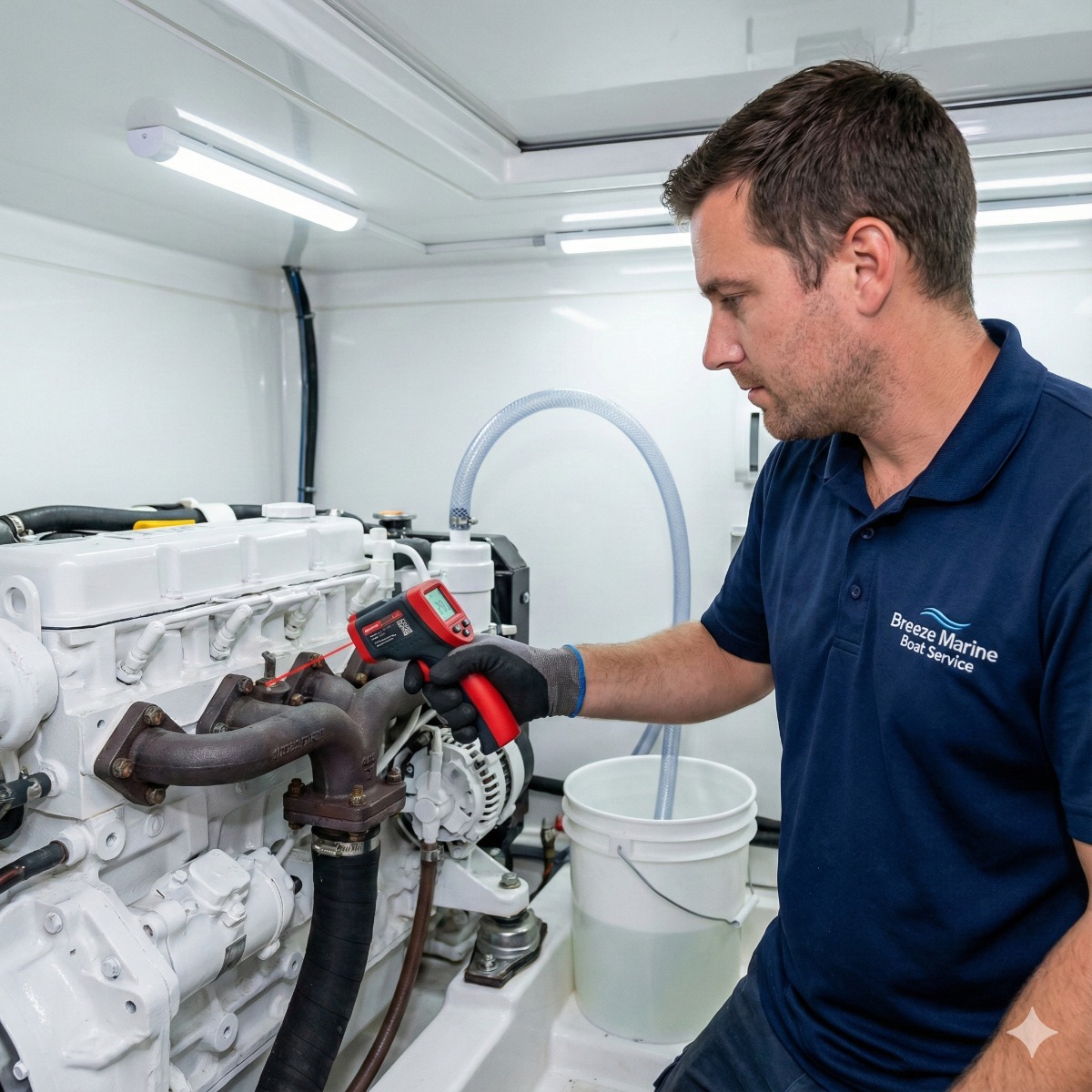
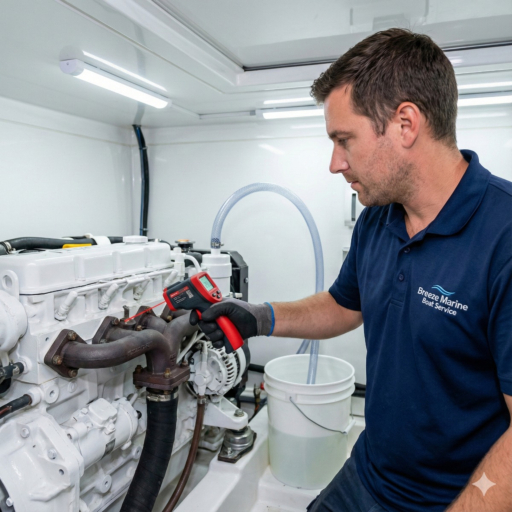
An infrared thermometer or camera lets a technician see temperature differences across the engine while it runs. A manifold much hotter on one side, a heat exchanger with a large temperature difference between inlet and outlet, or a single hot riser points to a specific restriction. Thermal imaging turns a guessing game into a map of where flow is poor.
What a cooling system flush involves
A boat cooling system flush with a descaling solution circulates a marine-safe acid-based cleaner through the raw water side for a period of hours, dissolving calcium and salt deposits without disassembly. Heat exchanger descaling can also be done by removing end caps and rodding tubes, which is more thorough when blockage is severe. After flushing, the system is rinsed, new gaskets or zincs are installed where needed, and the engine is tested under load to confirm temperatures are back to normal.
A flush is not a cure for everything. It will not fix a failed pump, a collapsed hose or a thermostat stuck shut, which is why diagnosis comes first.
Owner prevention
- Check the sea strainer before every trip and after running through weed.
- Replace the impeller on the manufacturer's schedule, not only when it fails.
- Flush outboards and sterndrives with fresh water after use in salt water.
- Watch the temperature gauge during every run so you notice gradual increases.
If the basic checks do not explain your boat engine overheating, arrange a professional engine overheating diagnosis and cooling system flush so flow and temperatures are measured before parts are replaced. Accurate engine overheating diagnosis often saves an impeller or thermostat that was never the problem.
Overheating FAQ
Why does my engine only overheat at higher RPM?
At higher load the engine produces more heat and needs more flow. A worn impeller, partial blockage or scale often keeps up at idle but falls behind at cruising speed.
Is it safe to keep running if the temperature is just a little high?
It is best to reduce speed and investigate. A small rise can become severe quickly if something is failing, and overheating damage is expensive.
How often should the cooling system be descaled?
It depends on use and water temperature. Boats used heavily in warm salt water benefit from periodic inspection, and descaling when temperatures begin creeping up.