

A teak deck is one of the nicest surfaces to have underfoot on a boat, and one of the easiest to wear out through well-meant care. Most teak damage comes from two sources: seams that were left too long after they started failing, and cleaning habits that are far too aggressive for a soft, oily wood. This guide covers how a teak deck is built, how to clean a teak deck without shortening its life, how to spot seam trouble early and when sanding and re-caulking make sense.
How a Teak Deck Is Put Together
Most modern decks are thin teak planks bonded or screwed to a fiberglass or plywood substrate. The gaps between planks are filled with a flexible black or white compound that keeps water out and lets the wood move as it swells and dries. That seam compound is the real waterproof layer. The teak itself is a wear surface, and every millimeter removed by hard scrubbing or sanding is gone for good.
How to Clean a Teak Deck Without Damaging It
Good teak deck cleaning is gentle. Rinse with fresh water, use a mild teak cleaner or soapy water, and scrub lightly across the grain with a soft brush or pad. Scrubbing along the grain digs out the softer wood between the harder growth lines, leaving the surface ridged and fuzzy.
Avoid pressure washers, stiff bristle brushes and harsh two-part cleaners used week after week. They strip wood fibers, open the grain and can soften the seam compound. A freshwater rinse to remove salt, plus an occasional gentle wash, is enough teak deck maintenance for most boats in a Southern California climate.
Early Signs of Seam Failure
Caulk ages faster than teak. Sun, heat and constant flexing make it harden, shrink and lose its grip on the wood. Look for:
- Caulk that has pulled away from the edge of a plank, leaving a hairline gap.
- Seams that stand proud of the deck, split down the middle or crumble to the touch.
- Planks that feel spongy or move when you step on them.
- Water stains, drips or a damp smell below deck after rain or a washdown.
- Missing bungs over screw heads on fastened decks.
A leaking teak deck is more than a cosmetic problem. Water that gets past the seams can follow fastener holes into a cored substrate, where it can cause rot and delamination that are much harder to fix than the deck surface.
What Re-Caulking the Seams Involves
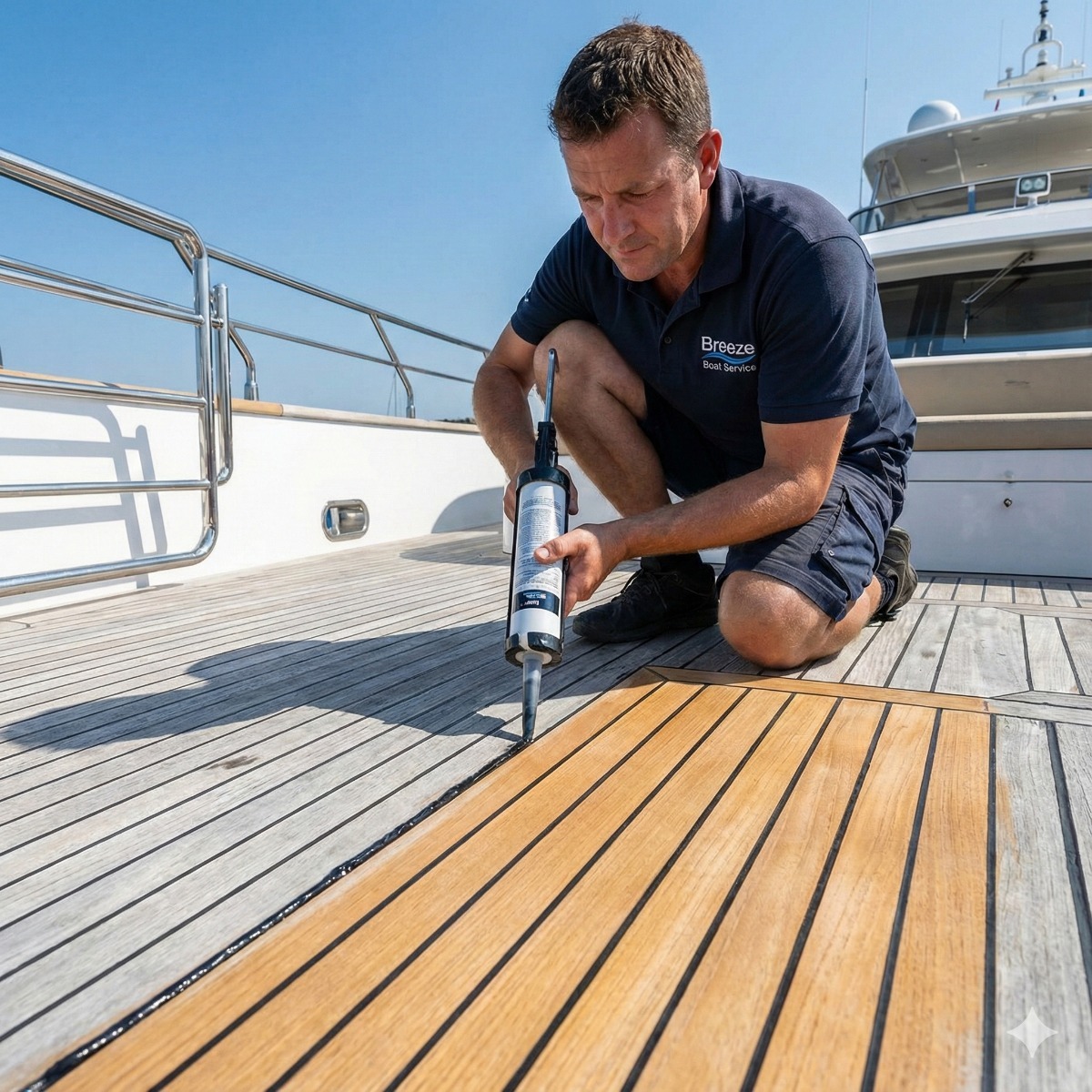
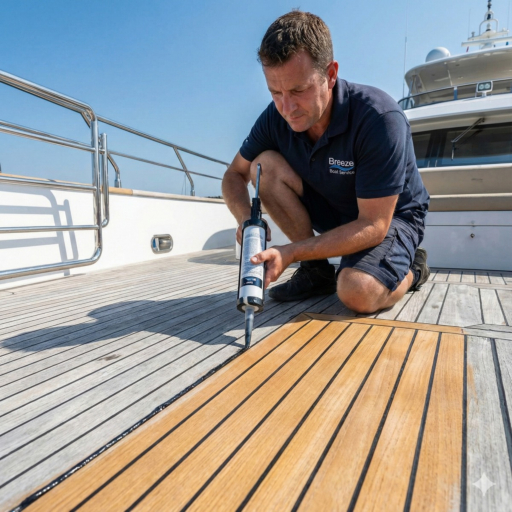
If only a few seams have failed, teak deck seam repair can be limited to cutting out and replacing those lengths. When failure is widespread, full teak deck caulking work is the better path. The old compound is routed out of every seam to a consistent depth, the groove is cleaned and primed, and a bond breaker tape or backing rod goes in the bottom so the new caulk sticks only to the two sides of the plank. New sealant is applied slightly proud of the surface, left to cure fully and then sanded flush. Skipping the bond breaker is one of the most common reasons DIY seam jobs split within a season.
When Sanding Makes Sense
Sanding is the step owners are most tempted to repeat and the one they should ration. Light teak deck sanding removes the grey, oxidized surface and levels new caulk, but it also removes wood that will never grow back. Many decks have only a few millimeters of usable teak above the fasteners or bond line. A sensible approach is to sand only when the deck is being re-caulked or is badly ridged, with a light touch and dust extraction so fine teak dust does not end up in the marina.
If the planks are already thin, with bungs worn down or screw heads close to the surface, sanding may no longer be the right answer, and the deck should be assessed before any more material is removed.
Restoration or Repair: How to Decide
Minor teak deck repair covers a few split seams, a loose bung or a small area of lifted caulk. A full teak deck restoration combines routing, re-caulking and sanding across the whole deck, and it is usually worth it when seams are failing everywhere, the wood is grey and furrowed and water is finding its way below. If you are unsure which category your boat falls into, a hands-on look at the seams and plank thickness settles it. For boats in Long Beach, San Pedro and nearby harbors, you can arrange teak deck sanding and re-caulking with Breeze Marine.
Teak Deck FAQ
Should I oil or varnish my teak deck?
Many teak decking specialists advise against it on walking surfaces, because oil attracts dirt and mildew and a varnished deck becomes slippery when wet. Left bare and cleaned gently, teak weathers to a silver grey that is still sound and grippy.
How long does new seam caulk last?
With good preparation and gentle care, quality seam compound can last many years, but direct sun, heat and harsh cleaners shorten that. Checking the seams each season catches small failures before they turn into a leak.
Can I fix one leaking seam myself?
Small repairs are possible for a careful owner, but the old caulk must be fully removed, the groove kept dry and a bond breaker used. If the leak shows up below deck, have the substrate checked, since water may already have traveled beyond the seam.