

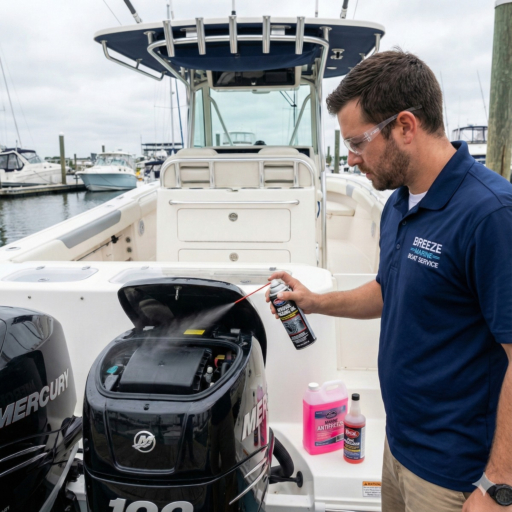
Boat winterization sounds like a chore for owners in snow country. In Southern California the harbors never freeze, yet plenty of boats in Long Beach, Newport Beach and Marina del Rey sit untouched from late fall until spring. That idle stretch is where the trouble starts, and a proper boat lay-up is the set of steps that stops it before it begins.
Why a Boat That Sits Needs Protection
An engine that runs regularly keeps oil on its cylinder walls, moves coolant through its passages and keeps its rubber parts flexible. Take that away for a few months and several slow problems appear at once:
- Fuel degradation. Gasoline oxidizes and loses its lighter parts over time. Ethanol blends also absorb moisture from humid harbor air, and a layer of water and alcohol can settle at the bottom of the tank.
- Internal corrosion. Condensation forms inside the engine as temperatures swing, and unprotected cylinder walls pick up surface rust.
- Contaminated oil. Used oil carries combustion by-products and moisture that turn corrosive while the engine sits.
- Salt and tired rubber. Seawater left in raw water passages keeps working on metal, impeller vanes take a set, and belts and hoses harden.
- Flat batteries. Small loads and self-discharge pull batteries down over a few weeks.
The Main Steps of a Boat Lay-Up
Most routines follow the same order: treat and protect everything while the engine can still be run, then shut the systems down one by one.
Treat the fuel
Add a marine fuel stabilizer at the dose printed on the bottle, then run the engine long enough for treated fuel to reach the filters and the carburetor or injectors. Stabilizer only protects the fuel it actually reaches, so pouring it into the tank and walking away is not enough. Many technicians also store the tank mostly full, which limits the air space where condensation forms while leaving room for expansion.
Do an oil change before storage
An oil change before storage means the engine spends the idle months in clean oil rather than in used oil loaded with acids and moisture. Warm the engine first so the old oil drains more completely, and change the filter at the same time. On sterndrives and outboards, look at the gear lube too: milky lube points to water getting past a seal.
Fog the engine
Fogging oil is sprayed into the air intake of a running engine, or into each cylinder through the spark plug holes, to leave a film on cylinder walls, valves and rings that holds off rust. Follow the engine maker's procedure, since many fuel injected engines have their own fogging instructions.
Flush the cooling system
For boats kept in salt water, flushing the raw water side with fresh water removes salt that would otherwise sit in the passages for months. Some owners follow the flush with a corrosion inhibitor; in local harbors the point is corrosion protection rather than freeze protection.
Look after the batteries
Charge the batteries fully, then either disconnect them or connect a battery tender that holds them at the right voltage without overcharging. A battery tender needs shore power to do its job; a disconnected battery should still be checked and recharged every few weeks.
Everything else
- Pump out holding tanks and treat or drain fresh water tanks.
- Leave lockers and hatches cracked open to keep mildew down.
- Block exhaust outlets and intakes against rodents and birds, and leave a note at the helm so nobody starts the engine with them blocked.
What You Can Check Yourself
Even if a technician does the full job, a few checks during the idle months catch problems early:
- Battery voltage, and whether the charger or tender is still on.
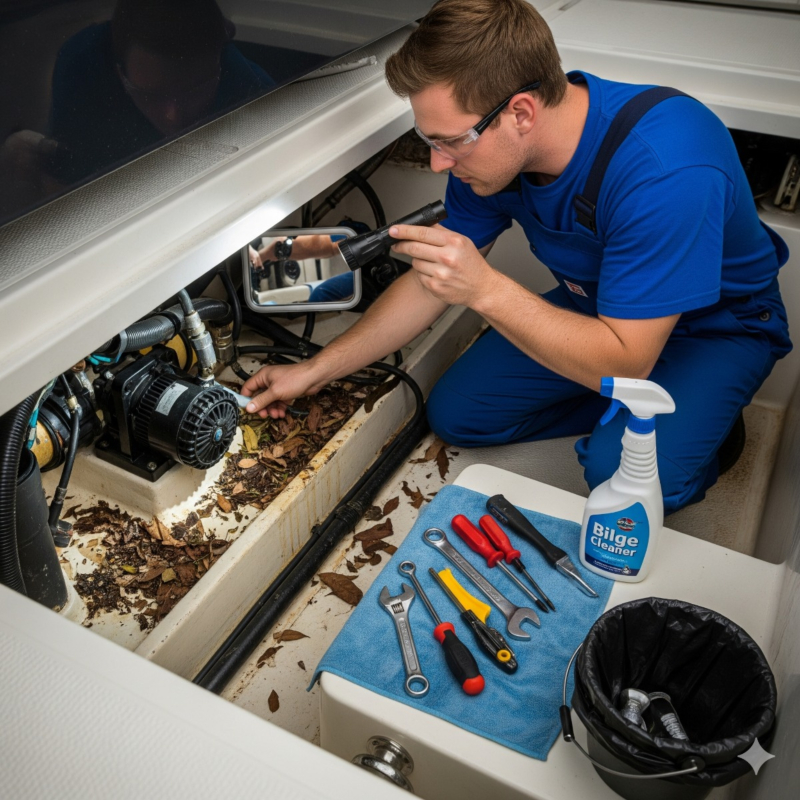
- Water in the bilge after winter rain, and whether the bilge pump still cycles.
- Droppings, chewed wiring or nesting material in the engine space.
- New stains or drips under the engine or around the drive.
When to Call a Technician
A do-it-yourself lay-up is realistic on a simple outboard boat if you are comfortable handling fuel, oil and batteries. It gets harder on twin inboards, diesels, boats with generators, or engines that need special fogging and flushing steps. Call a technician if the engine smokes, overheats or runs rough before storage, if you find milky oil or gear lube, or if you are unsure which method your engine needs. Our boat winterization and spring commissioning service covers fuel stabilizer treatment, fogging, battery care and a cooling flush at lay-up, then a check of batteries, impellers and signs of rodents before the engine is run again and checked for leaks.
Back in the Water in Spring
A careful lay-up makes spring commissioning simpler, but it does not replace it. Before the first trip, belts, hoses and impellers need a look, and the engine should be brought to temperature at the dock while you watch for leaks and steady cooling water flow. Keep notes from the lay-up aboard, including anything that was blocked or disconnected.
Boat Winterization FAQ
Do I really need to winterize a boat in Southern California?
If it will sit for more than a couple of months, yes. Freezing is rarely the issue here; stale fuel, rust inside the engine, salt in the cooling system and drained batteries are. Boats used year-round need regular running instead of a full lay-up.
Is fuel stabilizer enough on its own?
No. Stabilizer slows fuel degradation, but it does not remove water already in the tank, protect cylinder walls or keep batteries charged. It works best as one step of a complete boat lay-up.
When should the lay-up be done?
Most owners lay up at the end of their boating season, often in late fall, and plan spring commissioning a few weeks before the first trip they have in mind.


