
A healthy marine diesel under load leaves little more than a light haze. When the exhaust turns white, blue or black, the engine is telling you something specific, and the color is one of the most useful clues a technician has. If you landed here after searching long beach ca boat repair diesel because your engine started smoking, this guide explains what each color usually means, what can be checked with the boat still in its slip, and when the evidence points toward reconditioning or an overhaul.
Before you judge the color
Smoke is easy to misread. Wet exhaust systems mix raw water with the exhaust gases, so steam is normal, especially on a cool morning in the harbor. A few habits make your observations more reliable:
- Note whether the smoke appears at cold start, at idle once warm, or only under load.
- Look at the water in the exhaust. A sheen, soot or oily film is worth photographing.
- Check whether the smoke clears after a few minutes or stays constant.
- Smell it. Coolant, raw fuel and burning oil each have a distinct odor.
White smoke: fuel, water or temperature
White smoke is either unburned fuel or water vapor. On a cold start, a brief puff of white smoke that clears as the engine warms is often normal, especially on older engines. Persistent white smoke is different.
Common causes of white smoke
- Unburned fuel: worn or dripping injectors, low compression or incorrect injection timing leave fuel that does not burn fully. It smells sharp and stings the eyes.
- Coolant in the cylinders: a failing head gasket, cracked head or leaking exhaust manifold or riser can let coolant or raw water into the combustion chamber. It smells sweet and may leave coolant levels dropping.
- Water in the fuel: contaminated fuel causes rough running and white smoke. The fuel water separator bowl often shows it.
Blue smoke: the engine is burning oil
Blue or blue-gray smoke means lubricating oil is reaching the combustion chamber or the exhaust. It often shows most at startup or after a long idle, then on acceleration.
- Worn piston rings or cylinder liners: oil slips past and burns, often with rising oil consumption and crankcase blow-by.
- Worn valve guides or seals: oil runs down the valve stems, typically worst after idling.
- Turbocharger seals: a worn turbo can push oil into the intake or exhaust side.
- Overfilled crankcase: the simplest cause, and worth checking first.
Black smoke: too much fuel for the air
Black smoke is soot from fuel that did not have enough air to burn. On boats, the cause is often outside the engine itself.
- Air starvation: a clogged air filter, restricted engine room ventilation or a failing turbo.
- Overload: a fouled bottom, heavy growth on the running gear or a propeller with too much pitch forces the engine to work beyond its design.
- Fuel delivery: worn injectors spraying poorly, or injection pump problems.
- Clogged aftercooler: hot intake air carries less oxygen.
If black smoke appeared gradually over a season, check the hull and propeller before assuming the engine is worn. A diver cleaning often makes a visible difference.
What can be checked at the slip
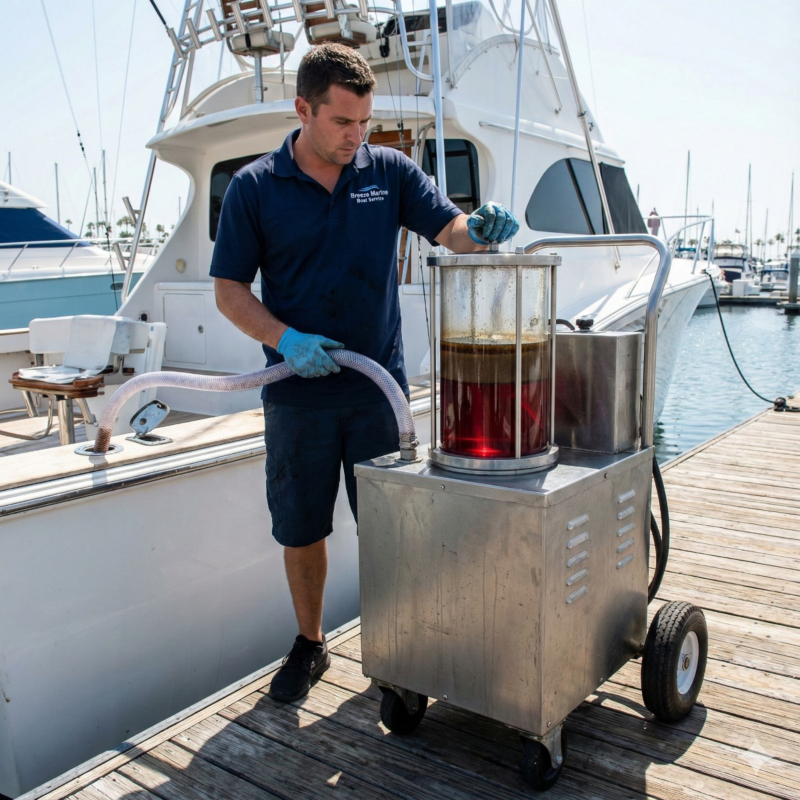
Much of the diagnosis happens with the boat in the water. When owners look for a mobile boat repair near me option, these are the checks that usually come first:
- Air filter, intake path and engine room ventilation.
- Oil level and condition, plus signs of coolant or fuel in the oil.
- Coolant level, pressure test of the cooling system and exhaust elbow inspection.
- Fuel filters and the water separator bowl.
- Crankcase blow-by at the breather.
- A compression test to compare cylinders.
- Injector testing where the engine allows removal at the dock.
An oil analysis sample can add useful information about wear metals and coolant contamination over time.
When the signs point to an overhaul
A single smoke color rarely justifies major work on its own. The case for an overhaul builds when several findings line up: low or uneven compression, heavy blow-by, rising oil consumption, persistent blue smoke once warm, and oil analysis showing wear. At that point, patching one component usually buys little time.
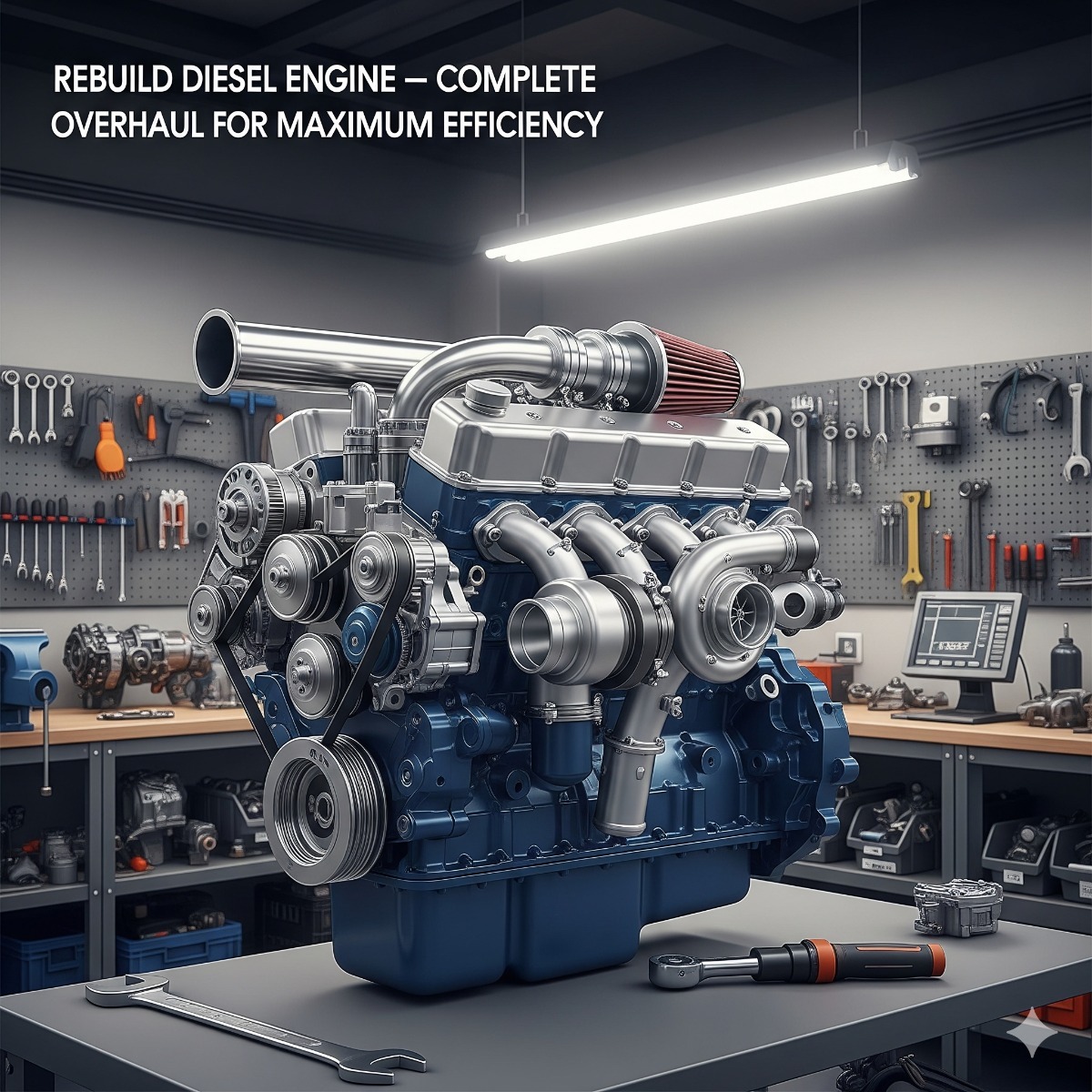
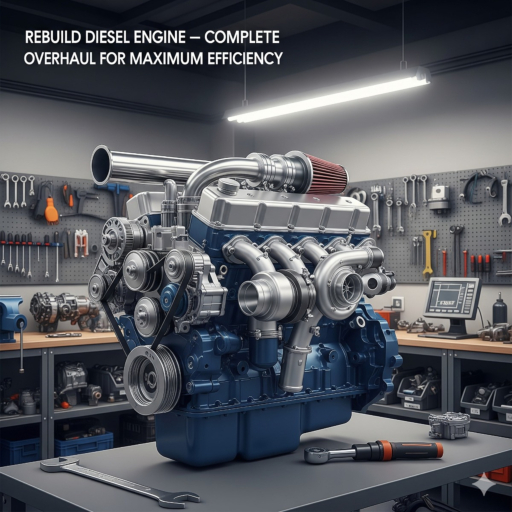
Depending on the engine and how it is installed, on-site marine engine reconditioning can cover work such as injectors, top-end repair or an in-frame rebuild, while other jobs are better done with the engine removed. Our page on a complete marine diesel engine overhaul explains what a full rebuild involves.
Owners comparing engineering marine services should look for someone who explains the test results, not just the conclusion. A clear record of compression numbers, oil findings and what was ruled out helps you decide between repair, rebuild or repower.
Booking diesel diagnosis in Long Beach
If your search was long beach ca boat repair diesel or boat diesel repair long beach ca, Breeze Marine Boat Service LLC works at slips in Long Beach, San Pedro and across LA County. Before the visit, note the smoke color, when it appears, the engine hours and any recent service. Photos or a short video of the exhaust at startup and under load are very helpful.
Diesel smoke FAQ
Is some white smoke normal on a cold marine diesel?
A brief white haze at cold start that clears as the engine warms is common. Smoke that persists once the engine is at operating temperature deserves a closer look.
Can black smoke be caused by the hull rather than the engine?
Yes. A fouled bottom or damaged propeller overloads the engine, so it burns more fuel than it can use cleanly. Check the running gear and hull first.
Does blue smoke always mean a rebuild?
No. An overfilled crankcase or worn valve seals can cause it. A compression test and blow-by check help separate minor fixes from internal wear.