Many boats leave the factory with an alternator sized for the engine's own needs plus a few lights and a depth sounder. Years later the same boat may carry a large stereo with amplifiers, a refrigerator, a chartplotter, radar and an electric anchor windlass. When the batteries never seem to be full, the question is whether the alternator is failing or whether it was simply never big enough for the job.
Failing alternator or undersized alternator?
The two problems look similar from the helm, but the clues differ. A failing unit often shows a charging voltage that is lower than it used to be, a whining or grinding noise, a hot smell or a charge warning light. An undersized but healthy unit shows normal voltage at the batteries after a long run, yet the house bank keeps drifting lower over a weekend of use.
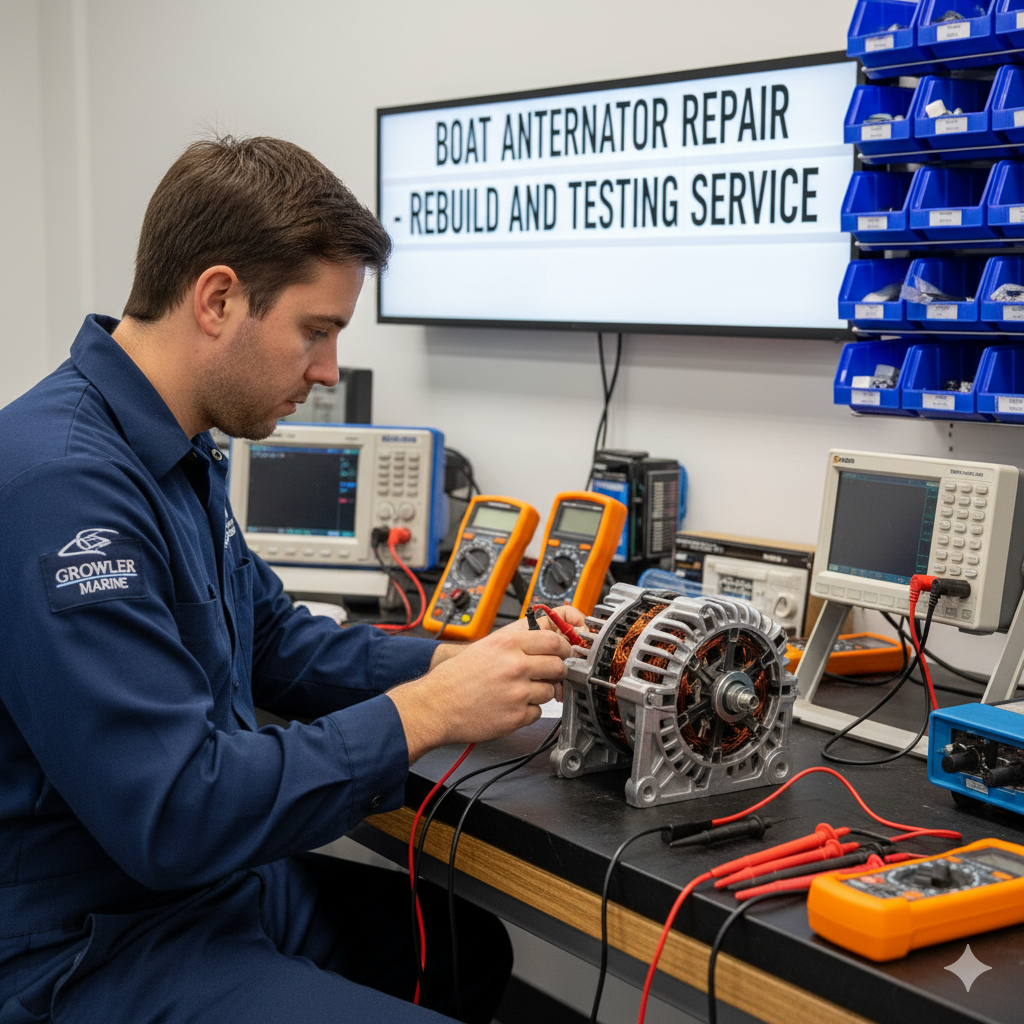
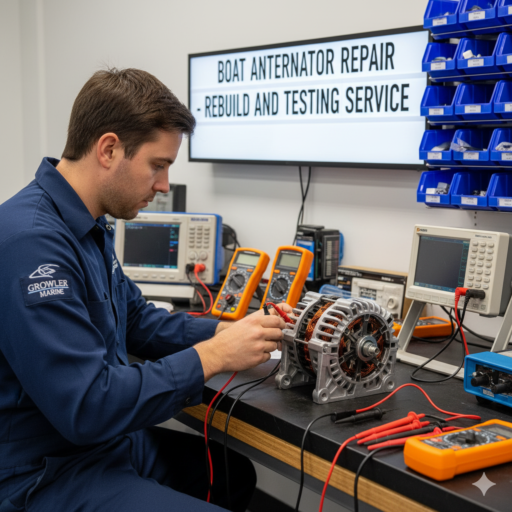
The cleanest way to separate the two is an alternator bench test. With the unit off the engine and spinning on a test stand, a technician can measure voltage and amperage at different speeds and under load. If a nominal 70-amp unit only produces 40 amps hot, it needs attention. If it meets its rating, the problem is capacity, not health.
Estimating how much charging you need
You do not need to be an electrician to get a rough picture. List your main loads and estimate how many hours each runs per day.
- Refrigerator: often 3 to 6 amps while running, cycling on and off through the day.
- Stereo with amplifiers: can draw 20 amps or more at high volume.
- Chartplotter and radar: a few amps each, more for open-array radar.
- Livewell pumps, washdown and downriggers: short bursts of high current.
Multiply each load by its hours of use to get amp-hours per day, then compare that with how long the engine typically runs. A boat that motors for one hour and anchors for eight has a very different charging picture from one that cruises all day. If daily consumption is far higher than what the alternator can replace in the available run time, a larger alternator, a better regulator or additional charging sources such as solar or shore power charging are worth considering.
Why a 60-amp alternator underdelivers
A 60-amp alternator rarely produces 60 amps in real use. Ratings are measured cold at high shaft speed. Hot engine rooms, low idle speeds and small belt pulleys all reduce output, and many internally regulated units taper off long before batteries reach full charge. That is why boats that spend a lot of time at idle or trolling speed often struggle, even with a healthy alternator.
What a high-output upgrade involves
Installing a high-output alternator is more than swapping one unit for another. A proper upgrade looks at the whole charging path:
- Mounting and belts: larger alternators need solid brackets and often a serpentine or dual belt setup to transmit the extra load without slipping.
- Wiring: the output cable and ground must be sized for the new current, with proper fusing close to the source.
- Regulation: an external, multi-stage voltage regulator with a battery temperature sensor lets the alternator deliver high current safely and taper correctly for AGM, flooded or lithium banks.
- Heat: high-output units run hot, so ventilation in the engine compartment matters.
- Engine load: a large alternator can take several horsepower at full output, which small engines notice.
Sometimes the better answer is a rebuild with upgraded internals. In some cases, a new stator and rotor can raise output while keeping the original mount and wiring, which is simpler than a complete conversion.
Rebuild, repair or replace?
When a bench test shows a tired unit, a marine alternator rebuild replaces the wear items: brushes, slip rings, bearings, the regulator and the rectifier diodes that convert AC to DC. Marine rebuilds also address corrosion inside the case and protect windings against salt air. A good boat alternator repair should end with a load test while the unit is hot, since that is where weak diodes and marginal windings show up. If you are searching for marine alternator repair near me, ask whether the unit will be bench tested before and after the work.
Automotive alternators should not be used as replacements on gasoline inboards and sterndrives. Marine units are ignition protected to reduce the risk of sparks in an engine room where fuel vapors can collect.
What owners can check
- Measure battery voltage with the engine off after resting (about 12.6 V for a charged lead-acid battery), then at fast idle. You should see roughly 13.8 to 14.6 V while charging.
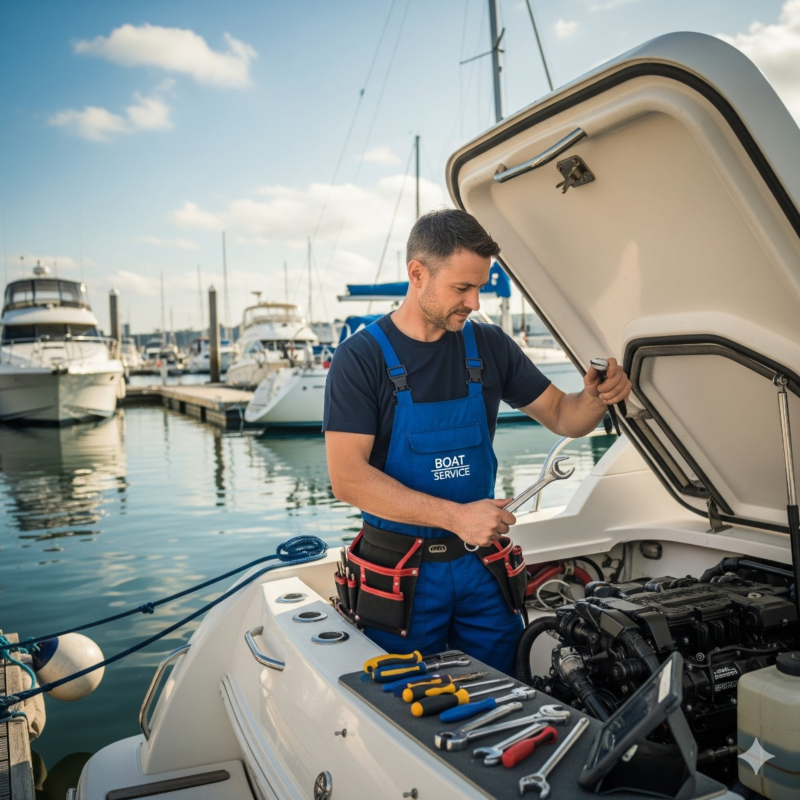
- Inspect the belt for glazing, cracks and correct tension.
- Look for loose, corroded or discolored terminals on the alternator, battery and ground.
- Listen for bearing noise with the engine running.
If readings are low or the alternator is noisy, it is time for professional marine alternator repair. You can see how we test and rebuild units on our marine alternator rebuild and high-output upgrade page.
Alternator upgrade FAQ
Will a bigger alternator damage my batteries?
Not if it is regulated correctly. Problems come from poor regulation, not size. A multi-stage regulator set for your battery chemistry keeps charging safe.
Can I add a high-output unit to an outboard?
Most outboards have fixed charging systems built into the flywheel, so upgrades are limited. Solar, a DC-DC charger or a generator are common alternatives.
Do lithium batteries change the picture?
Yes. Lithium banks accept current very fast and can overheat an alternator that is not designed or regulated for sustained high output.