
Switching a house bank to lithium iron phosphate (LiFePO4) batteries is one of the most popular upgrades on cruising boats. The batteries are lighter, deliver more usable capacity and accept charge far faster than lead-acid. That last point is exactly where many owners run into trouble: the engine alternator that happily topped up flooded or AGM batteries for years is suddenly asked to run flat out for an hour or more. This guide explains why stock alternators struggle, what a proper charging upgrade involves, and which warning signs to look for.
Why Lithium Changes the Charging Picture
Lead-acid batteries naturally limit how much current they accept as they fill, so an alternator runs at full output only for a short time. Lithium banks have very low internal resistance and will accept nearly all the current an alternator can produce until they are almost full. A standard internally regulated alternator, designed to cool itself between brief bursts of work, can overheat when it runs at maximum output for long periods. Diodes fail, windings cook and, in the worst cases, wiring overheats.
There is a second risk. A lithium battery management system (BMS) can disconnect the bank to protect the cells. If that happens while the alternator is charging hard, the sudden load dump can create a voltage spike that damages the alternator's diodes and sensitive electronics elsewhere on the boat.
What an Alternator Upgrade Involves
A high-output marine alternator
A high-output marine alternator is designed for sustained current at engine-room temperatures. It is ignition protected for gasoline engine spaces, uses heavier windings and bearings, and is sized to both the bank and the engine's ability to drive it. Bigger is not always better: a very large alternator can overload a small engine or its belt drive, especially at idle.
An external regulator
An external regulator gives precise control over lithium battery charging. It uses temperature sensors on the alternator and battery to reduce output before anything overheats, lets you program charge voltages to match the battery maker's recommendations, and on better systems communicates with the BMS so the alternator can be shut down before the BMS disconnects the bank. Many regulators also offer a reduced-output mode for long motoring days, which protects the alternator and the belt.
Belts and pulleys
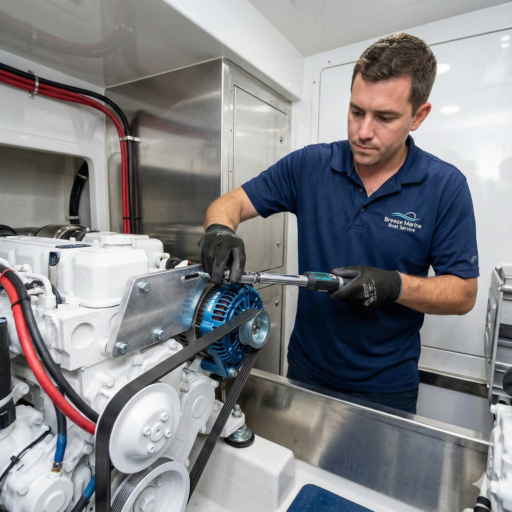
A high-output alternator asks a lot of the belt drive. Standard single V-belts often slip, squeal and shed black dust under heavy load. A serpentine pulley kit converts the drive to a multi-rib serpentine belt with far more contact area and grip. Each marine pulley on the crank and alternator must be correctly aligned and sized for the desired alternator speed, and the brackets must be rigid enough to hold tension without flexing.
Wiring and protection
Output cables must be sized for full current with minimal voltage drop, protected with an appropriate fuse close to the battery, and routed away from exhaust heat. On some boats a battery-to-battery (DC-DC) charger is a sensible alternative, especially where the engine alternator must also charge a lead-acid start battery.
Warning Signs of an Overworked Alternator
- A burning smell or discolored paint on the alternator case
- Charging current that drops off sharply after a few minutes of running
- Belt squeal, black dust around the engine or frequent belt replacement
- Flickering lights or electronics resetting while motoring
- An alternator failure soon after lithium batteries were installed
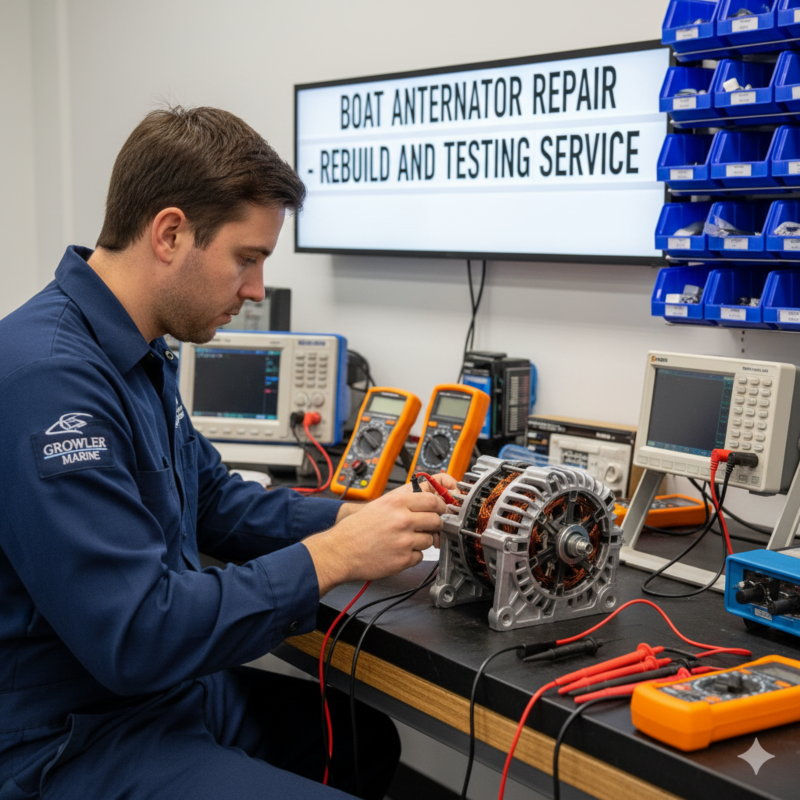
If you see these symptoms, avoid long engine runs until the system has been checked. Marine alternator repair can restore a damaged unit, but without addressing the cause the same failure is likely to repeat.
Planning the Upgrade
Before choosing parts, work out your daily energy use, the size of your lithium banks, how many hours you typically motor and how much alternator current the engine can realistically support. A product sold as a lithium battery conversion kit usually includes batteries, a BMS and sometimes a DC-DC charger, but it rarely addresses the alternator, regulator and belt drive, so plan those separately. Also consider how solar, shore power and a generator fit into the overall charging picture, since they share the same bank and settings.
When to Call a Technician
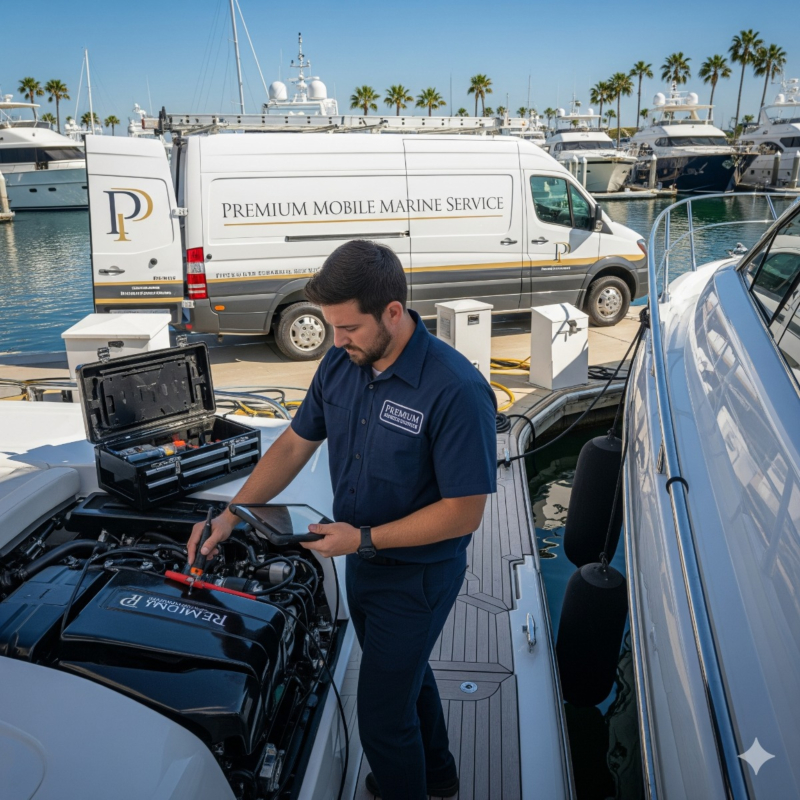
A charging upgrade touches the engine, the electrical system and the batteries at the same time, and mistakes can be expensive or dangerous. A technician can measure actual alternator output and temperature, check belt alignment and bracket strength, and program the regulator to the battery maker's settings. If your boat is moving to lithium, our high-output alternator upgrade service treats the alternator, regulator, pulleys and wiring as one system.
Lithium Charging FAQ
Can I keep my stock alternator with lithium batteries?
Sometimes, if the bank is small, motoring times are short and a DC-DC charger limits the current. For larger banks or long motoring days, an alternator and regulator designed for sustained output is the safer choice.
Do I need to change the start battery too?
Not necessarily. Many boats keep a lead-acid start battery and charge the lithium house bank through a smart regulator or a DC-DC charger.
How do I know the alternator is running too hot?
Temperature sensors on a smart regulator show it directly. Without one, an infrared thermometer after a long run gives a rough check; compare the reading with the maker's limits.


