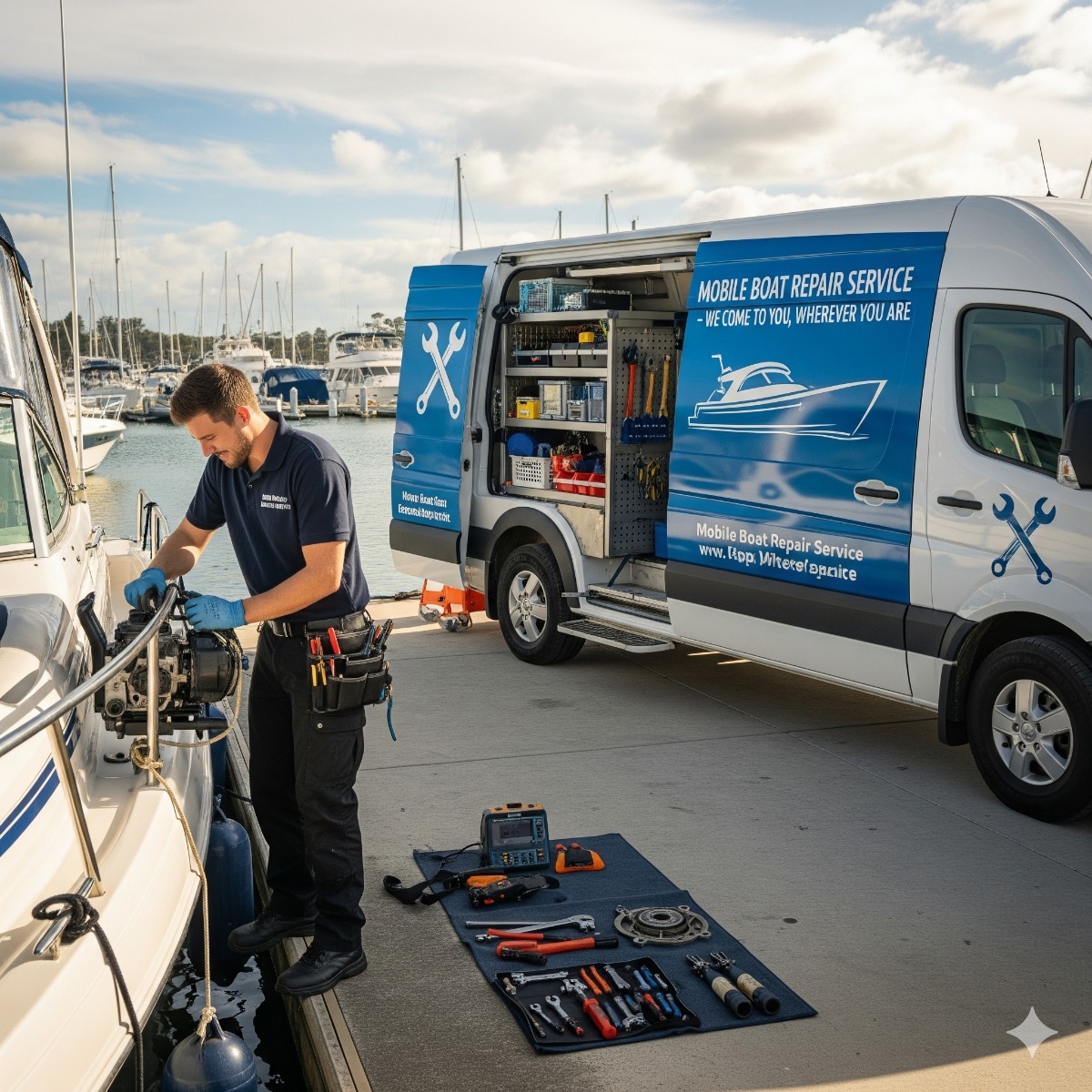
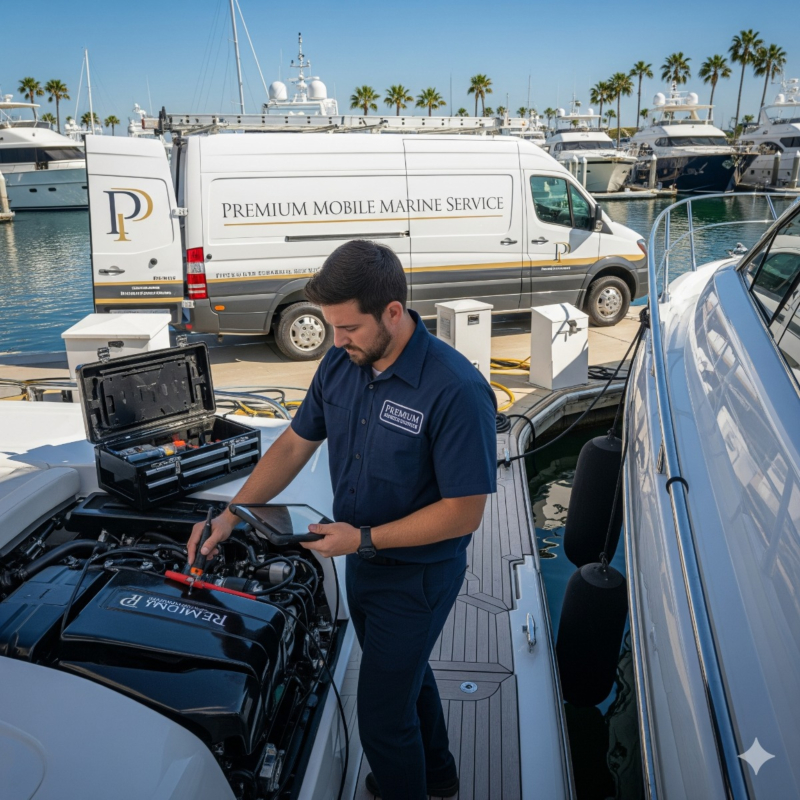
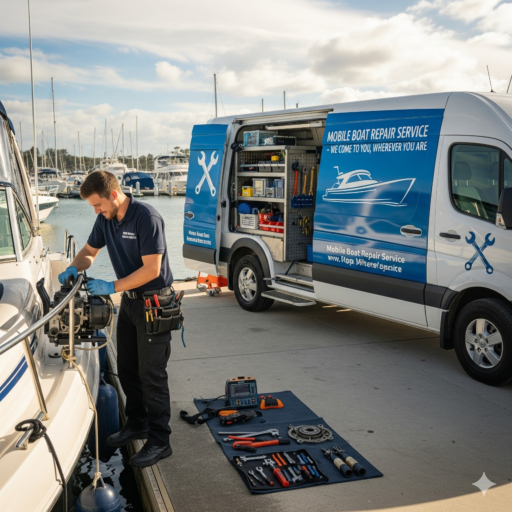
Moving a boat to a repair yard means trailering or running it across the harbor, waiting for a slot and then waiting again for it to come back. For many jobs none of that is necessary. A mobile technician carries tools, diagnostic equipment and common parts to the slip, and a large share of everyday repairs can be finished right where the boat lives. Knowing which jobs suit a dockside visit, and how to prepare for one, helps you get the most out of it.
Jobs That Usually Suit a Dockside Visit
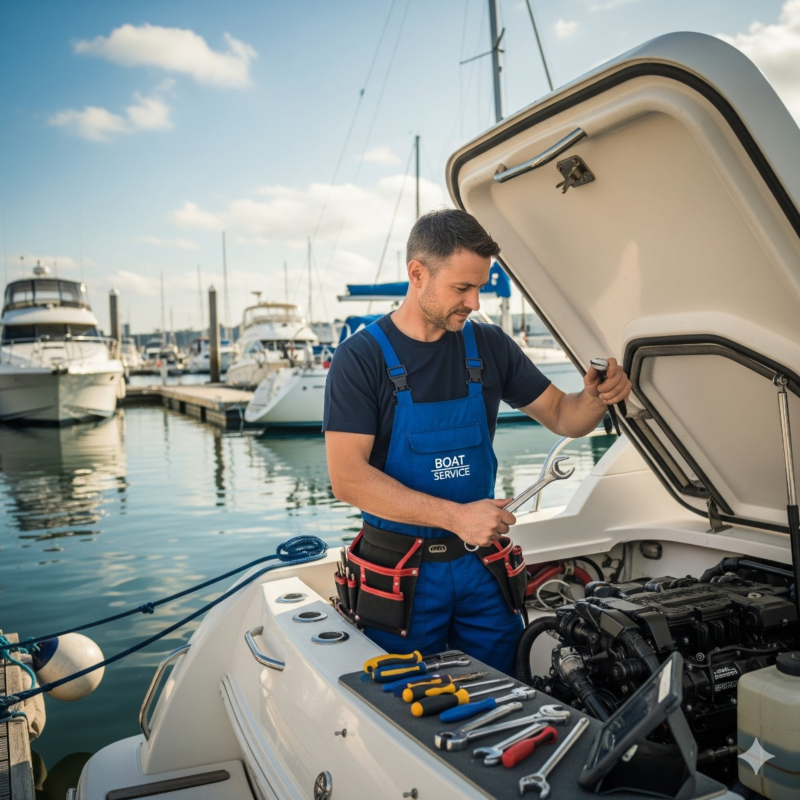
A mobile marine mechanic can reach almost everything above the waterline and most of what is inside the engine compartment. Typical work done at the slip includes:
- Engine diagnostics: no-start, rough running, alarms and fault codes, checked with the boat in its berth.
- Routine service: oil and filter changes, fuel filters and water separators, belts, raw water impellers and zinc anodes on the engine.
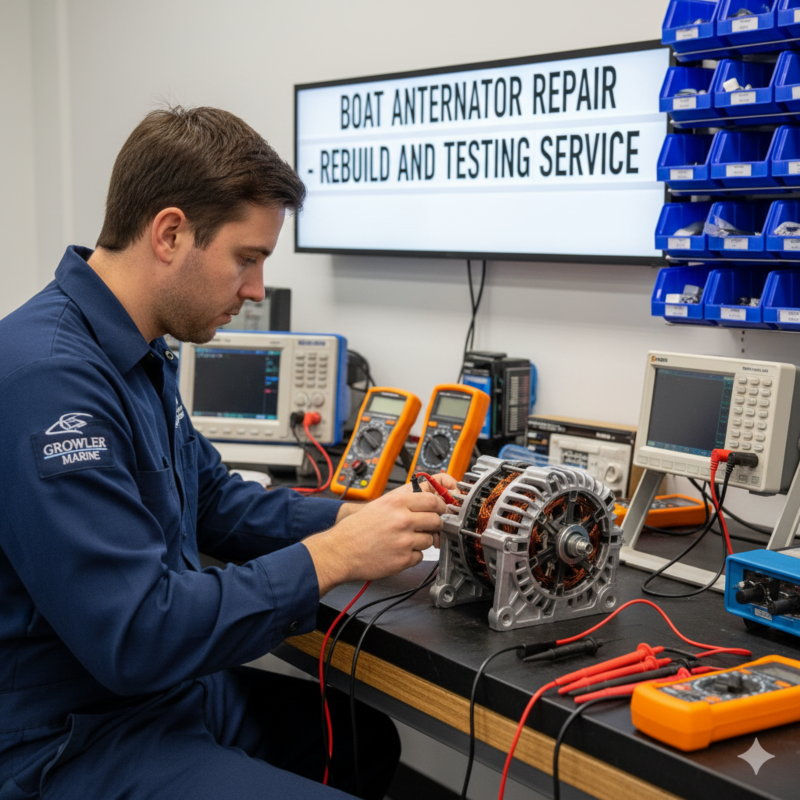
- Electrical work: batteries, charging systems, bilge pumps and float switches, navigation lights, and tracing shorts or parasitic drains.
- Fuel and cooling: fuel pumps, hoses, primer bulbs, thermostats and water pumps.
- Controls: shift and throttle cables, steering cables and hydraulic helm leaks.
- Outboards: mobile outboard motor repair covers most tune-up, fuel and ignition work, and a lower unit oil change if the engine can be tilted clear of the water.
Jobs That Usually Need a Haul Out
Some work simply cannot be done safely or properly while the boat is floating. Plan for a haul out when the job involves:
- Bottom painting, blister repair or structural hull damage below the waterline.
- Replacing thru-hull fittings, seacocks or cutless bearings.
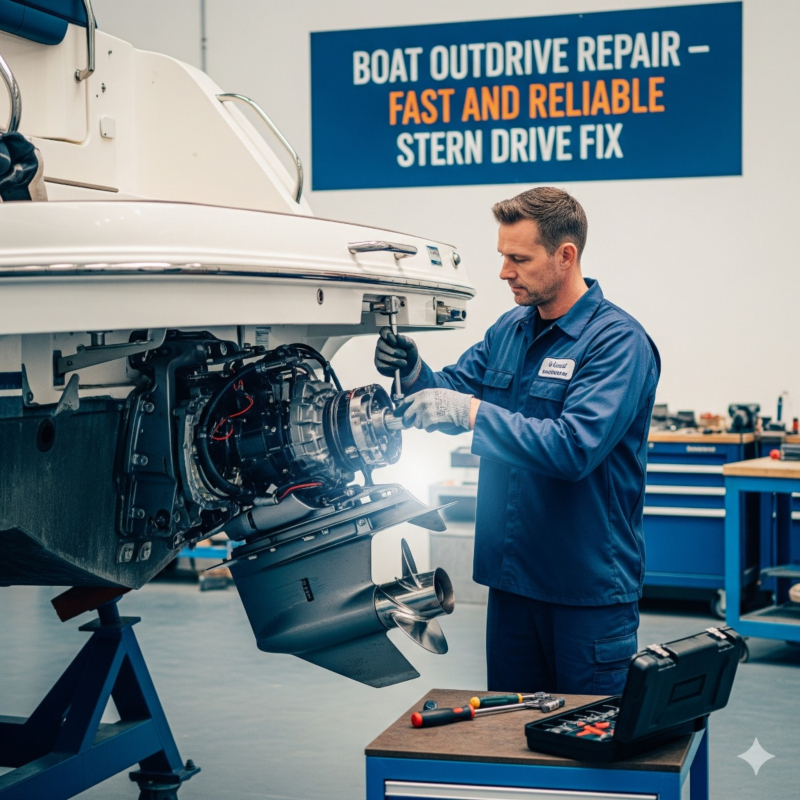
- Removing sterndrives or lower units for reseals on boats that stay in the water.
- Engine removal, repowers or major rebuilds that need a crane.
- Shaft and propeller work that requires pulling the shaft.
A good mobile technician will tell you early if a problem found at the dock needs the boat out of the water, so you can book the yard with a clear list of work.
How to Prepare for a Mobile Visit
A dockside repair goes faster when the technician arrives with the right information and can start work straight away. Before the appointment:
- Share the details: boat make and length, engine make, model and horsepower, and approximate engine hours.
- Describe the problem: what happens, when it started and anything that changed just before it did.
- Give the exact location: marina name, dock and slip number, gate codes and parking notes.
- Arrange access: keys, a way to open the engine hatch and a clear path to the engine compartment.
- Check shore power: if the slip has shore power, make sure the cord is connected and the breaker is on, since power tools and battery chargers may need it.
Knowing the engine model in advance lets the technician bring the right filters, impellers and gaskets, which often turns a two-visit job into one.
Choosing a Mobile Provider
Typing boat mechanic near me into a search bar returns plenty of names, so ask a few practical questions before you book. Does the provider work on your engine type? Do they carry common parts, or will they need to order and return? Will they explain findings and quote extra work before doing it? A clear written record of what was done also helps with resale and insurance.
Owners who keep their boats in local marinas often look for a mobile boat mechanic Long Beach boaters can call to the slip rather than towing. A mobile marine service like the mobile boat repair service that comes to your slip or dock is built around this kind of visit.
Limits and Safety at the Dock
Dockside repair has sensible limits. Fuel system work is done with care for spills, fumes and marina rules, and hot work such as welding is rarely allowed on the dock. Engines are run for testing only when the boat is securely tied and lines are checked. Some marinas require vendors to carry insurance or register at the office, which is worth confirming before the day.
The simplest measure of a good visit is that the technician leaves you with a working boat and a clear picture of what should be planned next. A mobile boat repair service that works to that standard saves owners the time and cost of moving the boat for everyday problems.
Mobile Repair FAQ
Can a mobile mechanic work on a boat on a trailer at home?
Often yes, provided there is safe access, a hose for flushing the engine and, ideally, a power outlet. Check local rules if the boat is kept on a street or in a shared lot.
Do I need to be on board during the repair?
Not always. Many owners arrange access and a phone call to discuss findings. Being present for the first diagnosis is helpful if the problem is intermittent.
What if the problem only happens underway?
Some faults only show under load. In that case the technician may need to run the boat or schedule a short sea trial to reproduce the symptom.