A boat that will not start rarely breaks down somewhere convenient. When the engine quits in the slip, or the repair needs the hull on dry land, the job suddenly has two parts: fixing the problem and getting the boat to where it can be fixed. This guide explains how a disabled boat usually gets from the dock to the shop, what each stage involves and what you can do to make the move go smoothly.
Does the Boat Really Need to Leave the Water?
Plenty of problems can be diagnosed and repaired at the slip. Before arranging any move, a few simple checks can save a trip:
- Is the battery switch on, and do the batteries show a healthy voltage?
- Is the engine kill switch lanyard clipped in, and is the throttle in neutral?
- Is there fuel in the tank, and is any fuel shutoff valve open?
- Are any breakers tripped or fuses blown on the helm panel?
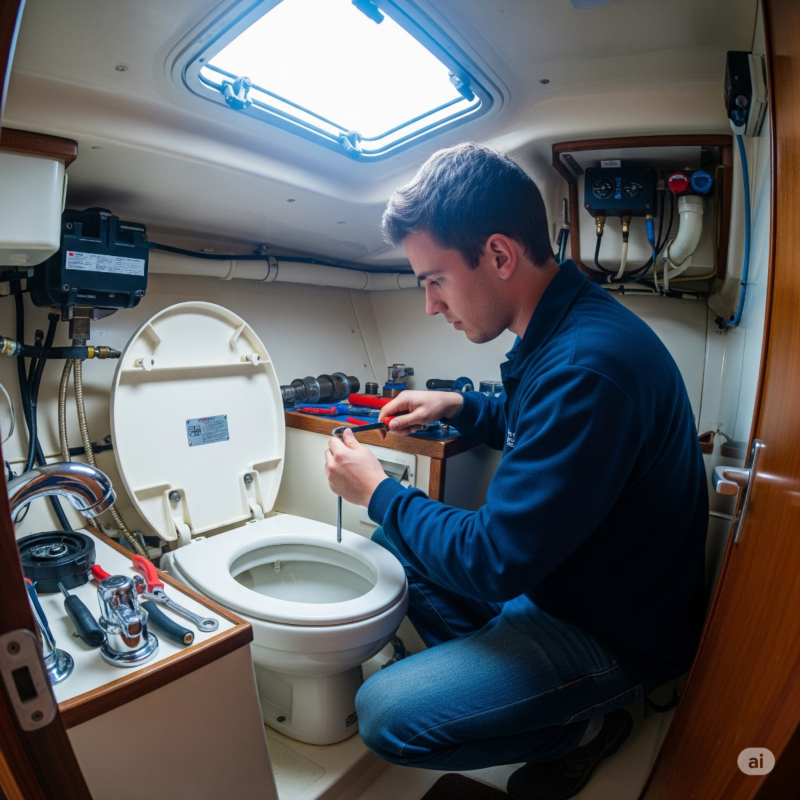
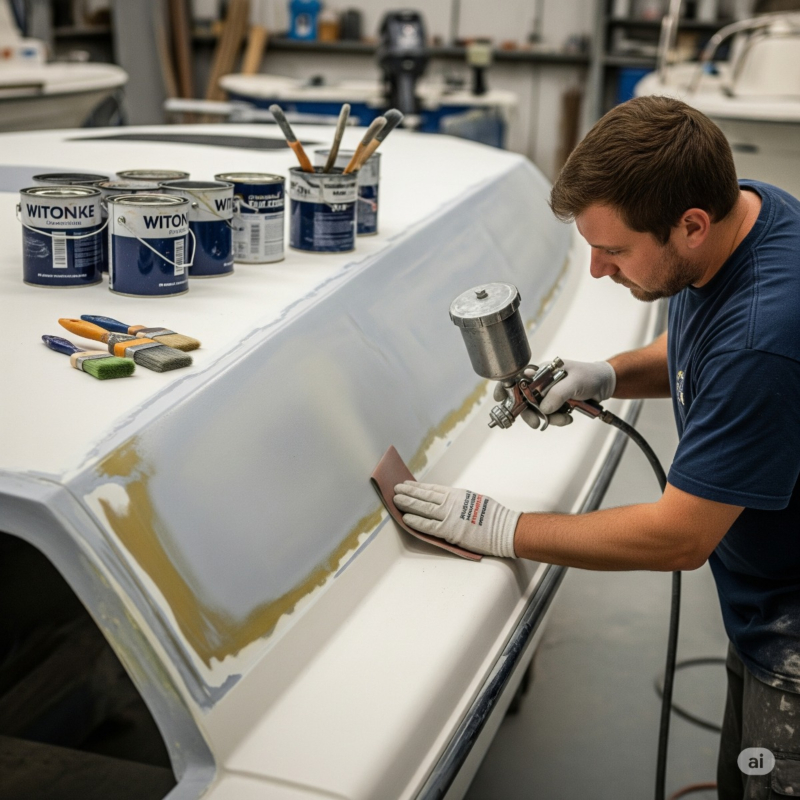
If those are fine, a technician can often find the fault on site. Some work, however, is far easier or only possible on land: damage below the waterline, running gear and outdrive work, major fiberglass repairs, engine removal or a repower, and anything that needs the bottom dry for days. In those cases a boat haul out is the practical way forward.
Stage One: Boat Towing Inside the Harbor
If the engine is dead, the boat cannot reach the launch ramp under its own power. The usual answer is a short tow by a work boat. In tight marina fairways a side tie, where the towing boat is lashed alongside, gives far better control than a long line astern, because the two hulls move as one and can be steered and stopped precisely.
Wind and current matter more than distance here. A calm morning with slack water makes boat towing in a crowded harbor easier and safer for everyone.
Stage Two: The Haul Out at the Ramp
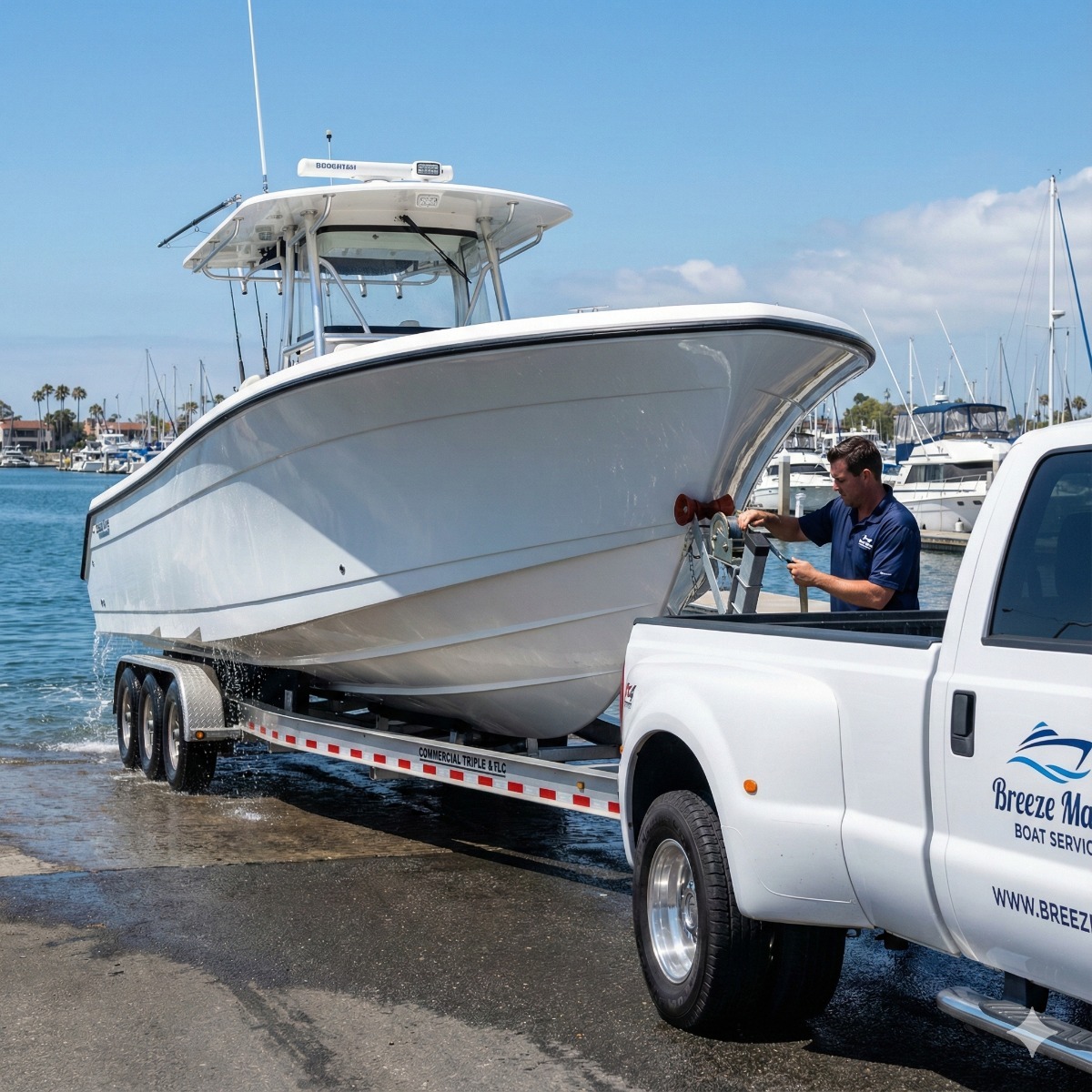
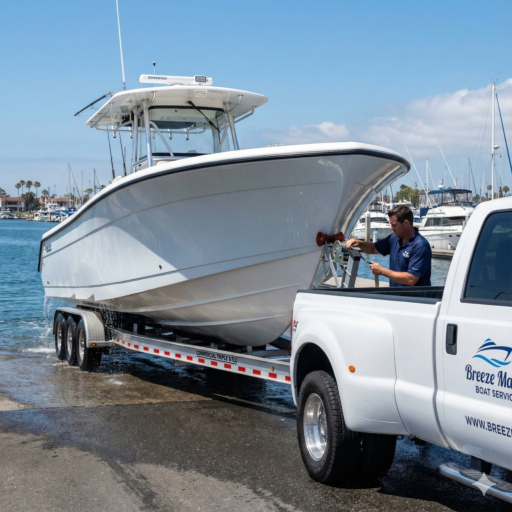
At the ramp, the trailer is backed into the water until the bunks sit low enough for the hull to float over them. The boat is winched forward by the bow eye, centered on the bunks and pulled clear of the water. A trailer with adjustable bunks matters because the supports must follow the shape and deadrise of the hull; badly placed supports can put point loads on the bottom and stress the stringers.
Before the boat goes on the road, the hull is usually washed at the ramp. This removes growth and helps stop invasive species such as quagga mussels from spreading to other waterways. It is also the first good look at the bottom, so damage to the hull, props or running gear can be noted before the trip.
Stage Three: Road Transport to the Boat Repair Shop
Road transport is about securing the load and fitting within legal limits. The stern is strapped to the trailer, the bow is secured, and tall items such as antennas, outriggers and some canvas are lowered or removed. Width matters: in California, loads wider than 8 feet 6 inches generally need an oversize permit, and overall height has to clear bridges and signs along the route. A boat repair shop with room to work on dry land can then start on the job once the boat is properly blocked and supported.
How to Prepare a Boat for Transport
Knowing how to prepare a boat for transport reduces the risk of damage on the road and speeds things up on pickup day:
- Stow or remove loose gear in the cockpit, cabin and lockers, and latch every hatch and door.
- Take down or tightly secure canvas, biminis and enclosures, which can tear at highway speed.
- Drain livewells, fish boxes and, where practical, freshwater tanks to reduce weight.
- Keep fuel at a moderate level rather than full, since fuel adds a lot of weight.
- Turn the battery switches off and note anything tall that does not fold.
- Photograph the boat from all sides so its condition before the move is on record.
- Have the length, weight and beam ready, plus the slip location and any gate access details.
Boat Hauling Without Your Own Trailer
Many owners of boats in the mid-20 to mid-30 foot range keep them in a slip year-round and have never owned a boat trailer. Borrowing one that was built for a different hull is risky: the bunks may not match the deadrise and the axles may not be rated for the weight. Professional boat hauling uses equipment sized for the job and a crew that does this work routinely.
When comparing any boat transport service, ask about the maximum length, weight and beam their equipment handles, how the boat is insured while in their care and whether the quote is one-way or round trip. In the Long Beach area, our dock-to-shop boat transport and haul out service covers the tow from your slip, the haul out and the road trip to our shop.
Boat Transport FAQ
Can a boat be moved if it sits on a lift?
Usually, yes. If the boat lift works, the boat is simply lowered and floated off. If the lift is stuck, a crane may be needed to lift the boat out first, so mention the condition of the lift when you ask for a quote.
Is a round trip better than a one-way move?
For a repair, a round trip is the usual choice: the boat goes from the slip to the shop and back again. A one-way move makes sense if you plan to launch at a different marina or are selling the boat.