


Underwater lighting has moved from a luxury-yacht extra to one of the most popular upgrades on cruisers, center consoles and sportfishers. A well-chosen set of underwater boat lights makes a boat easier to spot at anchor, attracts baitfish, and turns an evening on the water into something memorable. Done poorly, the same upgrade can put leaking holes below the waterline, drain batteries and corrode quickly. Here is what to think about before you buy fixtures or drill anything.
Types of Underwater Fixtures
Surface-mount lights
Surface-mount fixtures bolt to the outside of the transom and pass only a small wire through the hull. They are the simplest option and are common on smaller boats. Because they sit proud of the hull, they can snag lines and take hits at the dock or the ramp.
Thru-hull lights
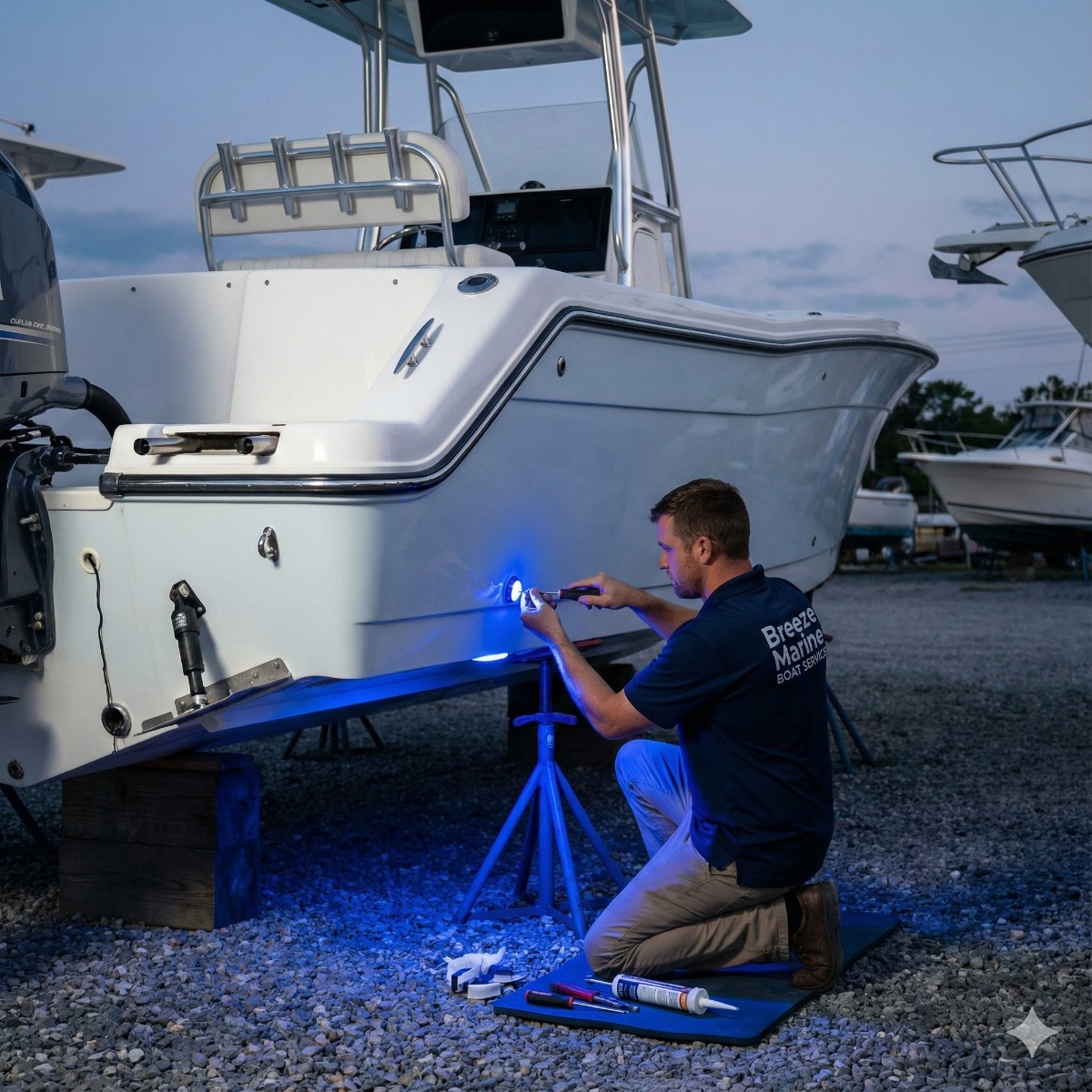
Thru-hull fixtures pass through a larger hole and are secured from inside with a nut and bedding compound. Many can be serviced from inside the boat, and some designs allow the LED module to be replaced without hauling out. They tend to produce the most output and sit nearly flush with the hull.
Transom or hull sides?
Most installations use transom lights mounted below the waterline at the stern, where they are protected from wave slap and light the water behind the boat. Larger vessels sometimes add fixtures along the hull sides for a full glow around the boat, which requires careful planning around strakes, chines, tanks and existing through-hull fittings.
Choosing Color and Output
Blue and white are the classic colors. Blue penetrates clear water well and looks dramatic; white shows the natural color of the water and marine life. Green is a popular choice for anglers because it carries well in green coastal water and is widely believed to attract more bait. RGBW LED fixtures combine red, green, blue and dedicated white diodes, so you can change colors from a switch panel or app and still get a true white rather than a blended one.
Output matters more than most people expect. Harbor water is often murky, and a light that looks bright in a showroom can disappear once it is a foot below the surface. Compare fixtures by measured in-water lumens, beam angle and heat management rather than by wattage alone.
Underwater LED Lighting for Fishing
Night fishing lights draw plankton, which draws baitfish, which draws the predators you want to catch. Many anglers use fixtures mounted low on the transom, while others hang a portable submersible light over the side. If fishing is the main goal, green or white fixtures with a wide beam usually work best, and underwater LED lighting that can be dimmed lets you adjust to conditions and avoid spooking fish.
What Makes a Leak-Proof Installation
Any hole below the waterline deserves respect. A leak-proof installation depends on several details:
- Location: the fixture must stay clear of trim tabs, transducers, drain plugs, stringers and fuel tanks, and inside access must be good enough to tighten and inspect the nut.
- Core sealing: on cored transoms, the core around the hole should be removed and filled with epoxy so water cannot migrate into balsa or foam if the seal ever weeps.
- Bedding compound: a marine-grade sealant rated for below-waterline use, applied correctly and allowed to cure fully.
- Bonding: metal-bodied fixtures may need to be tied into the bonding system to limit galvanic corrosion.
- Wiring: tinned marine wire, drip loops, proper fusing and a dedicated switch or relay so the lights cannot drain the start battery.
Some fixtures can be fitted from inside while the boat is afloat, but most new thru-hull holes are cut during a haul-out, both for safety and so the hull can be prepared properly.
Power and Heat
High-output LEDs still produce heat and rely on the surrounding water to cool them. Many fixtures dim or shut down automatically if they are switched on out of the water, and running them on a trailer can shorten their life. Add up the current draw of all fixtures and make sure your house bank and charging system can support them for the hours you plan to use them at anchor.
Pairing Underwater and Deck Lighting
Many owners plan marine deck lighting at the same time: courtesy lights at steps, cockpit lighting and spreader lights all make moving around at night safer. Boat deck lights and underwater fixtures can share the same switch panel or control system, which keeps the helm tidy. Avoid creating glare at the helm, and make sure navigation lights remain clearly visible and unobstructed.
When to Call a Professional
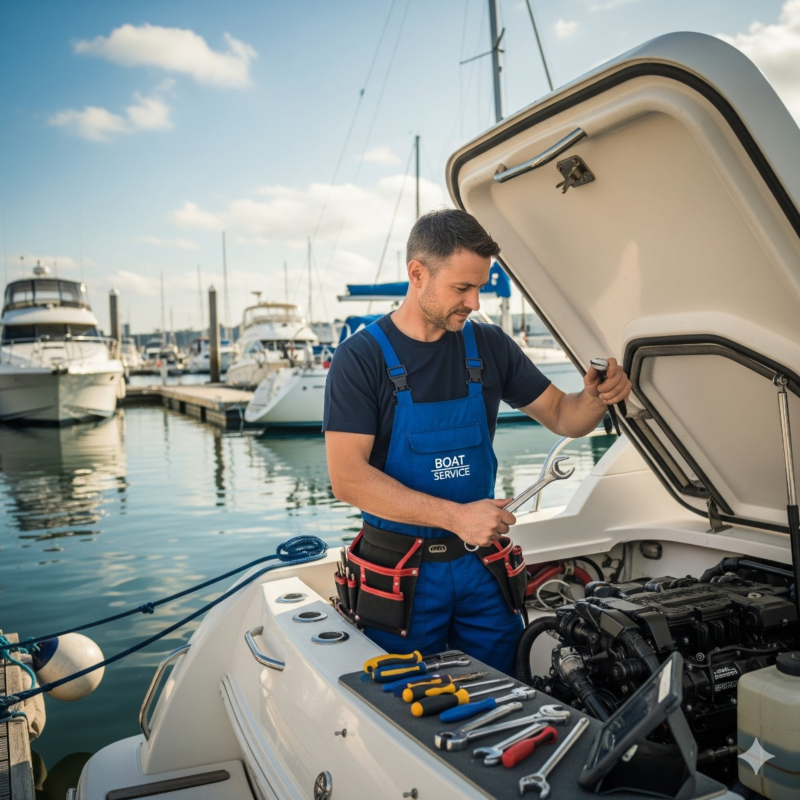
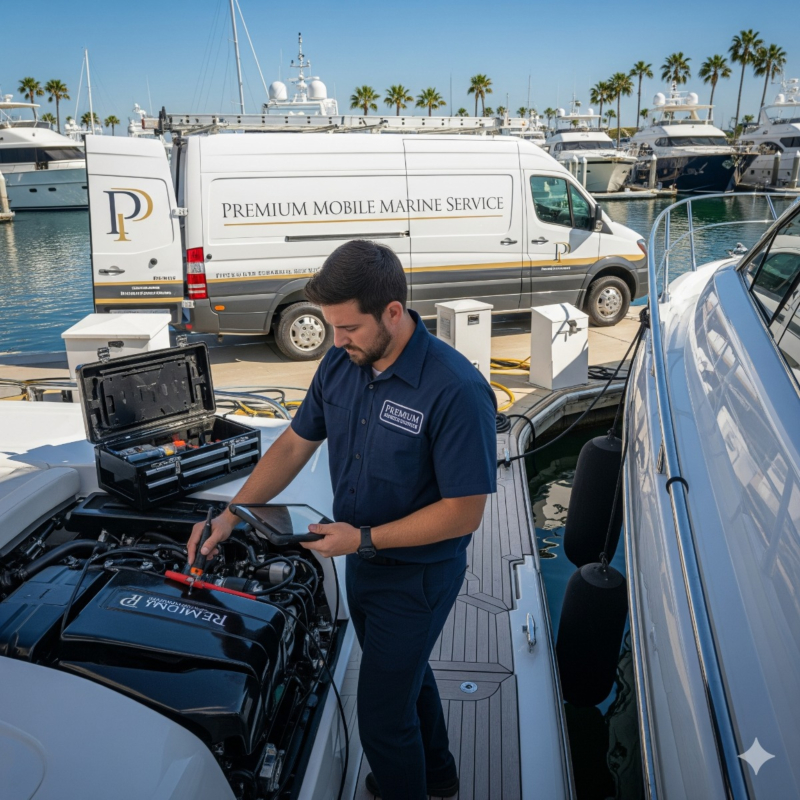
If you are comfortable with wiring but not with cutting holes below the waterline, bring in help for the hull work. A technician can check the transom for core, plan cable runs, size the circuit and test every fixture before relaunch. If you are planning a marine LED installation in Long Beach or the surrounding harbors, our underwater LED light installation service covers fixture selection, sealing and wiring.
Underwater Lights FAQ
Can underwater boat lights be installed without hauling out?
Surface-mount fixtures and some thru-hull designs can be fitted with the boat afloat in certain cases, but cutting a new hole below the waterline is usually done on the hard.
Do the lenses foul with growth?
Fixtures sit in the water full time, so the lens can foul. Most lenses should not be coated with standard antifouling paint; follow the maker's guidance and wipe them during regular hull cleaning.
Will they drain my batteries?
LED fixtures are efficient, but a set of high-output lights running for several hours adds up. Wire them to the house bank rather than the start battery, and consider a battery monitor.