
Flooring changes how a boat feels more than almost any other upgrade. It affects grip when the deck is wet, comfort on long days standing at the helm, how hot the surface gets in the sun and how much time you spend cleaning. Many owners replacing worn carpet now consider EVA foam instead. This guide compares the main options so you can choose marine flooring that suits how you actually use the boat.
The Main Options
Molded fiberglass non-skid
Most boats leave the factory with a textured gelcoat pattern. It is durable and easy to hose off, but it can be hard on knees and feet, slippery when worn smooth, and very hot in direct sun. Re-texturing old gelcoat is possible but labor intensive.
Marine carpet
Carpet feels soft underfoot and hides wear. The downside is moisture: it holds water, fish blood and spilled drinks, can smell musty, and may trap water against the deck underneath. Snap-in carpet is easier to remove and dry. When carpet is glued down and has started to mildew, boat carpet replacement is often the moment owners switch to something else.
EVA foam decking
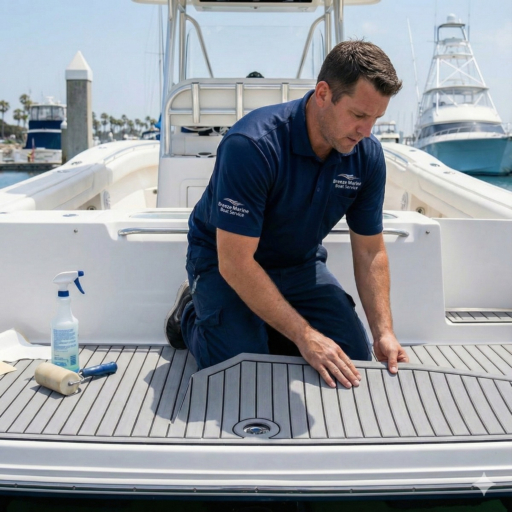
EVA foam decking is a closed-cell material, usually supplied in sheets with a pressure-sensitive adhesive backing. Because it is closed-cell foam flooring, it does not soak up water. It is cushioned, grips well wet or dry, and is available in faux teak flooring patterns with grooved or brushed textures, as well as solid colors and custom logos. It is the most popular choice for center consoles, pontoons and swim platforms today.
How EVA Compares
- Grip: textured foam offers excellent traction when wet, which is why it works well as non-skid decking on fishing boats
- Comfort: the cushioning reduces fatigue and softens the impact of chop
- Heat: lighter colors stay noticeably cooler than dark gelcoat or dark foam
- Cleaning: mild soap and a soft brush; harsh solvents and pressure washers at close range can damage the surface
- Noise: foam dampens footsteps and dropped gear
- Lifespan: good foam lasts for years, though UV exposure, fishing hooks and heavy abrasion eventually show
What a Custom Install Involves
Custom boat decking starts with templating. The installer lays thin template material over each deck area, traces around hatches, cleats, rod holders and drains, and marks seams. The templates are digitized and the foam is CNC cut, so every edge matches the boat. Hatches get their own pieces so they still open.
Surface preparation is the step that determines whether the job lasts. Old carpet, glue and wax are removed, the gelcoat is cleaned and degreased, and any soft spots in the deck are identified. Installing foam over a wet or delaminated deck just hides a structural problem. The adhesive then needs a clean, dry and reasonably warm surface to bond well. Pieces are placed carefully, since the adhesive grabs quickly, and rolled to ensure full contact.
Swim Platforms and High-Wear Areas
Swim platform pads take the most punishment: bare feet, wet gear and constant sun. A textured, lighter-colored foam is kind to feet and keeps its grip. Helm pads, casting decks, step pads and cooler tops are other popular spots. Some owners start with these smaller pieces before committing to a full deck.
What Owners Should Check Before Upgrading
- Press around the deck for soft or spongy areas that suggest core damage
- Check drainage so water does not pool under the edges
- Decide on colors with heat in mind; dark foam gets hot in summer sun
- Think about hooks, knives and anchor chain in fishing or anchoring areas
- Consider which hatches and fittings may be moved or replaced later
Common Problems With DIY Kits
Universal kits trimmed by hand often leave gaps and wavy edges that lift over time. Poor surface preparation is the most common cause of peeling corners. Placing sheets across hatch gaps or over existing screws causes bubbles and tears. If you prefer to do it yourself, take time to clean thoroughly and work in mild temperatures.
Is It Worth It?
For boats used for fishing, swimming or with children and pets aboard, the safety and comfort benefits of good marine decking are significant. If you are searching for marine decking near me in the Long Beach and San Pedro area, our custom EVA foam decking and marine flooring service covers templating, preparation and installation across Los Angeles County.
Marine Flooring FAQ
Can EVA foam be installed over existing non-skid?
Yes, on sound, clean gelcoat. Very aggressive non-skid texture may reduce adhesion, so preparation and the right adhesive matter.
Does faux teak foam get as hot as real teak?
Lighter colors generally stay comfortable, but darker shades absorb heat. Choosing a lighter tone helps on open decks.
Can damaged sections be replaced?
Yes. Because the pieces are cut from digital templates, a single worn panel can be recut and replaced.


