Docking in a crosswind or backing into a tight slip is where many boat owners feel least confident. A thruster gives sideways push at the bow or stern exactly when rudder and props cannot. Many boats did not come with one, and it is common to ask whether it is possible to add a bow thruster later. On most hulls it is, but it is a structural and electrical project that deserves careful planning.
Types of thrusters
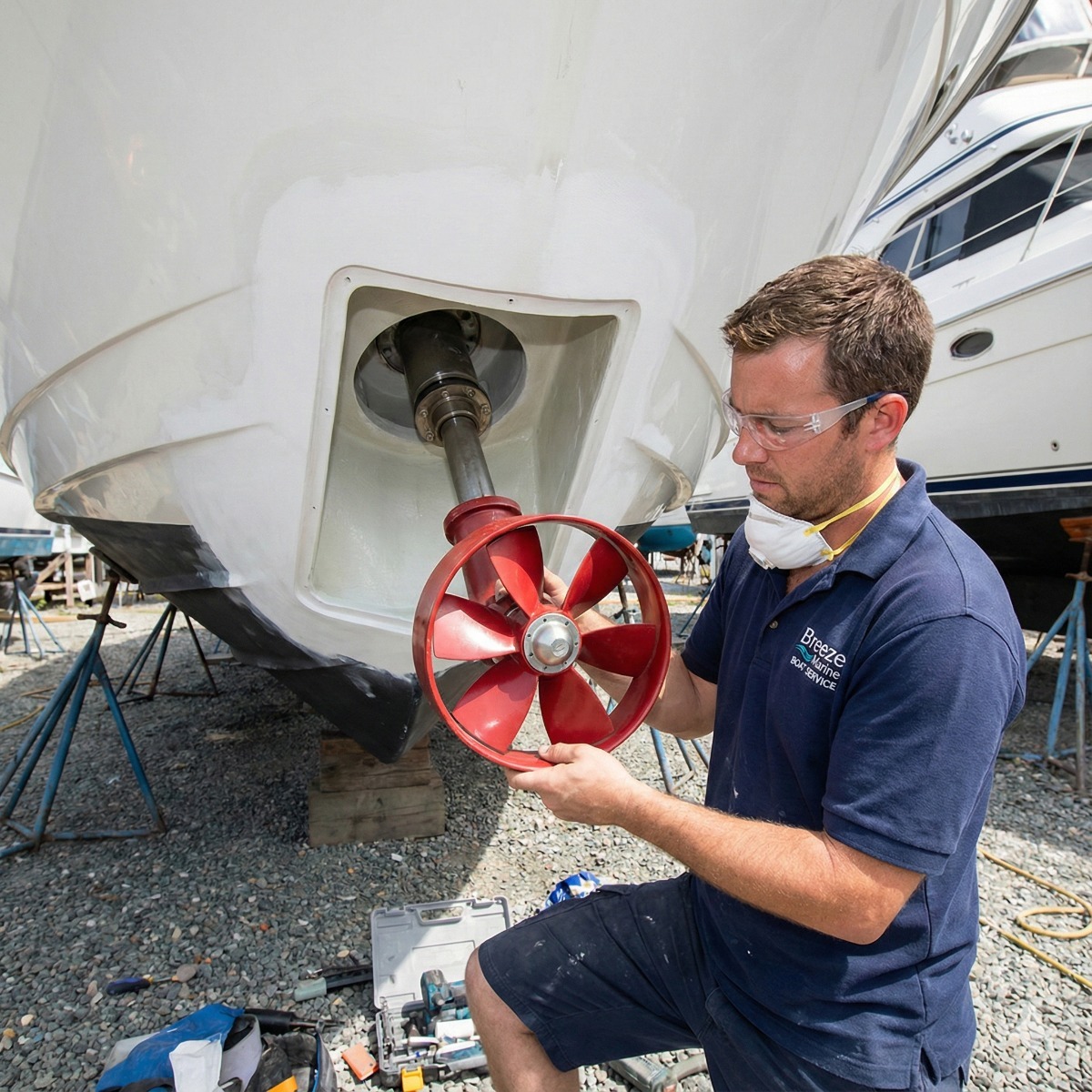
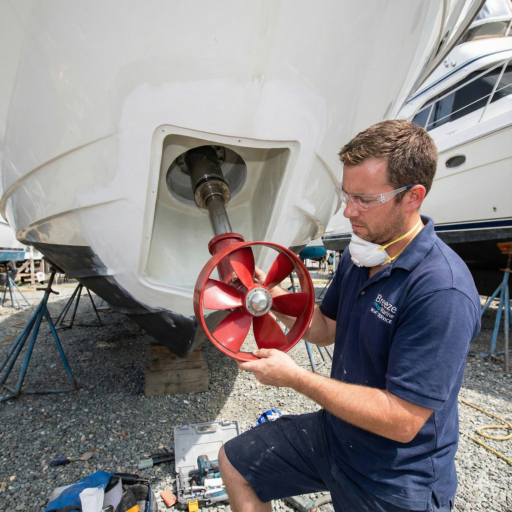
Tunnel thrusters mount a motor and propeller inside a tube that passes through the hull below the waterline. They are the most common choice. External or retractable units exist for hulls where a tunnel is impractical, such as some sailboats or shallow bows. Most recreational installations use electric thrusters powered by batteries, while larger vessels may use hydraulic units running off an engine-driven pump.
Planning a bow thruster installation
Tunnel position
The bow thruster tunnel needs to sit as far forward as possible for leverage, and deep enough to stay submerged when the boat pitches. Too shallow and the thruster draws air and loses power. Too deep in a narrow bow and the tunnel becomes very long. The hull shape, the anchor locker and interior structures all affect where it can go.
Structural work
The installer cuts holes on both sides of the hull, fits a fiberglass or composite tube and bonds it with multiple layers of laminate so the hull stays as strong as before. The tunnel ends are faired, often with a shaped deflector, to reduce drag and noise at cruising speed.
Power supply
Thrusters draw very high current for short periods. Many installations use a dedicated battery bank near the bow, charged from the main system, to keep cable runs short. Heavy cables, a proper fuse or breaker and a battery switch protect the circuit. Undersized wiring is a common reason for weak thrust and overheating.
Controls
Controls range from a simple toggle or paddle switch to proportional controllers and joystick control that coordinates thrusters with engines. Proportional control lets you apply gentle thrust rather than full power, which is easier in tight spaces.
Adding a stern thruster
A stern thruster installation adds control at the back of the boat, letting you move the whole hull sideways. It is more complex because the stern has less space and more machinery, and it often suits larger boats more than small ones. Many owners start with a bow unit and decide later whether stern control is worth it.
Questions to settle before the work starts
Before committing, it helps to agree on a few points in writing: the thruster size in relation to the boat's length, windage and displacement; where the motor and battery will sit and what storage space is lost; how the thruster bank will be charged; and whether the boat needs to be hauled, and for how long. Asking to see the planned tunnel position marked on the hull before any cutting begins is also reasonable, since it cannot easily be moved afterwards.
Common thruster problems
- No response: blown fuse, tripped breaker, a failed control panel or a bad main solenoid or relay.
- Motor runs, no thrust: a sheared bow thruster shear pin or a damaged propeller. The pin is designed to break if the prop hits something.
- Weak thrust: low battery voltage, corroded connections, marine growth in the tunnel or a fouled prop.
- Overheating or cutting out: running too long, which many thrusters prevent with thermal protection.
- Noise or vibration: damaged prop blades or worn motor brushes.
What owners can check
- Inspect the tunnel and props at each haul-out and remove growth.
- Check anodes in the tunnel and replace them when half worn.
- Confirm the thruster battery is fully charged and terminals are tight.
- Use thrust in short bursts rather than holding the control continuously.
If those checks look fine and the thruster still misbehaves, bow thruster repair usually starts with measuring voltage at the motor under load and inspecting the solenoid, brushes and drive leg. Owners searching for bow thruster repair near me around Long Beach can find retrofit and service details on the bow and stern thruster installation and repair page.
Bow thruster FAQ
Will a bow thruster slow my boat down?
A properly faired tunnel adds very little drag. Poor fairing or a tunnel placed badly can cause noise and a small speed loss.
How long can I run a thruster continuously?
Most electric units are designed for short bursts and have limited duty cycles. Check the manufacturer's limits and let the motor rest between long uses.
Can a thruster be added to any hull?
Most planing and displacement hulls can take one, but the hull shape, interior space and structure decide the best type and position.