
Trailer bearings are small, cheap parts that carry the whole weight of the boat down the freeway. When one fails, the result can be a seized wheel, a damaged axle or a wheel coming off at speed. Boat trailers have it tougher than most because they are regularly backed into salt water. Understanding why bearings fail and what to look for before each tow is one of the simplest ways to avoid a roadside breakdown.
Why Boat Trailers Eat Bearings
A wheel hub gets hot on the highway. When the trailer is backed down the ramp, the hot hub hits cold water and the air inside contracts suddenly. That creates a slight vacuum, which pulls water past the seal into the hub. Salt water mixes with the grease, washes out the lubricating film and starts rust on the races and rollers. Repeat that at every launch, add months of sitting between trips, and trailer wheel bearings wear much faster than on a road trailer.
Warning Signs of a Failing Bearing
- Hot hubs: after a drive, carefully touch each hub. Warm is normal; one that is much hotter than the others, or too hot to hold your hand near, is a warning.
- Noise: grinding, rumbling or squealing from a wheel, especially at low speed.
- Wheel play: with the trailer jacked up, grab the tire at top and bottom and rock it. Any clunk or movement suggests worn bearings or loose adjustment.
- Grease on the wheel: grease slung onto the inside of the rim or tire usually means a failed rear seal.
- Uneven tire wear: can indicate a wheel that is not running true.
- Smoke or a burning smell: stop immediately and let the hub cool before going further.
Simple Checks Before Every Tow
Good boat trailer maintenance does not take long. Before a trip, check tire pressure and condition, lug nut tightness, lights and the hub grease level. After arriving at the ramp, let the hubs cool for a while before backing into the water, which reduces the vacuum effect. After retrieving the boat, rinse the trailer and hubs with fresh water when you can.
Many trailers use a bearing buddy style cap, a spring-loaded grease reservoir on the hub. It keeps light positive pressure on the grease to resist water entry. It is useful, but it has limits. Pumping in too much grease can push out the rear seal, and adding grease does not remove water, sand or rust already inside. If the reservoir needs frequent topping up, grease is escaping somewhere.
What a Proper Repack Involves
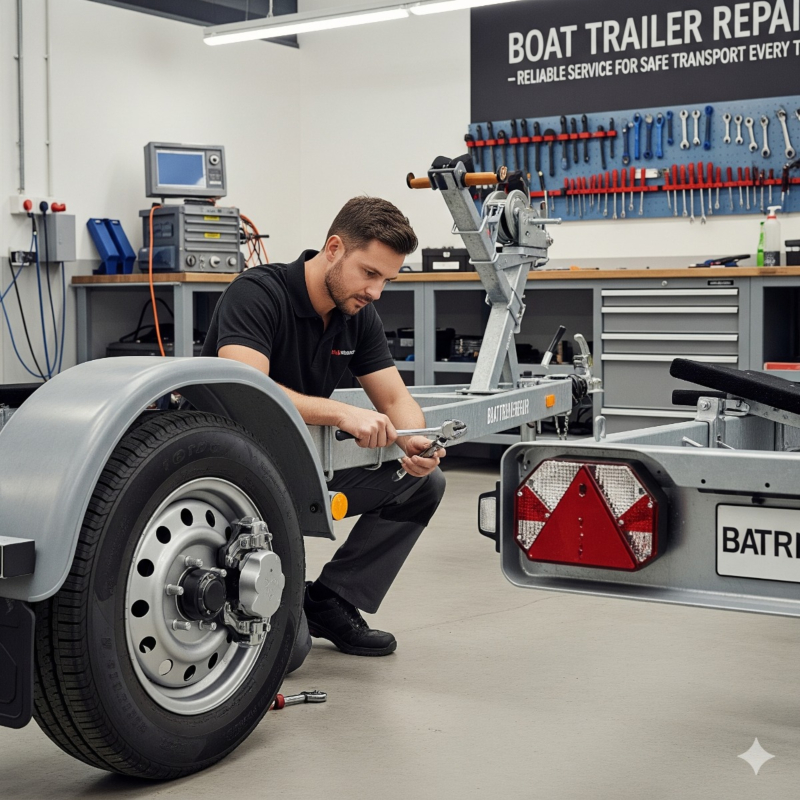
A boat trailer bearing repack is more than adding grease. Done properly it includes:
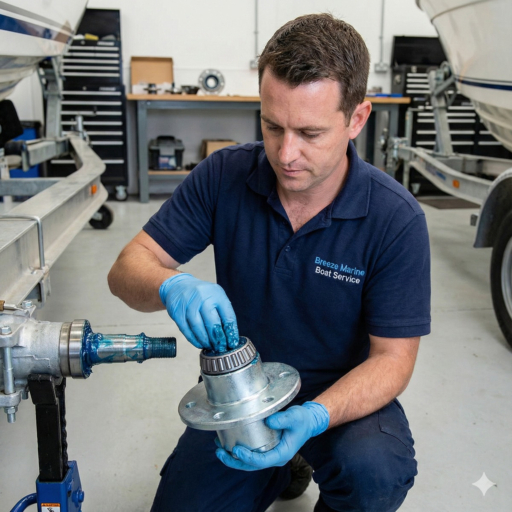
- Disassembly: the trailer is jacked and supported, the wheels removed and the hubs taken off the spindles.
- Cleaning: old grease is cleaned from the hub, bearings and spindle so every surface can be inspected.
- Inspection: tapered bearings and races are checked for pitting, discoloration from heat and rough spots. The axle spindle is checked for scoring, wear and cracks, because new bearings will not last on a damaged spindle.
- Repacking: bearings are packed with high-quality marine grease worked fully into the roller cage, not just smeared on the outside.
- New seals: fresh rear seals are fitted. Double-lip seals give better protection against water than single-lip designs on trailers that are dunked regularly.
- Adjustment: the spindle nut is set to the correct preload so the wheel turns freely with no play, then locked with a new cotter pin.
Where bearings have overheated or spun, the hub itself may be damaged, and trailer hub replacement with a complete new assembly is often more reliable than reusing a scored hub. Hub and bearing kits made for marine use include galvanized hubs and seals suited to immersion.
How Often Should It Be Done?
For trailers used in salt water, an annual inspection and repack is a common recommendation, and sooner if you hear noise or find water in the grease. Trailers that sit unused for long periods deserve a check before the first tow of the season, because rust can form while they sit.
When to Call a Technician
Get professional boat trailer repair if a hub runs hot, if there is play or noise, if grease is leaking, or if the spindle shows any scoring. Towing on a failing bearing risks the axle and the boat. The page on trailer wheel bearing repack and hub replacement explains how the service is carried out and what is checked along the way.
Trailer Bearing FAQ
Can I just add grease through the cap?
Topping up helps between services, but it does not remove water or rust. Only disassembly shows the true condition of the bearings.
What should I carry on long tows?
A spare tire, jack, lug wrench, and ideally a spare hub assembly or bearing kit with seals, grease and cotter pins.
Are sealed or oil-bath hubs better?
They can reduce maintenance, but they still need inspection. Any hub dunked in salt water benefits from regular checks.


