

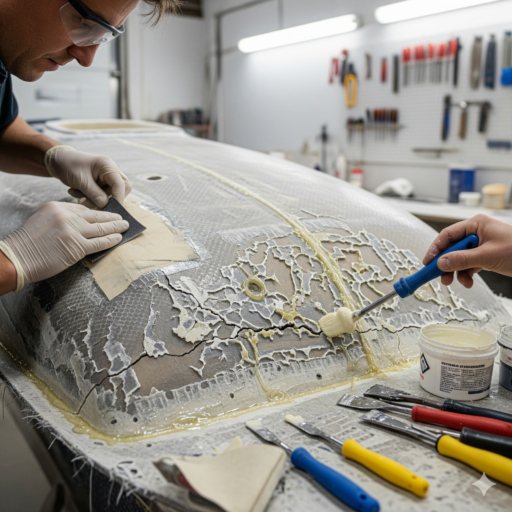
Fiberglass is tough, but it is not indestructible. Years of flexing, a hard landing on a wave, a collision with a dock or water finding its way into the core can all weaken the laminate. The early signs are easy to miss: a deck that feels slightly springy, fine cracks radiating from a cleat, or a hull panel that sounds dull when tapped. Catching these early keeps a modest repair from becoming a major structural job.
How Fiberglass Laminate Fails
A fiberglass hull is built from layers of glass fabric bonded with resin, finished with gelcoat on the outside. Many decks and some hulls are cored with balsa or foam between two fiberglass skins for stiffness. Delamination happens when those layers stop bonding to each other, or when the skins separate from the core. Once the bond is lost, the panel flexes more than it was designed to, which accelerates cracking and lets water travel further into the structure.
Common causes
- Water intrusion through poorly bedded deck hardware, stanchions and screw holes, especially into balsa core.
- Impact from docks, pilings, trailers or floating debris.
- Repeated stress around hatches, cleats, rod holders and engine mounts.
- Original build issues such as resin-starved areas or voids.
Symptoms Owners Can Spot
- Soft or spongy spots when you walk on the deck or press on a panel.
- Spider cracks in the gelcoat, often in a star or circular pattern.
- Straight cracks along hull-to-deck joints or around fittings.
- Rust-colored or brown weeping from screw holes, a sign of wet core.
- A dull thud instead of a sharp tap when you knock on the surface with a plastic mallet or screwdriver handle.
- Blisters or bubbles below the waterline.
Tapping is the simplest owner inspection. Work across the deck in a grid and mark areas that sound different with painter's tape. A moisture meter adds another layer of information, although readings on fiberglass need interpretation and are best compared against a known dry area of the same boat.
Cosmetic Versus Structural Damage
Not every crack is a structural problem. Gelcoat is brittle, and fine hairline cracks may only affect the surface. A gelcoat repair involves opening the crack, filling it and refinishing the area. Structural damage is different: if the laminate beneath is cracked, crushed or separated, surface filler only hides the issue. Proper hull damage repair means removing the damaged material and rebuilding strength with new fiberglass.
What a Proper Repair Involves
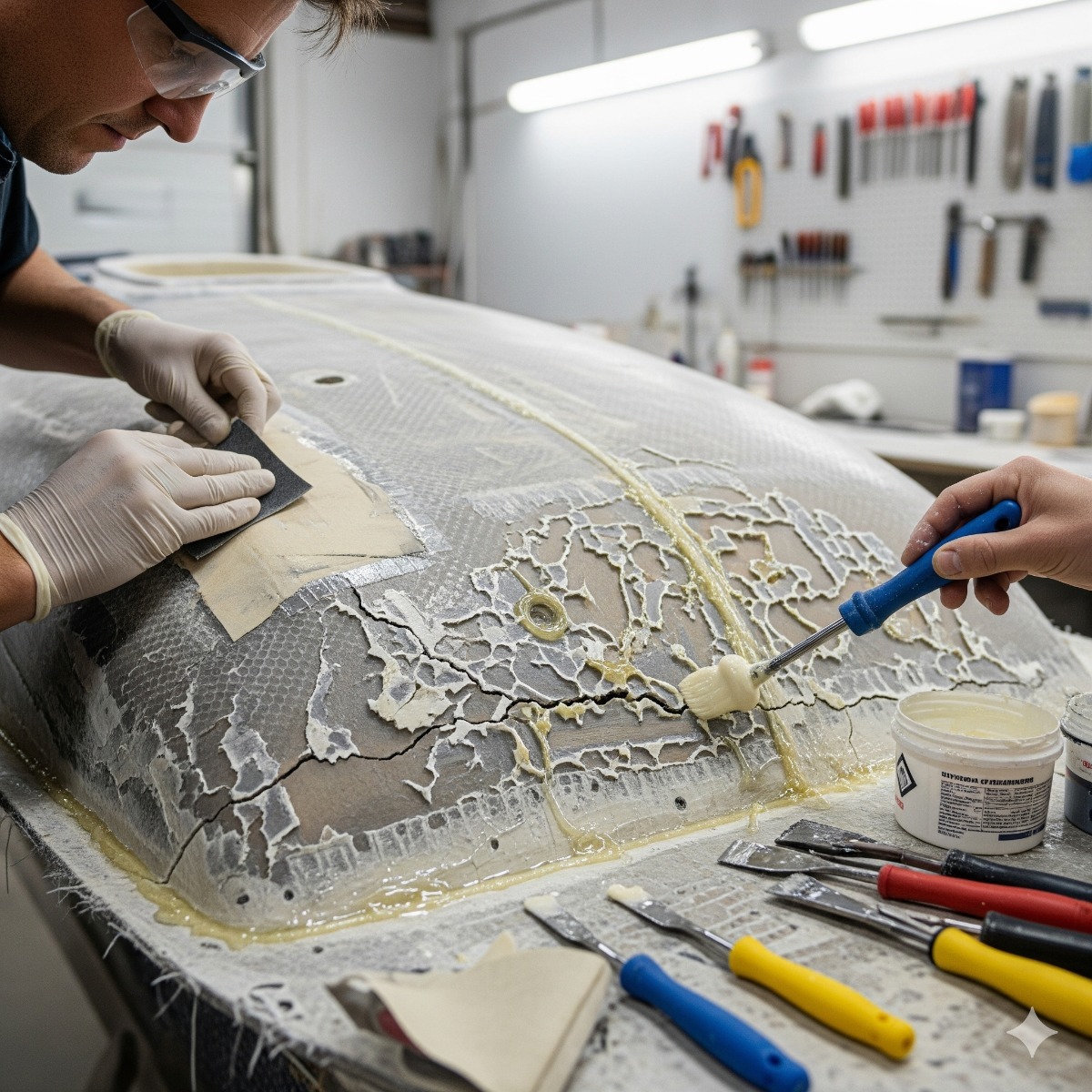
Quality fiberglass boat repair follows a well-established sequence. The damaged laminate is ground back to sound material and the edges are beveled at a shallow taper, often around 12 to 1, so that the new layers have plenty of surface to bond to. Wet core is removed and replaced, or in some deck situations the skin is drilled and injected with epoxy when the damage is limited. New layers of glass cloth are laid up with suitable resin to restore the original thickness. The area is faired with compound, block sanded and finished with gelcoat or paint.
The finish is where craftsmanship shows. Marine white comes in many shades, and aged gelcoat yellows and fades over time. Good gelcoat color matching involves tinting the material to blend with the surrounding hull, then wet sanding and compounding so the repair does not stand out. Unusual shapes, molded features or non-standard parts may call for custom fiberglass repair, such as rebuilding a broken edge from a mold taken from the undamaged side.
What Affects Fiberglass Boat Repair Cost
Owners often ask about fiberglass boat repair cost before anything else. The honest answer depends on the size and depth of the damage, whether cored areas are wet, how accessible the damaged area is from inside, how much hardware must be removed, and the finish required. A small gelcoat chip is a very different job from recoring a section of deck. A careful inspection and moisture survey is the only reliable basis for an estimate.
When to Call a Technician
Get professional help if you find soft areas in the deck or transom, cracks near structural points such as the stringers, engine mounts or hull-to-deck joint, water weeping from fittings, or any damage below the waterline. Delaying a boat fiberglass repair lets water spread through the core and increases the size of the job. Our structural fiberglass and gelcoat restoration service covers delamination repair, crack and chip repair and color-matched finishing. For a broader look at marine fiberglass repair options, an inspection is the best place to start.
Fiberglass Damage FAQ
Can I fix stress cracks with gelcoat paste?
Only if the crack is confined to the gelcoat. If it keeps returning, the laminate underneath is flexing and needs reinforcement rather than surface filler.
Is a soft deck dangerous?
A soft deck usually means wet or failed core. It weakens the structure over time and can spread, so it should be assessed promptly, especially around hardware and railings.
Will a repaired area be as strong as the original?
When the damage is ground back properly and rebuilt with suitable cloth and resin, the repaired section can match or exceed the strength of the original layup.