A raw water pump works in the dirtiest, saltiest corner of the engine room, pulling seawater through the strainer and heat exchanger and sending it out with the exhaust. When it starts to fail it rarely quits all at once. More often you notice a drip under the pump, a slow climb on the temperature gauge or less water at the exhaust outlet. This guide explains what those signs mean, what you can check yourself and when a raw water pump rebuild is the sensible next step.
How the pump works and why it wears out
Most inboard and sterndrive engines use a flexible-impeller pump driven by a belt or a gear. The rubber vanes flex against an offset cam inside the pump body, creating the suction that draws water up from the through-hull. Behind the impeller, a shaft spins on bearings, and a water seal stops seawater from travelling along that shaft.
Three areas do most of the wearing. The impeller vanes take a set and crack, especially after a dry start or a long layup. The cam and wear plate get grooved by sand and silt, which lets water slip past the vanes. The water seal, a mechanical seal on many larger diesels or a lip seal on smaller pumps, eventually lets salt water through, and the bearings are next in line.
What a dripping water pump weep hole is telling you
Between the water seal and the oil seal most pumps have a small drain, the water pump weep hole. It lets water that gets past a worn seal drain out instead of being forced into the bearings. A steady drip, a trail of salt crust below the pump or rust stains on the engine bed all mean that seal has stopped doing its job.
Oil at the drain points to a leaking oil seal instead. Either way, a raw water pump leaking from the weep hole should be dealt with before the next long run, because salt water in the bearings quickly turns a seal job into a bearing and shaft job.
Other signs of a tired pump
- Temperature creeping up at cruising RPM while it looks normal at idle, typical of a worn cam or impeller.
- Less water at the exhaust outlet than usual, or steam mixed in with it.
- Squealing or grinding from the pump area, often a sign of failing bearings.
- Missing impeller vanes, which usually end up lodged in the heat exchanger inlet.
Any of these can lead to boat engine overheating if ignored. Not every overheat is the pump, though. A blocked strainer, a closed seacock or a bag over the intake can produce the same reading.
What you can check before calling anyone
- With the engine off, confirm the seacock is open and the strainer basket is clean.
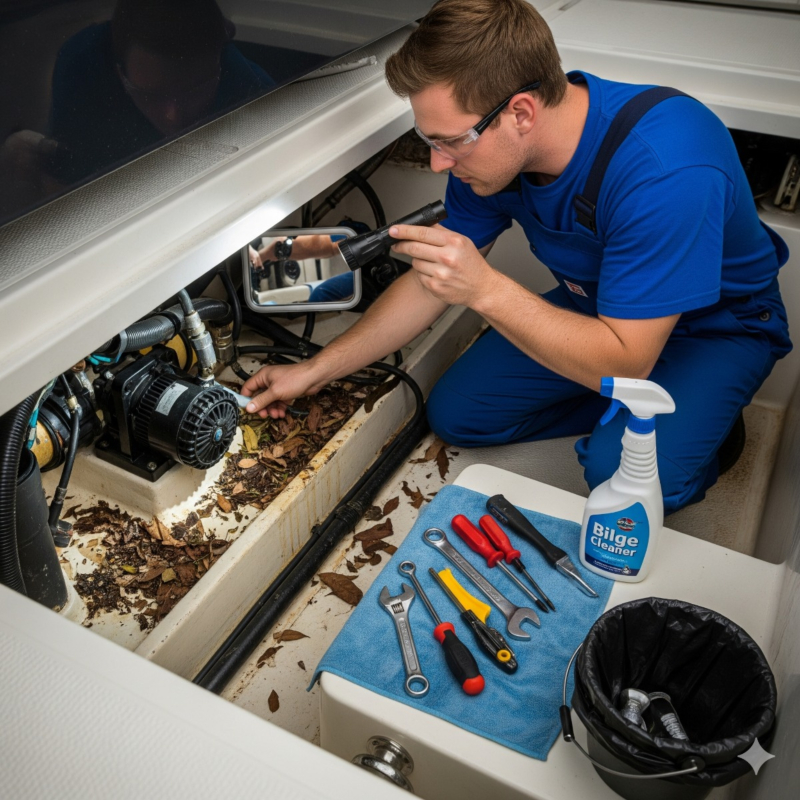
- Look under the pump with a flashlight for drips, salt trails or oil at the drain.
- Start the engine and watch the exhaust. Water should appear within a few seconds; if it does not, shut down quickly to protect the impeller.
- Check when the impeller was last changed against the interval in your engine manual.
An impeller replacement is a common owner job on some engines, but on many inboards the pump sits behind belts, hoses and brackets. If you do open the cover, look at the cam and wear plate while it is apart. A new impeller in a grooved housing will not bring back full flow.
Rebuild or replace the pump?
If the pump body is sound, a rebuild is usually the practical route. Bronze pump bodies tend to outlast their seals and bearings, so renewing the wearing parts keeps a good housing in service. Replacement makes more sense when the body is cracked, badly eroded around the cam, or rebuild parts for that model can no longer be found.
What a proper rebuild involves
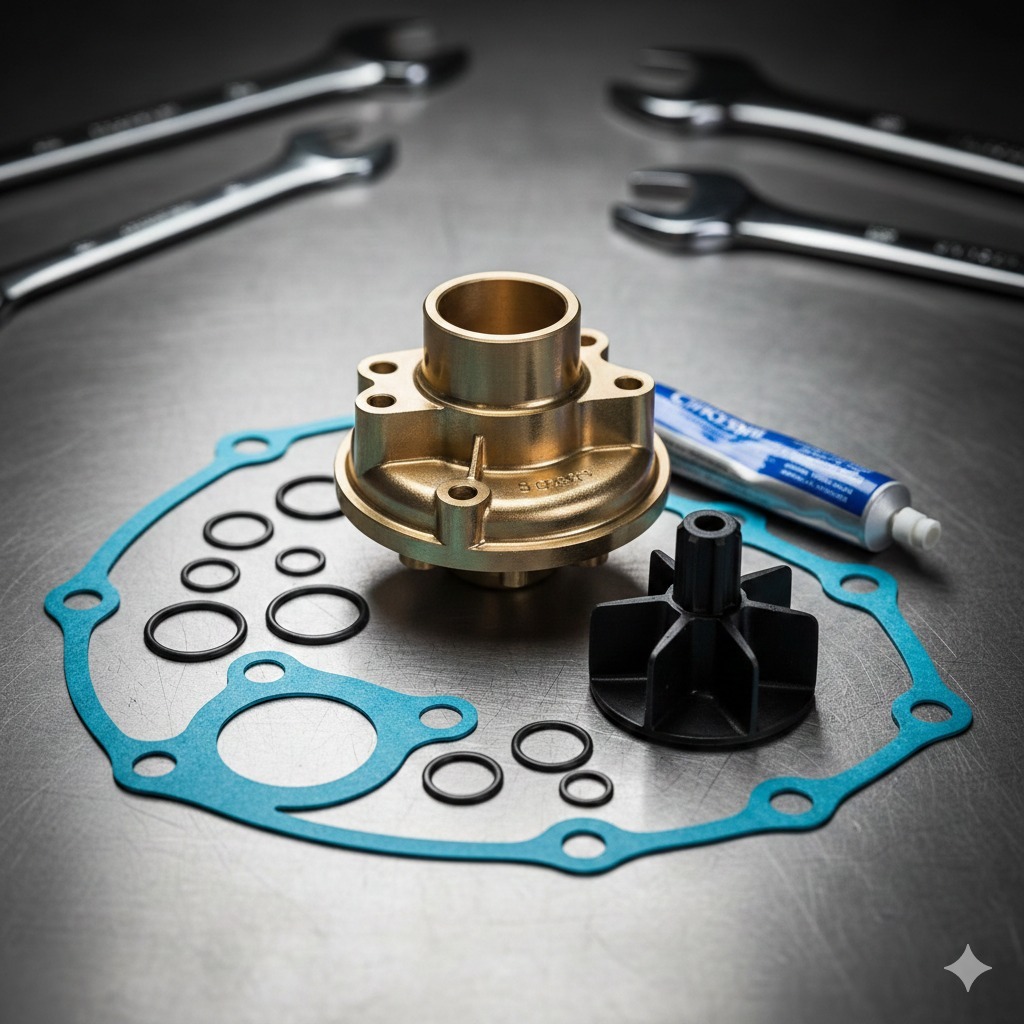
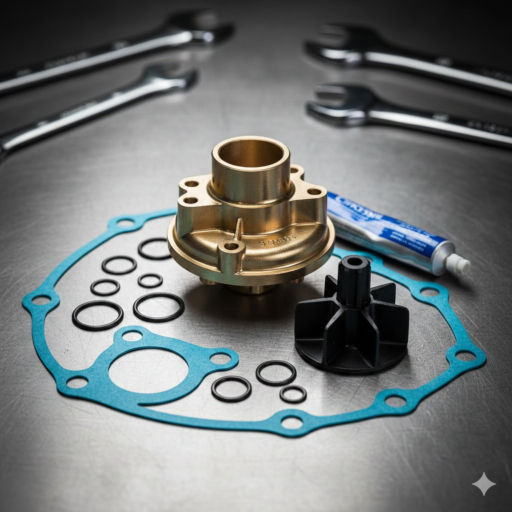
The pump comes off the engine and is stripped completely. Old bearings and seals are pressed out, the housing is cleaned of scale, and the shaft is checked for grooves where the seals ride. New bearings, a new mechanical seal or lip seals, gaskets and a fresh impeller go back in, plus a cam and wear plate where needed. The pump is then refitted, primed and run until flow is confirmed and the weep hole stays dry.
When to call a technician
Call for help if the weep hole drips steadily, the engine runs hot under load after you have ruled out the strainer and seacock, you find missing vanes, or the pump is hard to reach. A technician can also check the rest of the marine engine cooling system on the same visit, from the heat exchanger to the hoses and thermostat. If your pump is due, our raw water pump rebuild service covers removal, a full rebuild and a running test on the boat. For owners in Long Beach, San Pedro, Marina del Rey and Newport Beach, booking marine pump repair before the busy season beats dealing with an overheat far from the slip.
Raw Water Pump FAQ
Is a small drip from the weep hole normal?
A steady drip is not normal. The weep hole only shows water when the internal seal is no longer holding, so the seal should be replaced before the bearings suffer.
Can I just replace the impeller?
Yes, if the impeller is the only worn part. A new impeller will not fix a leaking seal, noisy bearings or a scored cam, and those faults bring the heat problem back sooner than expected.
How often does a raw water pump need a rebuild?
There is no fixed rule. Many owners change the impeller on the schedule in the engine manual and plan raw water pump repair when the pump starts to weep, gets noisy or loses flow, rather than waiting for a failure out on the water.