Few onboard problems are less pleasant than a holding tank that will not empty. On boats that use a macerator pump to discharge the tank offshore, the pump is the single component standing between a working head and a full tank with nowhere to go. When you flip the switch and hear only a hum, or nothing at all, it helps to know what is likely happening and what you can safely check before calling for help.
How a macerator pump works
A macerator pump combines a small electric motor, a chopper blade and a flexible rubber impeller. The blade grinds waste into a slurry, and the impeller pushes it through the discharge hose to a through-hull fitting. Many boats have two ways to empty the tank: a deck fitting for pump-out stations, and the macerator for overboard discharge where legal. The boat holding tank pump is usually mounted low, near the tank, which makes it hard to reach and easy to forget.
The most common reasons it stops
- Jammed chopper: wet wipes, paper towels, feminine products and even thick toilet paper can wrap around the blade. The motor hums but cannot turn.
- Burned impeller: running the pump dry, even for a short time, overheats and destroys the rubber impeller. The motor spins but nothing moves.
- Seized motor: pumps that sit unused for months can seize from corrosion or dried waste.
- Clogged hose or through-hull: scale builds up inside discharge hoses, and a closed or blocked seacock stops flow entirely. The result looks like a clogged waste pump even when the pump is fine.
- Electrical faults: a tripped breaker, corroded connections or a failed switch.
What owners can safely check
Before touching any hoses, remember that sewage contains bacteria. Wear gloves and eye protection, and keep absorbent pads handy.
- Confirm the through-hull seacock for the discharge is open.
- Check the breaker or fuse for the pump and look for loose wires.
- Do not hold the switch down if the pump only hums. Repeated attempts overheat the motor and can burn the wiring.
- Some pumps have a slot at the back of the motor for a screwdriver. With power off, gently turning the shaft can free a light jam.
- Check that the tank actually contains waste; a pump running on an empty tank quickly destroys its impeller.
If these checks do not help, the pump usually needs to be removed, which means opening sewage lines. That is where most owners prefer to call a professional.
What a replacement job involves
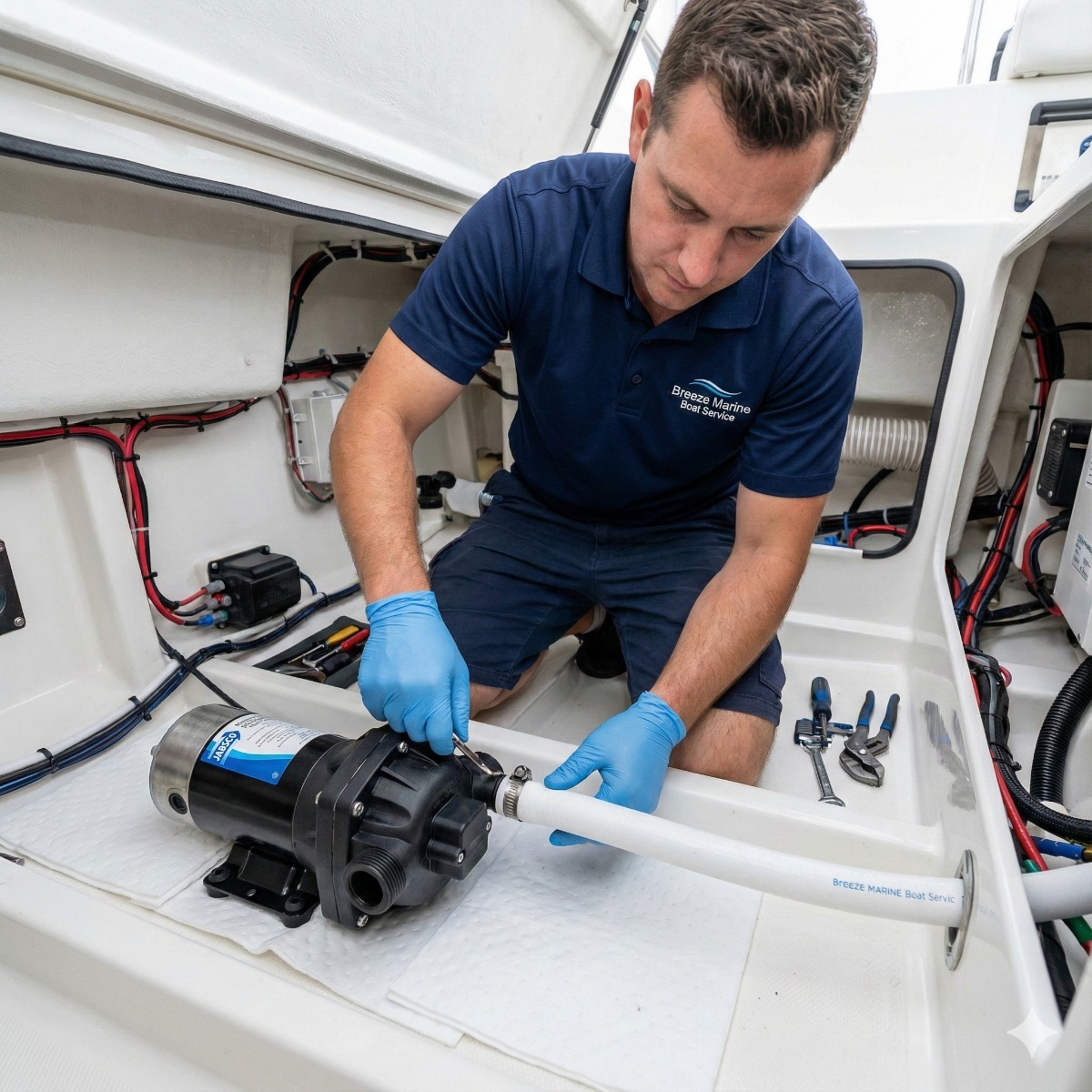
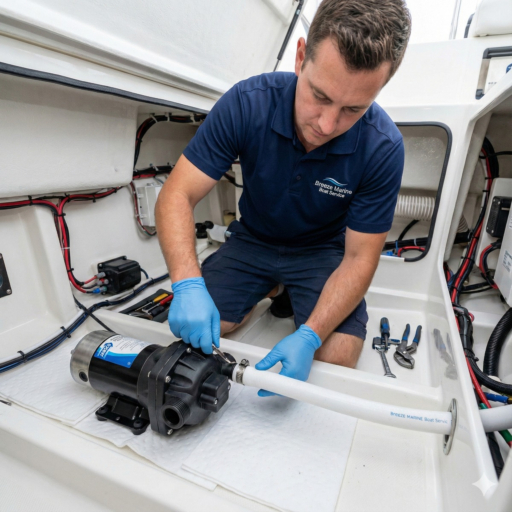
A clean macerator pump replacement is mostly about containment. The area is prepared with absorbent mats, the electrical supply is isolated, and hoses are unclamped and capped immediately to prevent spills and odor. The new pump is mounted securely, hose connections are double clamped, and clean water is run through the system to prime it and confirm flow. A Jabsco macerator replacement is common because the brand is widespread, but other makes follow the same process. Modern pumps may include run-dry protection and stronger chopper blades that resist jamming.
It is also the right time to inspect the sanitation hose. Old hose becomes permeable, lets odors pass through the walls and often has hard scale inside that restricts flow. Replacing tired hose along with the pump removes a common source of lingering smells.
Repair or replace?
Some pumps can be rebuilt with a new impeller, seal and chopper blade, and macerator pump repair makes sense when the motor is healthy. When the motor is seized, corroded or burned, replacement is usually the better value. A technician will also check the vent line on the holding tank; a blocked vent can cause odor, slow pumping and even tank damage.
Discharge rules in local waters
Federal rules prohibit discharging untreated sewage within three nautical miles of the coast, and many harbors and bays are designated no-discharge zones. In practice, most local boaters use pump-out stations, and the macerator is used only well offshore. Keep the Y-valve for overboard discharge closed and secured while in harbor.
Preventing the next failure
- Only human waste and marine-safe toilet paper go into the boat toilet.
- Never run the macerator dry; stop as soon as the sound changes.
- Flush the system with fresh water periodically, and run the pump briefly with water if the boat sits unused.
- Treat the tank with an enzyme-based product to break down solids.
When a pump fails anyway, a sanitary, well-contained blackwater system repair makes the difference between a quick job and a lingering smell. You can see our approach on the macerator pump replacement and troubleshooting page.
Macerator pump FAQ
Why does my macerator hum but not pump?
The chopper is usually jammed or the motor is seized. Stop pressing the switch and check for a manual turning slot, or have the pump removed and inspected.
How long does a macerator pump last?
With good habits it can last many seasons, but dry running or flushing the wrong items can kill it quickly.
Can I use the macerator in the harbor?
No. Untreated sewage must not be discharged within three nautical miles of shore, and many harbors are no-discharge zones.