
A low growl or rumble from the back of the boat that gets louder when you turn the wheel, or when the drive is trimmed, is one of the classic sterndrive complaints. In most cases the noise comes from the gimbal bearing, and in most of those cases the real culprit is a bellows that let water in long before the noise started. Understanding how the two parts relate helps you catch the problem before it turns into a sinking risk or a burned-out engine coupler.
How the bellows and gimbal bearing work together
A sterndrive passes power from the engine inside the boat through the transom to the drive outside. The drive shaft runs through the gimbal bearing, which supports it as it passes through the gimbal housing. Around this area sit three rubber boots known as sterndrive bellows:
- U-joint bellows: the large boot that seals the opening around the drive shaft and universal joints. This is the one that keeps the sea out of the boat.
- Exhaust bellows: routes engine exhaust out through the drive and reduces noise. On some models a split here causes exhaust sound changes rather than leaks.
- Shift cable bellows: a small boot protecting the shift cable where it passes through the transom.
The gimbal bearing is greased and sealed, but it sits right inside the U-joint bellows. When that boot cracks, seawater reaches the bearing, washes out the grease and starts rusting the races and rollers. The result is roughness, then noise, then eventually a bearing that seizes or damages the shaft and engine coupler.
Symptoms worth paying attention to
- A growl or rumble that changes with steering angle or trim position.
- Water in the bilge that is not coming from the engine cooling system, hoses or through-hulls.
- Rust-colored streaks or grease residue around the transom area inside the boat.
- Rough or clunky shifting, which can point to a worn shift cable.
- Rust on the U-joints when the drive is removed.
What owners can check
With the drive tilted fully up, look at the rubber folds of the bellows with a flashlight. Cracks often hide inside the pleats, so gently spread them with your fingers. Stiff, chalky or cracked rubber is past its service life. Inside the boat, check the bilge below the transom after the boat has been sitting in the water for a day. Listen with the engine off while someone slowly turns the wheel lock to lock; a gritty sound near the transom is a clue. Never ignore a steady trickle of water: a failed U-joint bellows can let enough water in to sink a boat at the slip.
What the repair involves
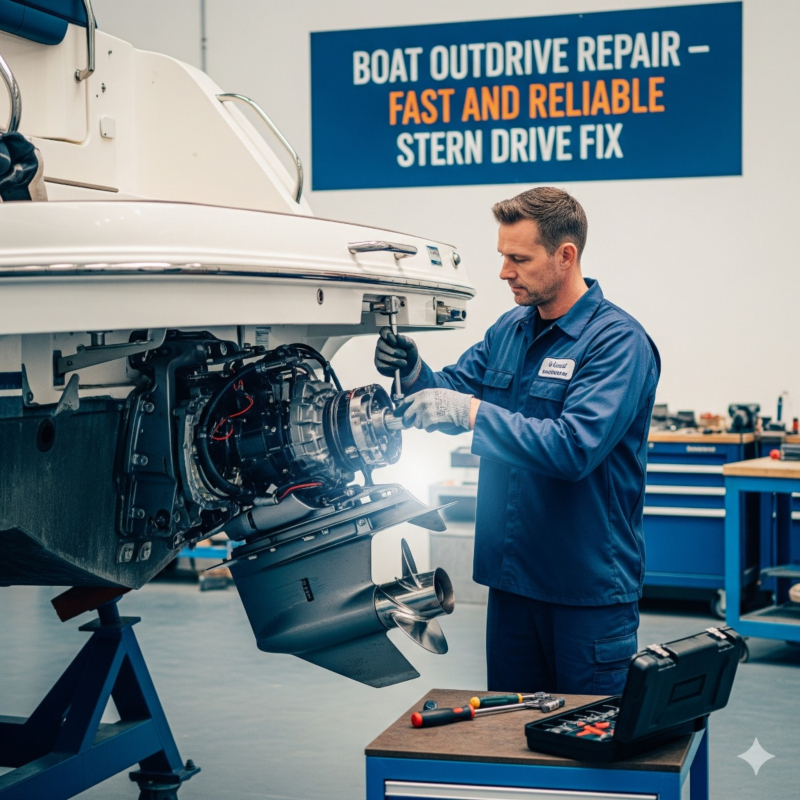
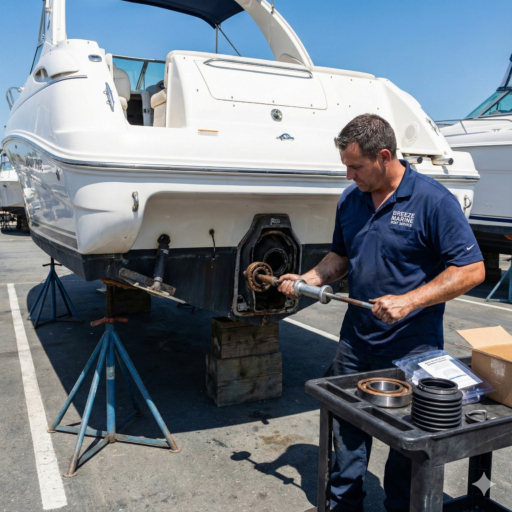
Both the bellows and the gimbal bearing sit behind the drive, so the drive must come off to reach them. That makes it sensible to handle the bellows and gimbal bearing in a single visit rather than opening the transom assembly twice. A typical outdrive bellows replacement follows these steps:
- Drive removal: the outdrive is unbolted and pulled, exposing the bell housing and U-joints.
- Inspection: U-joints, splines, the gimbal bearing and the coupler are checked for rust and wear.
- Cleaning: old rubber, glue and corrosion are removed from the mounting surfaces so the new boots can seal.
- Installation: new bellows are fitted with marine bellows adhesive and stainless clamps, positioned so they do not bind at full trim and tilt.
- Gimbal bearing replacement: the old bearing is pulled with a special puller and a new sealed bearing is pressed in.
- Engine alignment check: an alignment bar is passed through the gimbal bearing into the engine coupler. If it does not slide in easily, the engine mounts are adjusted before the drive goes back on.
The alignment step is not optional. A misaligned engine loads the gimbal bearing and wears out the coupler splines, which can cause a clunking noise and eventual loss of drive.
How often to replace bellows
Rubber ages whether the boat runs or not. For boats kept in saltwater, many technicians recommend replacing the bellows roughly every five years, sooner if cracks appear. Replacing the shift cable at the same time is usually wise, since it passes through the transom and has to be disturbed anyway. Planning this work before the rubber fails is far cheaper than dealing with a flooded engine compartment. You can read how we handle the full job on our outdrive bellows replacement and gimbal bearing service page.
Bellows and bearing FAQ
Can I keep using the boat if the gimbal bearing growls?
Short trips may be possible, but the noise means the bearing is already damaged. Continued use risks the coupler and drive shaft, and the underlying bellows leak may be letting water in.
Do all three bellows need replacing at once?
It is common practice, since the drive has to be removed for any of them and the rubber has aged the same amount.
Why does the engine need alignment after bellows work?
Removing and reinstalling the drive is the right moment to verify that the engine and gimbal bearing line up, preventing coupler and bearing wear.


