


Few things are more frustrating for a boat owner than dealing with mysterious electrical issues. A battery that's always dead or a circuit breaker that won't stay reset can ruin a day on the water. These "electrical gremlins" often stem from two common culprits: parasitic battery drains and circuit overloads. This guide will help you diagnose and solve both problems.
Part 1: Finding the Source of a Parasitic Battery Drain
A parasitic drain is a small, continuous electrical load that slowly drains your batteries even when you believe everything is turned off. It’s the reason you leave your boat with a full charge and come back to find the batteries mysteriously dead.
Symptoms of a Parasitic Drain
- Batteries are consistently low or dead after the boat sits for a few days.
- Voltage on your battery monitor drops steadily overnight with no known loads running.
- You need to use shore power or run the engine more often than usual to keep batteries topped off.
How to Find the Drain: A Step-by-Step Guide
- Prepare for the Test: Turn off all lights, electronics, and appliances on your boat. Disconnect shore power and turn off your main battery switches.
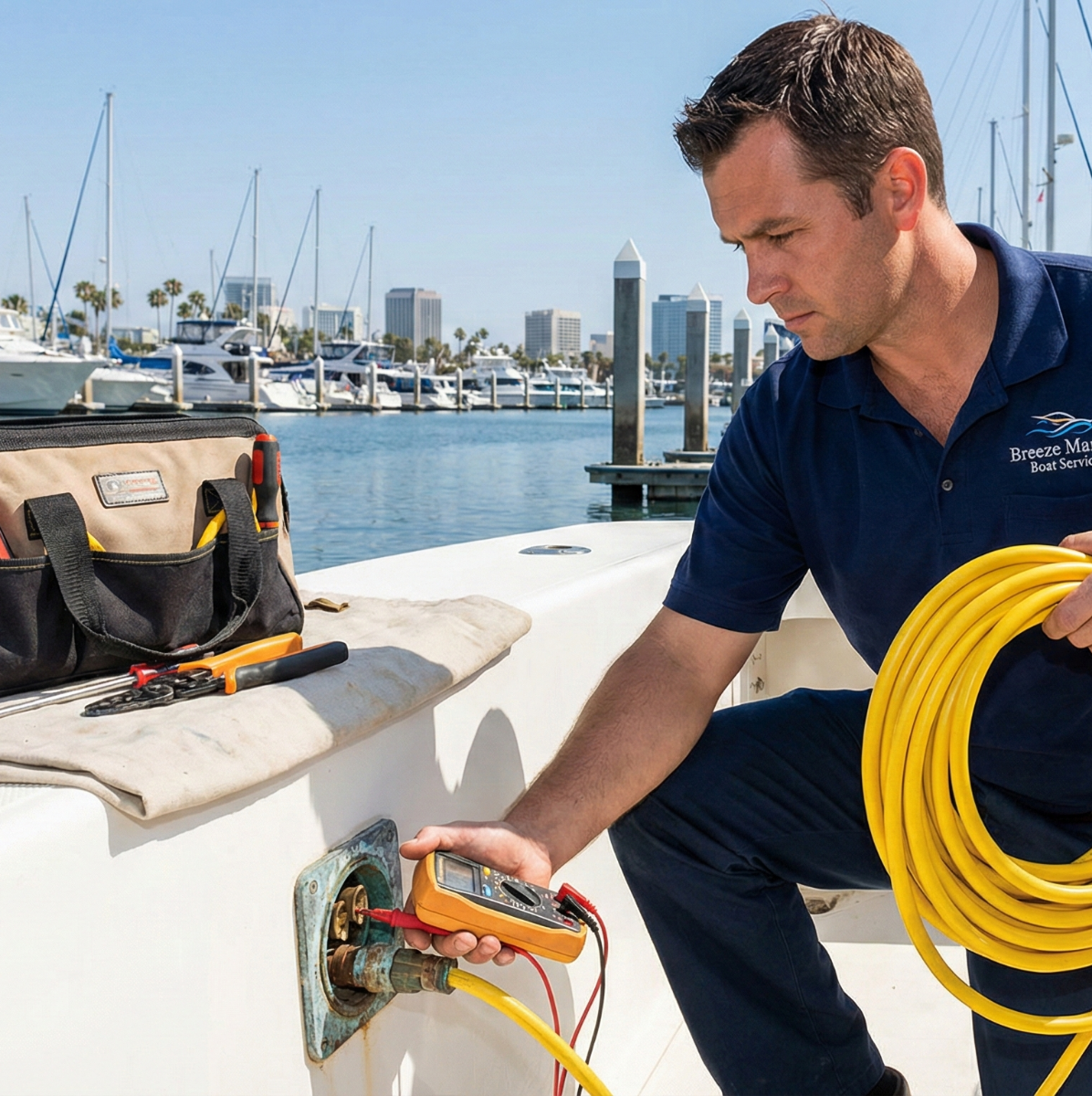
- Set Up Your Multimeter: You will need a multimeter that can measure DC amps. Set it to the highest DC Amps setting (usually 10A).
- Disconnect the Battery: Disconnect the negative battery cable from your main house battery bank terminal.
- Connect the Multimeter: Connect one lead of the multimeter to the negative battery post and the other lead to the disconnected negative battery cable. This forces all the electricity being drawn by the boat to flow through the meter.
- Read the Drain: With the battery switch still off, you should see a reading of 0.0 amps. Now, turn the main battery switch on. The reading you see on the meter is your parasitic drain. A small drain (under 50 milliamps or 0.05A) might be normal for things like stereo memory, but anything significant needs to be found.
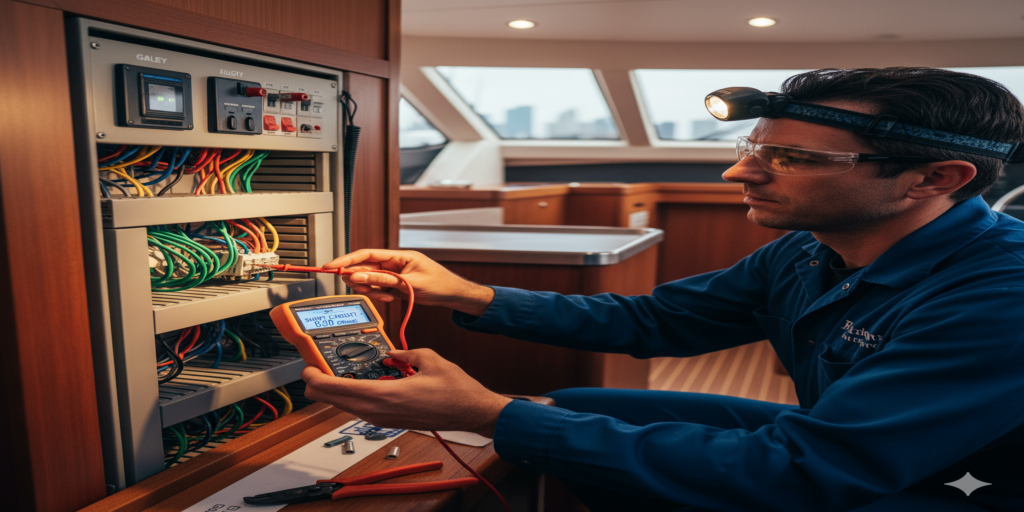
- Isolate the Circuit: Go to your main DC electrical panel and pull one fuse or turn off one circuit breaker at a time. Watch the multimeter after each one. When the amp reading drops significantly, you've found the circuit with the problem!
Pro tip: Common culprits for parasitic drains are bilge pump float switches with indicator lights, stereo memory wires, faulty USB charging ports, and carbon monoxide detectors. Start by checking those circuits first.
Part 2: Tripping Breakers
A circuit breaker is a safety device. Its job is to cut power before an overloaded or damaged circuit gets hot enough to melt insulation or start a fire, so when a circuit breaker keeps tripping, it is warning you about a real fault. Never hold a breaker on, tape it closed, or swap it for a higher-rated one.
Common Reasons a Boat Breaker Trips
- Overload: Too many devices share one circuit, or one device draws more current than the circuit is designed for, such as running the air conditioner, water heater, and microwave together on shore power, or a pump straining against a clog.
- Short to ground: Chafed or pinched insulation lets a live wire touch the engine, a metal fitting, or another conductor. A short usually trips the breaker instantly, even right after a reset.
- Failing device: A pump motor with worn bearings, a jammed windlass, or an aging appliance can draw excessive current or short internally.
- Moisture and corrosion: Saltwater in connectors, switches, and junction boxes creates unwanted current paths, a frequent cause of boat electrical problems. Breakers can also weaken with age and corrosion and start tripping below their rating.
- Undersized wire: Equipment added to an existing circuit may need more current than its wiring can carry. The fix is correctly sized wire and protection, never just a bigger breaker, which could let the wire overheat.
- GFCI and ELCI trips on shore power: GFCI outlets and the ELCI (equipment leakage circuit interrupter) on the shore power feed of many newer boats trip when current leaks to ground, and many marina pedestals have similar protection. Common triggers include a failing water heater element, moisture in an outlet, and neutral and ground wrongly connected on board. Leakage current is a shock hazard, so take these trips seriously.
How to Diagnose a Tripping Breaker Safely
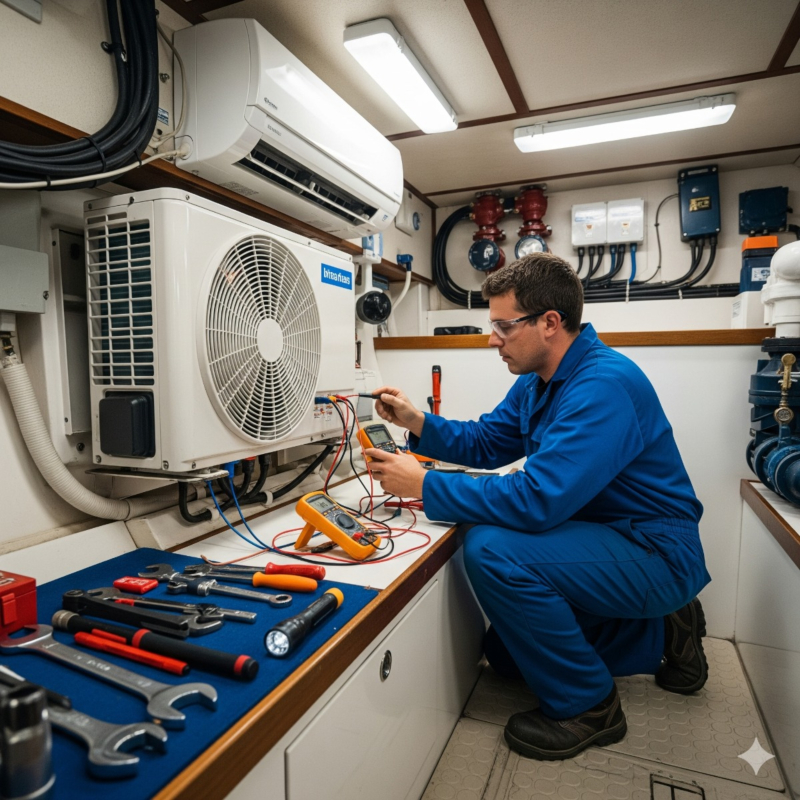
- Work safely: Turn the circuit off before inspecting anything. For AC problems, also unplug shore power and shut down the generator and inverter, because AC voltage can kill.
- Note when it trips: An instant trip points to a short, a delayed trip to an overload or a struggling motor, and trips only in wet weather or after a washdown to moisture.
- Isolate the load: Switch off everything on the affected circuit, then reset the breaker. If it holds, reconnect devices one at a time until the trip returns.
- Inspect the wiring: If it trips with nothing connected, check the circuit for chafed, melted, or discolored insulation, corroded terminals, or a burning smell.
- For GFCI or ELCI trips: Turn off the AC branch breakers, reset the device, then turn the branches back on one at a time to find the culprit.
- Know when to stop: Reset a breaker once or twice at most. Repeatedly resetting into a fault can damage wiring and equipment.
When to Call a Marine Electrician
Call a professional for marine electrical troubleshooting if a breaker trips immediately with all loads off, if you find heat damage or smell burning, if the problem involves the AC system, generator, inverter, or ELCI, or if you are unsure whether added equipment is wired for its load. Marine wiring should meet ABYC standards, and household parts are not a substitute. For boat electrical repair in Long Beach and San Pedro, our technicians can help trace the fault and fix it safely.
Frequently asked questions: Parasitic battery drain
Why does my boat circuit breaker keep tripping?
A breaker that keeps tripping is protecting the circuit from a short to ground or from a device drawing more current than the circuit is rated for, such as a seized pump motor. Never hold or tape a breaker closed, since that can start a fire. Disconnect the loads on that circuit one at a time, and have a marine electrician trace the fault.
How is a short circuit different from an overload on a boat?
An overload happens when a working device, or too many devices, draw more current than the circuit is designed for, which usually trips the breaker after a delay. A short circuit is an unintended path, such as chafed insulation touching metal or seawater in a connector, that lets current flow almost unrestricted and trips the breaker or blows the fuse instantly.
Should I turn off the battery switch every time I leave the boat?
In most cases yes, because it is a simple way to stop a parasitic battery drain from flattening your batteries while you are away. First confirm which circuits must stay live, such as an automatic bilge pump, which is often wired to bypass the main switch, and any security or monitoring devices. If batteries still drain with the switch off, have the wiring checked.
Can a shore power battery charger hide a battery drain problem?
Yes. While the boat is plugged in, a battery charger can quietly replace the current that a faulty device or wiring leak is using, so the problem only shows up after you leave the dock or unplug. If batteries die quickly once shore power is disconnected, test for a boat battery drain with the charger off and have the batteries themselves tested too.