A loud clatter that shows up while a boat idles at the dock, then fades as soon as the throttle comes up, worries owners more than almost any other noise. In most inboard boats the source is a worn damper plate, a spring-loaded disc hidden between the engine and the transmission. This guide explains what the part does, which damper plate symptoms to watch for, how to tell the sound apart from serious engine damage, and what a repair actually involves.
What the Damper Plate Does
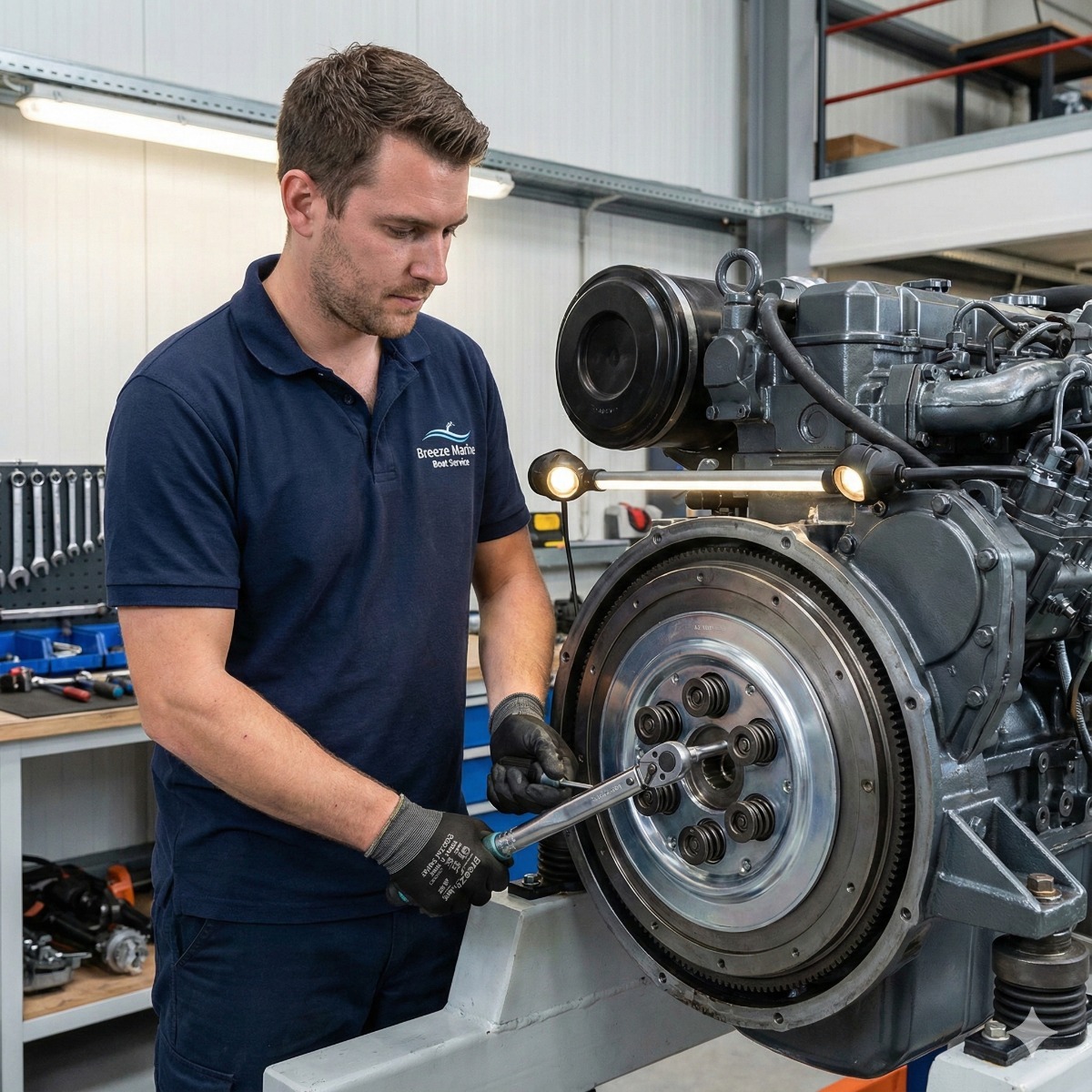
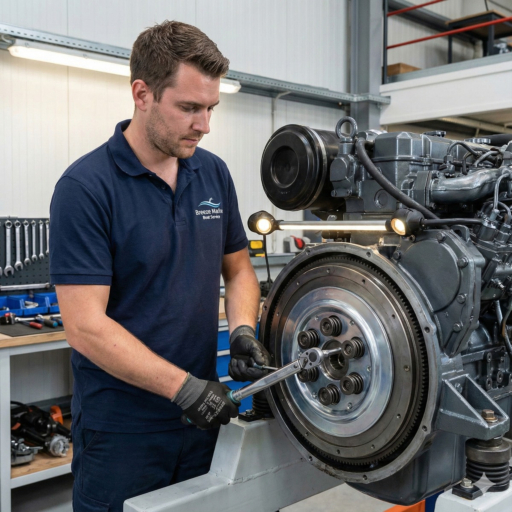
Every combustion stroke sends a small shock through the crankshaft. In a boat, the engine usually connects straight to a marine gearbox with no clutch to soften those pulses, so the damper plate, also called a marine drive plate, takes on that job. It bolts to the flywheel, and its splined center hub accepts the transmission input shaft. Coil springs set around the hub compress and release with each firing pulse, smoothing the power before it reaches the gears.
Some installations, especially diesels on soft engine mounts, use a torsional coupling instead of a spring plate. It relies on a rubber or elastomer element rather than steel springs, and it wears in a similar way, hardening and cracking with age and heat.
Warning Signs of a Worn Plate
Springs rarely fail all at once. They lose tension, wear their pockets oval and eventually crack, and the sound and feel of the boat change as that happens. The most common damper plate symptoms are:
- A rattle at low idle that sounds like gravel shaken in a can and fades once rpm rises a little.
- A clunk when shifting into forward or reverse, as slack in the worn hub is taken up.
- Metal dust or spring fragments in the bell housing, visible through an inspection opening.
- Sudden loss of drive with the engine running normally, which can mean the hub has sheared or its splines have stripped.
Damper Plate Rattle or Something Worse?
Owners often fear a rod knock, and the two can sound alike from the helm. The difference is in how the noise behaves. A rod knock usually gets louder and sharper as load and rpm increase, and it is present in neutral as well as in gear. A worn damper plate is usually loudest at low idle in gear, quiets down as rpm climbs, and often changes when you shift between neutral and forward.
Other sources worth ruling out include a loose exhaust clamp, a heat shield touching the manifold, a failing raw water pump bearing and loose alternator brackets. If there is any doubt about a rod knock, stop running the engine and have it checked, because a failing bearing gets worse quickly.
What an Owner Can Check First
- Listen in neutral and then in gear at the same rpm. A clear change between the two points toward the drivetrain.
- Raise the idle slightly and note where the noise disappears. A spring rattle often stops just above normal idle.
- Inspect the engine mounts for cracked rubber or loose nuts. Tired mounts let the engine move and can make a rattle worse.
- Note when the noise started, for example after a grounding, a hard wake or an engine change, and pass that on to the technician.
What Damper Plate Replacement Involves
In a damper plate replacement, the part itself is simple; getting to it is the hard part. The transmission, or on some boats the whole drive, has to come away from the engine so the flywheel face is exposed. In a V-drive or a tight engine room, that can mean moving the engine forward on its mounts. Once the old plate is off, the technician checks the flywheel face, the dowel pins and the input shaft splines, because a damaged spline will chew up a new plate quickly.
A heavier-duty or high-deflection plate is often chosen for engines that have been repowered or spend long hours at low speed, since those conditions load the springs harder. If your boat shows the signs above, our damper plate service in Long Beach covers separating the transmission, fitting the new plate and realigning the drivetrain.
Why Engine Alignment Matters Afterward
Reinstalling the transmission is only half the job. The shaft coupling faces must meet within a few thousandths of an inch, and engine alignment is best checked with the boat in the water, after the hull has settled. A misaligned drivetrain loads the new plate, the transmission input bearing, the cutless bearing and the shaft seal, and it can bring back a vibration that feels like the original problem.
When to Call a Technician
Call for help if the rattle is new or getting louder, if you feel a clunk when shifting, or if the boat loses drive while the engine keeps running. Investigate straight away if engine rattle at idle comes with rising temperature, low oil pressure or smoke, because those point to something other than the drivetrain. Leaving a broken plate in service risks loose springs in the bell housing, damage to the starter ring gear and extra wear that can turn into boat transmission repair.
Damper Plate FAQ
Does a new plate fix every engine rattle at idle?
Only when the plate is the cause. Loose mounts, exhaust parts and accessory brackets can make similar noises, which is why the drivetrain should be inspected before parts are ordered.
Is the marine drive plate the same on every boat?
No. Plates differ in diameter, spline count, spring rate and bolt pattern, and they must match both the flywheel and the transmission input shaft. Some boats use a torsional coupling instead of a plate, so matching the part to the engine and gearbox is part of the job.