
Hydraulic steering is smooth and low effort when it is healthy, which makes it easy to forget about until the wheel starts feeling wrong. A steering system that is spongy, stiff, slow to respond or drifting off course is not just an annoyance. Steering is a safety system, and changes in feel are early warnings worth taking seriously.
How hydraulic boat steering works
Behind the wheel sits the helm pump. Turning the wheel pushes hydraulic steering fluid through two hoses or tubes to a steering ram, also called a cylinder, mounted at the engine or rudder. The ram extends or retracts and turns the outboard, drive or rudder. Because liquids do not compress, every turn of the wheel produces a precise movement at the engine, as long as the system is full of clean fluid and free of air.
Symptoms and what they usually mean
Spongy steering or extra turns lock to lock
Air in hydraulic steering is the classic cause. Air compresses, so part of each wheel turn is spent squeezing bubbles instead of moving the engine. You may also notice the wheel needs more turns than it used to from full port to full starboard, or that the engine does not return to the same position for the same wheel angle.
Stiff boat steering
Stiffness often comes from old, contaminated fluid, a binding tilt tube or steering arm on an outboard, or a ram that is corroded and dragging. Fluid slowly absorbs moisture and breaks down, becoming thicker and dirtier over years of use.
Clicking, knocking or wheel drift
A wheel that drifts or will not hold position with the engine under load can point to worn check valves in the helm pump. Clicking may come from air, a loose mount or internal wear.
Fluid on the floor or near the engine
Any leak lets air in and fluid out. Look for weeping at the helm pump shaft seal behind the wheel, at fittings along the hose run and at the wiper seals on the steering ram.
What purging and flushing involve
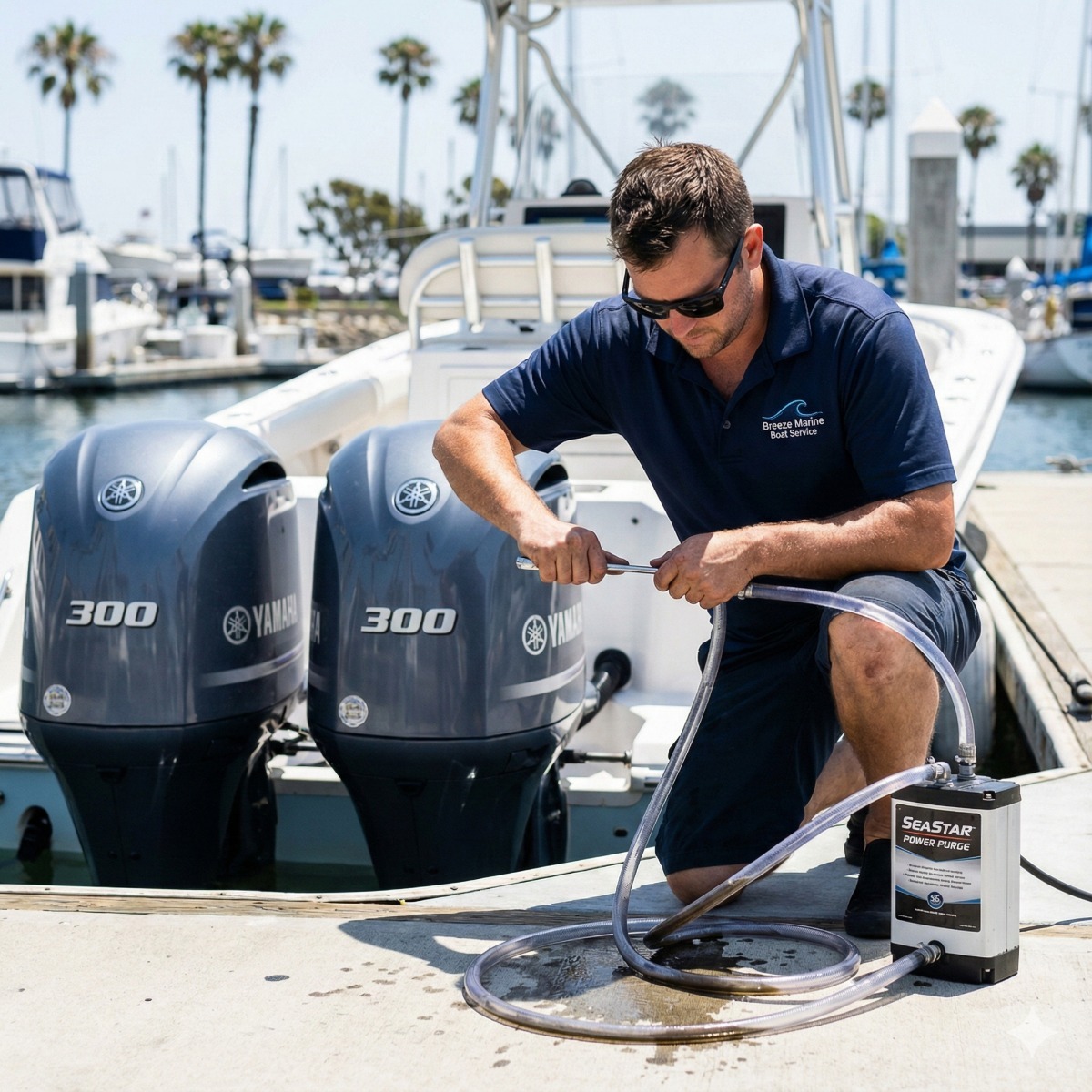
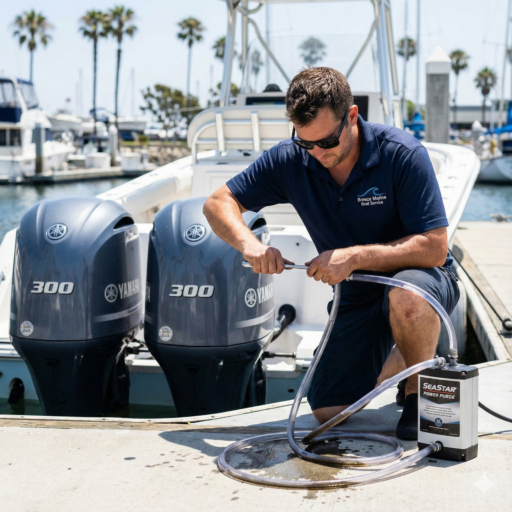
To bleed hydraulic steering by hand, one person turns the wheel and keeps the helm topped up while another opens bleed fittings on the cylinder until fluid runs clear of bubbles. It works but is slow, and small bubbles often remain. A hydraulic steering purge with a power purge unit instead pumps fluid through the system in a closed loop, pushing air and old fluid out while fresh fluid goes in. The wheel is cycled lock to lock during the process to dislodge trapped air.
A boat steering fluid flush goes further by replacing all the old fluid, not just enough to remove air. That matters on older systems where the fluid is dark or contaminated. Only the fluid specified by the steering manufacturer should be used, since mixing types can damage seals.
Purging a system that is leaking is wasted effort. Leaks are found and fixed first, typically by replacing seals in the helm or ram, and then the system is purged and pressure-tested.
What owners can check
- Check the fluid level at the helm fill port with the engine centered, following the manufacturer's instructions.
- Wipe the helm shaft area, hose fittings and ram with a clean rag and look for fresh fluid.
- Count wheel turns lock to lock and compare with the owner's manual.
- With the engine off, grease the tilt tube and steering pivot points on outboards as specified.
- Inspect hoses for cracks, chafe or kinks where they pass through bulkheads.
When to stop and call a technician
Stop using the boat and arrange boat steering system repair if the steering suddenly becomes loose, the wheel spins without moving the engine, fluid is actively leaking or the steering binds at any point in its travel. Loss of steering at speed or in a crowded harbor is dangerous. For routine sponginess or stiffness, a scheduled hydraulic steering purge and fluid flush usually restores the original feel.
Hydraulic steering FAQ
How often should hydraulic steering fluid be changed?
Follow the manufacturer's schedule. Many owners have the fluid checked annually and flushed every few years or when it becomes dark, cloudy or contaminated.
Can I use automatic transmission fluid in my steering?
Only if the steering manufacturer specifies it. Many systems require a dedicated hydraulic steering fluid, and the wrong fluid can harm seals.
Why did my steering get spongy after the engine was serviced?
If hoses were disconnected or the engine was removed, air can enter the system. A proper purge after reconnection normally fixes it.