
Saltwater is hard on trailers. Every launch dunks the axles, brakes, springs and frame in seawater, and every drive home leaves that salt sitting in seams, brake drums and spring leaves. A quick walk-around before each trip catches obvious problems, but it does not replace a thorough yearly service. If you are searching for boat trailer service near me, this guide explains what an annual saltwater service should cover, what you can reasonably do yourself, and where a technician earns their time.
Why saltwater trailers need an annual service
Freshwater trailers can go years with light attention. Saltwater trailers corrode from the inside out: salt gets into hollow frame members, behind brake backing plates and between spring leaves, where a hose rinse never reaches. By the time rust shows on the outside, the damage underneath is usually well along. A yearly service, ideally before the busy season, looks at the parts that fail quietly and then fail all at once on the freeway.
Surge brakes: actuator and brake lines
Most boat trailers use surge brakes. When the tow vehicle slows, the trailer pushes forward on the coupler, which compresses a master cylinder inside the actuator and sends brake fluid to the wheels. It is a simple system, but it lives in a harsh environment.
Actuator inspection
The actuator slides in its housing and needs to move freely. Corrosion, dried grease or a bent shaft make it stick, so the brakes either drag or never apply. A service checks the slide, the damper, the breakaway cable, and the reverse lockout, whether it is a manual pin or an electric solenoid.
Brake fluid and lines
Brake fluid absorbs moisture over time, and in a surge system that water settles in wheel cylinders and calipers and corrodes them from within. Flushing the lines with fresh fluid, checking the reservoir, and inspecting steel lines for rust and rubber hoses for cracks are core parts of annual trailer boat repair. Where lines are badly corroded, replacing them with stainless or coated lines is usually a better choice than patching.
Drums, discs and hardware
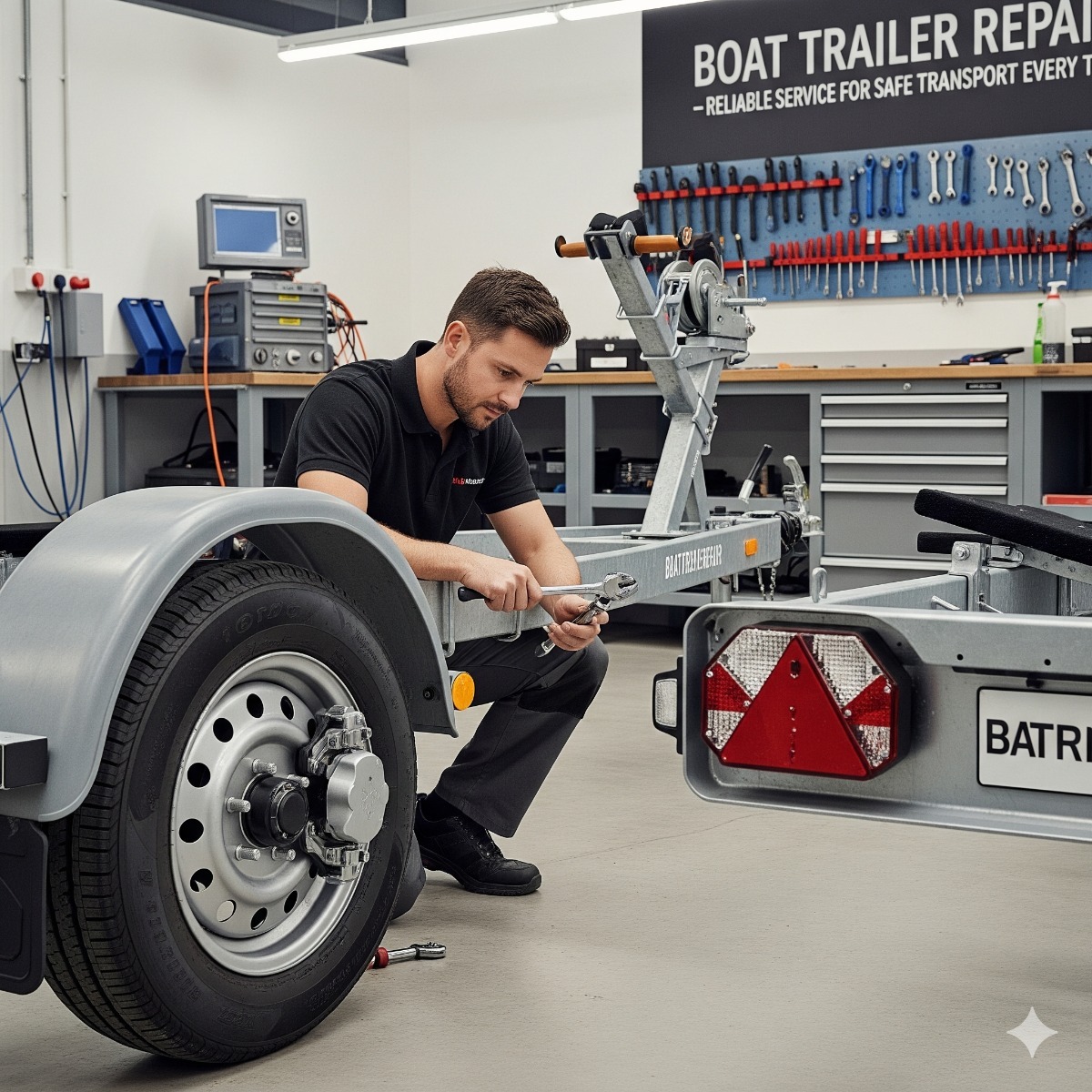
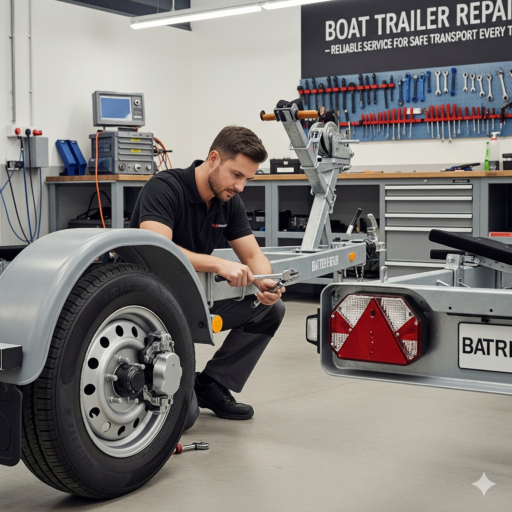
Pulling the wheels lets the technician see rotor or drum condition, pad and shoe wear, seized caliper slides and rusted adjusters. Many owners rinse the brakes with a flush kit after each launch, which helps, but it does not remove built-up scale.
Frame and crossmember inspection
Galvanized frames hold up well, but the zinc coating wears through at welds, bolt holes and places where bunks and rollers rub. Painted steel frames fare worse. Aluminum frames avoid rust but can suffer galvanic corrosion where steel fasteners or brackets touch them.
A proper inspection covers the underside of each crossmember, the inside of box sections where they can be reached, welds at the tongue, and the areas under the bunk brackets. Look for flaking, swelling, pinholes and cracks. A light tap with a hammer often reveals thin metal that looks solid.
Leaf springs and U-bolts
Leaf springs rust between the leaves, which makes them stiff and eventually leads to cracked leaves. Spring eyes and hangers wear, and shackle bolts can wear oval. The U-bolts that hold the axle to the springs stretch and loosen, and their nuts corrode. A service checks spring condition and arch, bolt and bushing wear, and U-bolt tightness. Replacing springs and U-bolts together is common on older saltwater trailers.
Tires: age matters more than tread
Trailer tires often age out before they wear out. Sidewalls crack from sun and ozone even when the tread looks new. Every tire carries a DOT code on the sidewall ending in four digits: the first two are the week and the last two the year of manufacture. Many tire makers recommend replacing trailer tires after a set number of years regardless of tread, so check the manufacturer's guidance. Also compare the load rating with the combined weight of trailer, boat and gear, and inspect the spare, which is often the oldest tire on the rig.
Winch, strap and coupler
The winch strap or cable holds the boat on the trailer. Straps fade and fray in the sun; cables kink and break strands. Check the winch gear and pawl, the bow stop, and the safety chain from the winch post to the bow eye. At the front, inspect the coupler latch for wear, make sure it locks fully onto the ball, and confirm the ball size matches the coupler. Safety chains should be in good condition with proper hooks.
What owners can do versus a service visit
- Owner jobs: fresh water rinse after every launch, brake flush, tire pressure checks, looking over straps and chains, and greasing any fittings the trailer maker specifies.
- Service visit: brake fluid flush and bleed, actuator rebuild, wheel removal and brake inspection, spring and U-bolt replacement, frame inspection, and brake line replacement.
Owners whose search is boat trailer service near me, boat trailer maintenance near me or a boat trailer repair shop near me often expect to drop the trailer off somewhere. A mobile service can handle much of this work where the trailer is parked, which saves towing a trailer with questionable brakes across town.
Help in LA County
Breeze Marine Boat Service LLC is a licensed and insured mobile boat repair company based in San Pedro, serving Long Beach, San Pedro and LA County. We no longer sell parts; if components need replacing, you source them and we install them. See our boat trailer repair service for the work we handle, and use the questions below as a checklist whether you work with us or another boat trailer repair shop.
Trailer Service FAQ
How often should a saltwater boat trailer be serviced?
At least once a year with a full inspection, plus a fresh water rinse and brake flush after every saltwater launch.
How do I tell how old my trailer tires are?
Find the DOT code on the sidewall. The last four digits show the week and year the tire was made.
Why do my surge brakes drag?
Usually a sticking actuator, a seized caliper or a corroded wheel cylinder. The reverse lockout can also stay engaged if its solenoid or pin fails.