
Marine air conditioning works hard in Southern California. When a unit starts shutting itself down after a few minutes with a fault code, most owners fear a failed compressor. In many cases the unit itself is fine: it simply cannot get rid of heat because the seawater side is restricted. Understanding why this happens makes it easier to fix and to prevent.
How Marine AC Rejects Heat
A marine air conditioner moves heat out of the cabin and dumps it into seawater. A pump pulls water through a through-hull and sea strainer, pushes it through the condenser coils wrapped around the refrigerant line, and sends it overboard. If less water flows, heat builds, refrigerant pressure rises and the control shuts the compressor down to protect it. That shutdown shows as a high pressure fault. On many units, a Dometic HPF error is the same message: the system is protecting itself.
Common Causes of Restricted Flow
- A clogged sea strainer basket full of weed, shells or plastic
- Barnacles or mussels growing inside the through-hull or intake
- Scale and marine growth coating the inside of the condenser coils
- A worn or airlocked seawater pump
- Kinked, collapsed or undersized hoses
- A closed or partially closed seacock
Warm water accelerates marine growth, so boats kept in the harbor year-round tend to build up deposits steadily. A system that ran well last summer can start faulting this summer with no single event to blame.
Symptoms to Watch For
- The AC runs for a few minutes, then stops and shows a fault code
- Weak or intermittent water flow from the overboard discharge
- Air from vents that is cool but not cold
- Faults that get worse on hot afternoons when water temperature rises
- Pump noise changes or the pump running without moving water
What an Owner Can Check
Start with the easy items. Make sure the seacock is fully open. Close it, remove the strainer lid and clean the basket, then reopen and confirm water fills the strainer. Watch the overboard discharge with the system running; a strong, steady stream is what you want. If flow is weak with a clean strainer, the restriction is in the intake, pump, hoses or coils. If the pump loses prime, air may be trapped; some systems need the pump mounted below the waterline and hoses run without high loops.
How Descaling Works
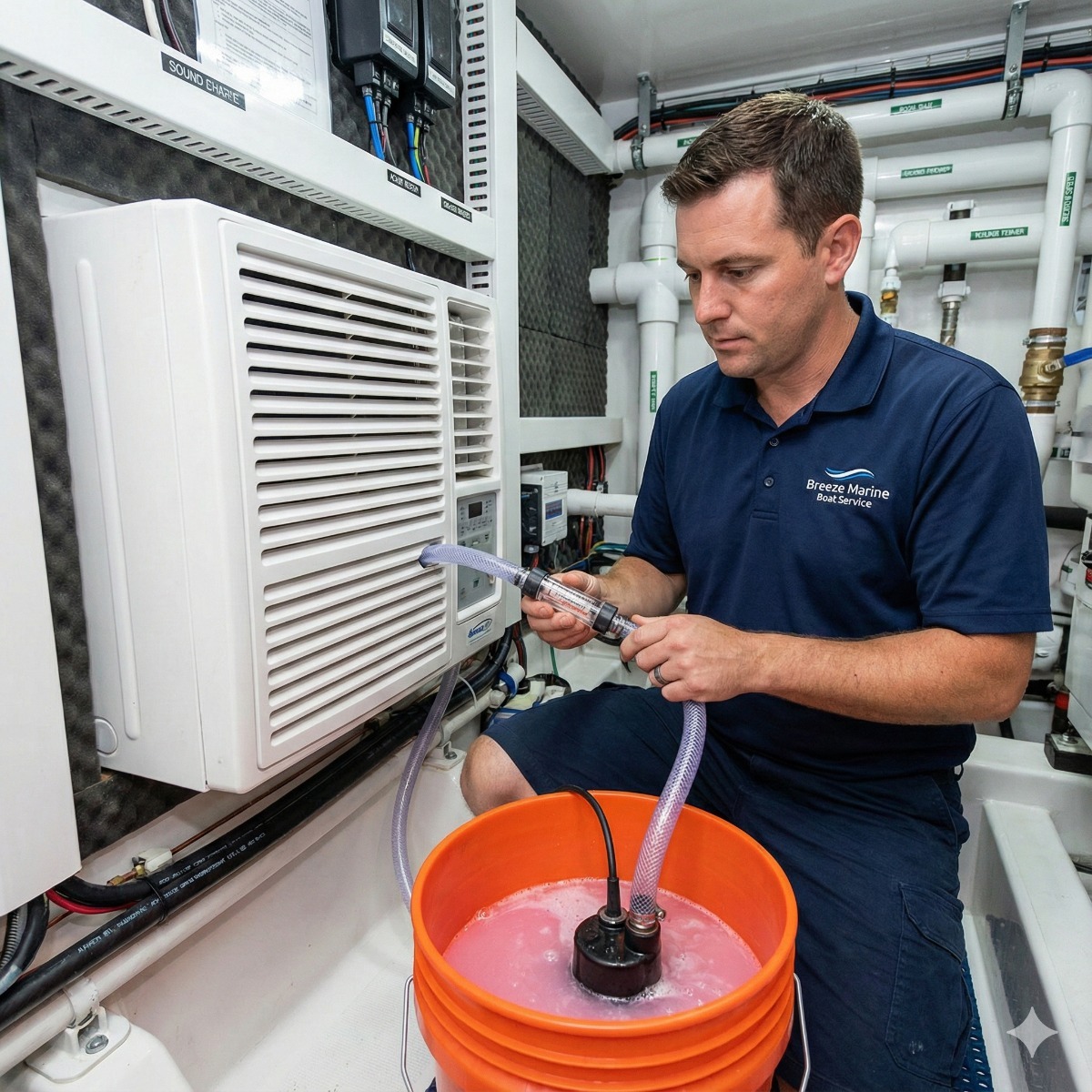
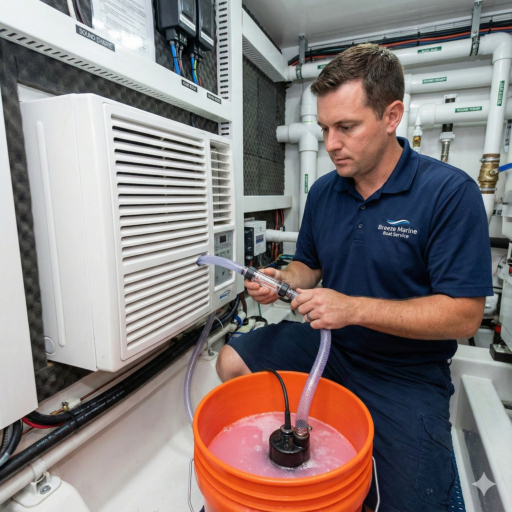
When scale and growth have built up inside the coils, cleaning the strainer will not fix it. Marine ac descaling means circulating a descaling solution through the seawater circuit to dissolve calcium deposits and soften shell growth. The technician closes the seacock, disconnects the hoses at the pump and overboard, and connects a separate circulation pump and bucket. The solution then runs through the pump, coils and hoses for a period, typically until it stops changing color and fizzing. Afterward the system is flushed with fresh water, reconnected and tested.
A boat ac acid flush uses products designed for marine condensers and copper-nickel tubing. Harsh or unsuitable acids can damage coils, which is one reason this job is better handled by someone familiar with the process. Spent solution must also be disposed of properly rather than dumped in the marina.
After the Flush
With full water flow restored, the compressor runs at normal pressure, faults stop and cooling improves noticeably. A marine ac technician will also check refrigerant-side performance, supply and return air temperatures, the pump and the electrical supply. If faults continue after a successful flush, a low refrigerant charge, failing pump, faulty sensor or electrical issue may be involved.
Prevention
- Clean the strainer basket regularly, more often in summer
- Consider periodic descaling as part of seasonal maintenance
- Keep hose runs free of kinks and high loops
- Clean return air filters so the evaporator side is not restricted too
When to Call for Help
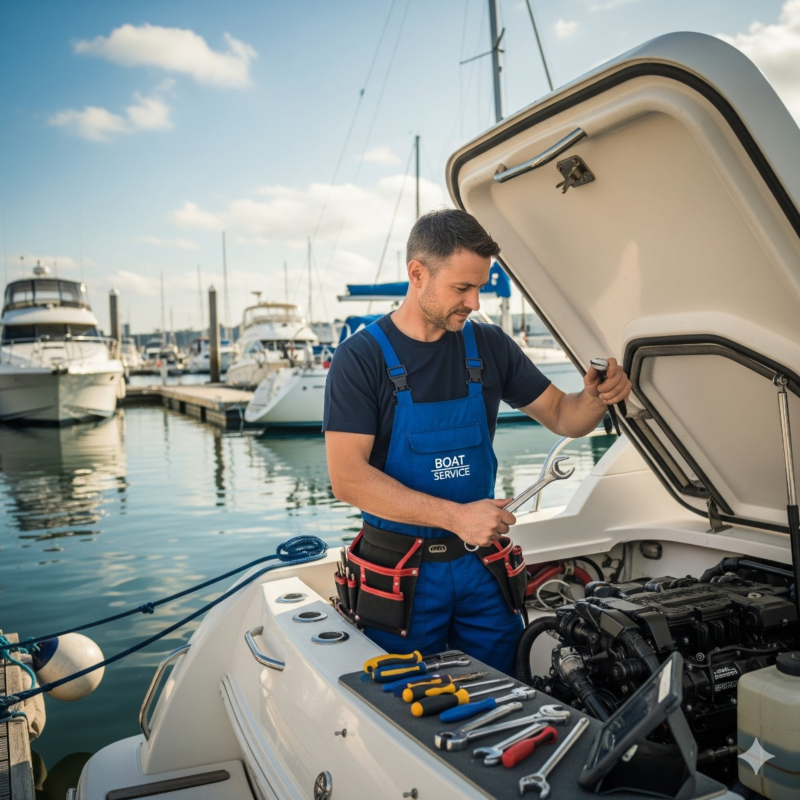
If the fault returns with a clean strainer and open seacock, or if flow stays weak, it is time for professional service. Owners searching for marine hvac long beach or boat hvac long beach service can book our marine AC descaling and acid flush service, which covers San Pedro, Long Beach and Los Angeles County.
Boat AC High Pressure Fault FAQ
Does a high pressure fault mean the compressor is broken?
Usually not. Most often the system is protecting itself because seawater flow is restricted.
How often should marine AC be descaled?
It depends on water temperature and use. Boats in warm harbors running AC often benefit from descaling at regular seasonal intervals.
Can I flush the system myself?
Some owners do with the right kit and product, but it must be compatible with the coils, and spent solution requires proper disposal.