
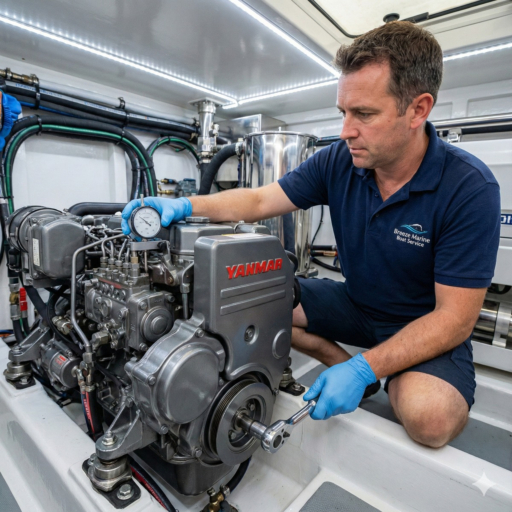
A diesel engine has no spark plugs. It relies on compressing air until it is hot enough to ignite fuel the instant it is sprayed into the cylinder. That makes the moment of injection critical. On older and many workboat and sailboat auxiliary engines, that moment is controlled mechanically by the injection pump, and it can drift over time. When diesel injection timing is out, the engine tells you through smoke, noise and lost power. Understanding the symptoms helps you describe the problem accurately and avoid chasing the wrong fix.
Why Timing Matters
Fuel takes a short time to ignite and burn after it is injected. Injection has to begin a few degrees before the piston reaches top dead center so peak pressure occurs just after it. If injection starts too late, the fuel burns while the piston is already moving down, so energy is wasted and some fuel leaves unburned. If it starts too early, pressure rises while the piston is still coming up, causing harsh knocking and high cylinder loads.
Symptoms of Incorrect Timing
Late (retarded) timing
- White smoke at idle and on cold start that clears as the engine warms.
- Hard starting, especially in cool weather.
- Sluggish response and loss of power.
- Higher exhaust temperatures.
Early (advanced) timing
- Loud, sharp diesel knock, particularly at low speed.
- Black smoke under load in some cases.
- Rough running and increased vibration.
Timing is not the only cause of these signs, which is why diagnosis matters. Dirty or worn injectors, a restricted air intake, a fouled turbo, contaminated fuel or low compression can produce similar smoke. White smoke can also indicate coolant entering a cylinder, which has a sweet smell and needs urgent attention. A good marine diesel mechanic rules these out before touching the pump.
Why Timing Drifts
- Wear in timing gears or, on some engines, stretch in a timing belt or chain.
- Internal wear inside the injection pump.
- Pump mounting bolts that were loosened during other work and not reset correctly.
- A pump that was replaced or overhauled without verifying the timing on installation.
How Timing Is Checked and Set
Every method begins with finding top dead center on the compression stroke of the reference cylinder, using flywheel marks, a timing pointer or a piston stop. From there, the technician compares the point where injection begins against the engine maker's specification, measured in degrees of crankshaft rotation or in plunger lift.
Spill timing
Spill timing is a traditional method used on many inline and some rotary pumps. The delivery valve for the reference cylinder is modified or removed, fuel is fed to the pump, and the engine is turned slowly by hand. Fuel flows out of the outlet until the pump plunger closes the port, at which moment the flow stops. That point marks the start of injection, and it is compared against the flywheel.
Static timing with dial indicators
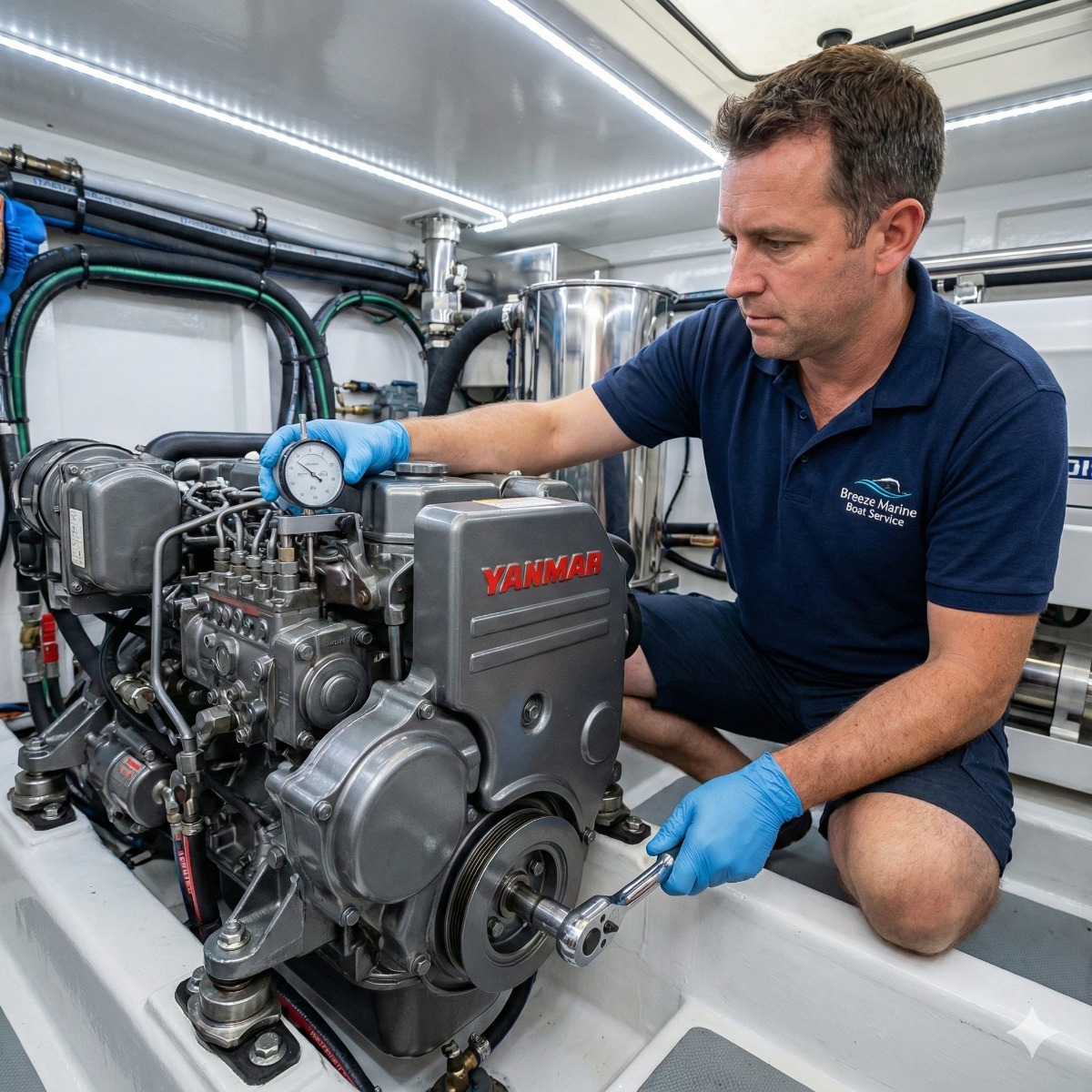
Many pumps are timed by measuring internal plunger movement. A dial gauge is fitted to the pump through a special adapter, and the engine is rotated until the specified lift is reached at the correct flywheel angle. Using dial indicators allows very precise static timing on pumps where spill timing is impractical.
Adjustment
Once the error is known, the pump body is rotated on slotted mounts, or shims or gear positions are changed, to advance or retard the timing. The mounting is torqued and the measurement rechecked. Finally, the engine is run to confirm easy starting, a smooth idle and clean exhaust.
Timing Versus Calibration
Injection pump timing sets when fuel is delivered. Injection pump calibration concerns how much fuel each element delivers and how evenly, which is done on a test bench after an overhaul. If one cylinder receives more fuel than the others, retiming alone will not fix the problem. Both are specialist work on mechanical injection systems, and results depend on correct specifications for the exact engine and pump model.
What Owners Can Do
- Note when smoke appears and its color: cold start, idle, under load or all the time.
- Check the air filter and look for restrictions in the intake.
- Change fuel filters and check for water in the separator.
- Record whether any recent work involved removing or loosening the injection pump.
When to Call a Technician
Retiming requires the right adapters, specifications and experience, and small errors have large effects. Call for help if smoke persists after basic fuel and air checks, if knocking is new, or after any pump removal. Our diesel injection pump timing and calibration service checks the timing against specification and sets it correctly.
Diesel Timing FAQ
Can timing change without anyone touching the pump?
Yes. Gear and pump wear, or belt stretch on some engines, can let timing drift gradually over many hours.
Is dark exhaust always a timing problem?
No. Overloading, a dirty hull, a wrong propeller, a blocked air filter or bad injectors are more common causes.
Do electronically controlled diesels need this?
Common rail and electronic engines manage timing through the engine computer, so diagnosis uses scan tools rather than mechanical timing.