
A gasoline boat engine needs three things to run: fuel, air and a strong spark delivered at exactly the right moment. When the spark weakens, the engine tells you through stumbling, bucking under acceleration, rough idle and hard starting. Fuel problems can produce similar symptoms, which is why ignition faults are often misdiagnosed. This guide focuses on the parts beyond the spark plugs themselves: coils, wires, modules and the safety circuits that can shut everything down.
How Marine Ignition Differs
Marine ignition components are designed to be ignition protected, meaning they will not ignite fuel vapor that can collect in an enclosed engine compartment. That is why automotive parts should never be substituted, even if they fit. Boats also subject ignition parts to heat, humidity and salt, which breaks down insulation far faster than on a car.
Common Causes of Misfires
Ignition coils
Ignition coils step battery voltage up to the tens of thousands of volts needed to jump the plug gap. Heat cycles eventually crack the internal insulation, and a failing coil often works when cold and then breaks down as the engine warms. Hairline cracks in the coil tower allow spark to leak to ground, especially on damp mornings.
Ignition wires
Plug leads carry that high voltage to each cylinder. Over time the insulation hardens and cracks, boots lose their grip, and terminals corrode. In the dark you may see faint blue arcing along a bad wire. Resistance-type wires can also fail internally, so a wire that looks perfect may still be open.
Electronic ignition modules and sensors
Most modern engines use electronic ignition, with a module and pickup sensor replacing mechanical points. When these fail they tend to fail suddenly: the engine cuts out and will not restart, or runs until it gets hot and then dies. Heat-related failures are a strong clue pointing to a module or sensor.
Safety lanyard and safety circuits
The kill switch lanyard and its wiring are a surprisingly common cause of no-spark complaints. A corroded switch or a chafed wire in the harness can ground the ignition intermittently, producing random cutouts that look like a serious engine fault. Neutral safety switches and key switches can cause similar trouble.
Symptoms and What They Suggest
- Misfires under acceleration but smooth idle: weak coil or wire breaking down under higher cylinder pressure
- Engine dies when hot, restarts after cooling: module, sensor or coil
- Random cutouts over bumps: loose connection, harness chafe or a faulty lanyard switch
- Hard starting on damp mornings: cracked coil tower, leaking wires or moisture in a cap
- Single cylinder dead: that cylinder's plug, wire or coil, or a mechanical issue
How a Technician Diagnoses Ignition Problems
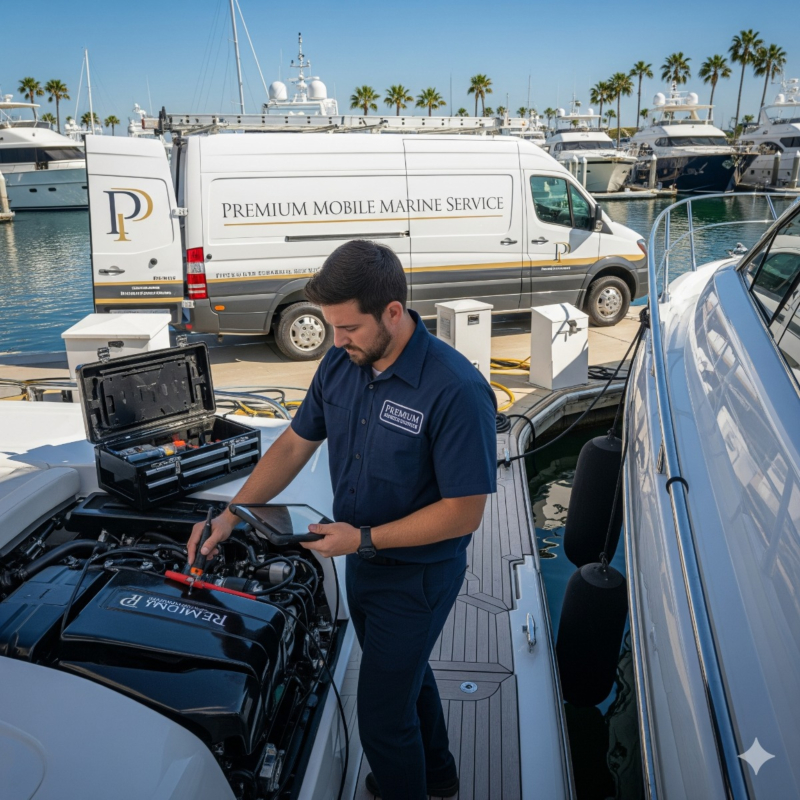
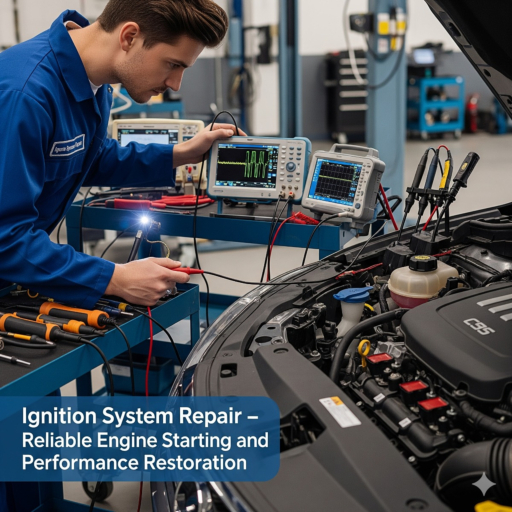
Good diagnosis starts by confirming the problem really is ignition. A spark tester shows whether each cylinder gets a strong, consistent spark. Resistance checks on coils and ignition wires compare readings against specifications. A timing light verifies timing and shows any erratic spark. On engines with a diagnostic port, stored fault codes and live data can point directly at a failing sensor. Wiring checks cover the key switch, the lanyard switch and every ground connection, since a weak ground can mimic a failed coil.
When several components are old, a complete ignition system overhaul often makes more sense than chasing one part at a time: new plugs, wires, cap and rotor where fitted, and testing or replacing coils and the module together. It resets the whole system to a known good state.
What an Owner Can Check
- Clip the safety lanyard firmly in place and check its switch for corrosion
- Pull a plug and look at its color and electrode condition
- Inspect plug leads for cracks, burn marks or loose boots
- Look at battery voltage while cranking; low voltage weakens spark
- Check that the engine compartment is dry after washdowns
Replacing spark plugs yourself is reasonable if you use the correct marine plug and gap. Beyond that, testing coils, modules and timing requires the right tools.
When to Book Ignition Repair
If misfires persist after fresh plugs, if the engine cuts out when hot, or if you have no spark at all, it is time for professional boat ignition system repair. Continuing to run a misfiring engine can overheat catalytic converters where fitted, wash oil off cylinder walls with unburned fuel and leave you stranded. Our ignition system repair service for gasoline boat engines covers San Pedro, Long Beach and the wider Los Angeles County area.
Boat Engine Misfire FAQ
Can I use automotive ignition parts on my boat?
No. Marine parts are ignition protected to prevent sparks from igniting fuel vapor in the engine compartment. Automotive parts are not built to that standard.
Why does my engine die only when it gets hot?
Heat-sensitive failures are typical of coils, electronic modules and pickup sensors. Testing them at operating temperature usually reveals the culprit.
Could my kill switch really cause a misfire?
Yes. A corroded switch or damaged wire can intermittently ground the ignition, causing stumbling or sudden cutouts.


