
Ignition System Repair for Smooth Boat Engine Starts Every Time
Hard starts, misfires or stalling on your boat? Our ignition system repair for gasoline inboard and outboard engines tracks down the real fault, whether it is in the spark plugs, ignition wires, coils, distributor or electronic ignition, the kill switch or the wiring, and repairs it so your engine can start reliably and run smoothly again.
Labor estimate Usually 1–2 hours
Book sends us a ticket; nothing is charged online. Before any work you get a written estimate for labor, parts and the trip fee, and nothing is done without your OK.
Trip fee By distance, one way: $30 in San Pedro, $50 in Long Beach
- San Pedro$30
- Wilmington, Terminal Island$40
- Long Beach: Shoreline, Rainbow Harbor$50
- Long Beach Marina, Alamitos Bay$60
- Redondo Beach$60
- Seal Beach, Huntington Harbour$75
- Marina del Rey$85
- Newport Beach$110
Farther away: $25 plus $2.50 a mile, one way from our San Pedro shop. No trip fee when the boat comes to our shop, or for plan members.
- Registered in California
- Breeze Marine Boat Service LLC, San Pedro
- Where we work
- At your slip from Marina del Rey to Newport Beach, or in our San Pedro shop
- Questions first
- (562) 542-7296 or submit a ticket
About this service
Hard Starts, Misfires and Stalling on the Water
Gasoline boat engines, inboard and outboard, work in a damp, salty environment that is hard on every part of the ignition system. Corroded terminals, cracked ignition wires, worn spark plugs and weak ignition coils lead to hard starts, rough idle, misfires, stalling and lost power, often far from the dock. Our boat ignition system repair service finds the actual fault instead of replacing parts at random, so the engine gets consistent spark delivery and reliable engine starting again.
What We Check and Repair
Spark plugs and ignition wires
Old spark plugs tell a story: fouled, oily or burned electrodes point to fuel, oil or overheating problems. We fit plugs of the type and gap specified for your engine, and check ignition wires and boots for cracks, corrosion and arcing.
Ignition coils and modules
We test ignition coils and ignition modules and, on many outboards, the stator, trigger and CDI or power pack components that create the spark.
Distributor or electronic ignition
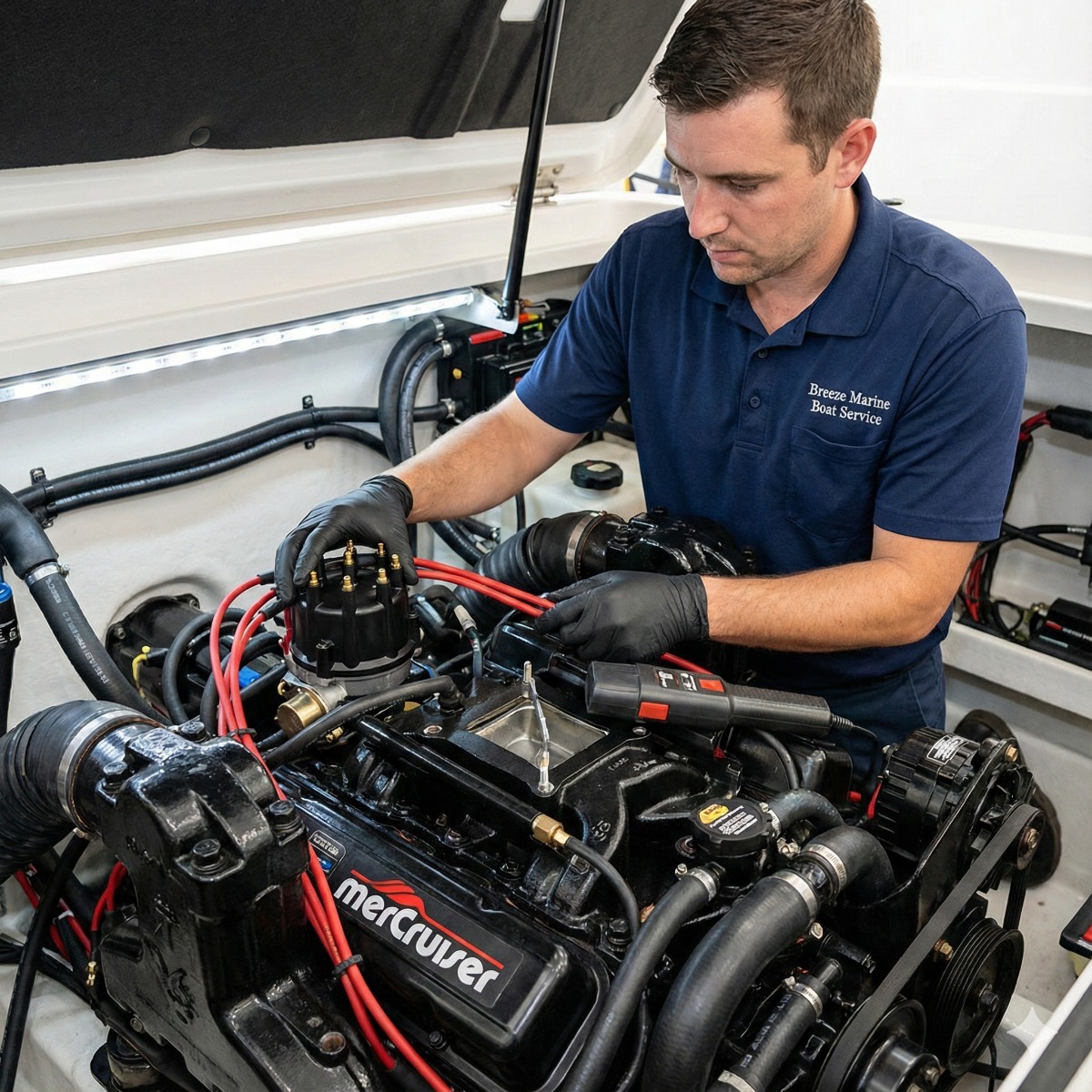
Older inboard engines use a distributor with a cap and rotor, and some still have points. Newer engines use electronic ignition managed by sensors and an engine control module. We inspect caps and rotors for carbon tracking and wear, check ignition timing, and read fault codes where the engine supports it.
Kill switch, lanyard and key switch
A worn kill switch, a lanyard clip that is not seated properly or a corroded key switch can stop an engine from starting or cut it out without warning. We test the whole circuit and replace a faulty kill switch or lanyard. We never bypass it: since 2021, federal law requires operators of most boats under 26 ft to use it.
Wiring and grounds
Loose connections, corroded grounds and chafed harnesses cause intermittent faults that come and go with vibration and moisture. We trace the fault, repair the wiring and protect the connections from moisture.
Diagnosis First, Then Repair
Testing before parts
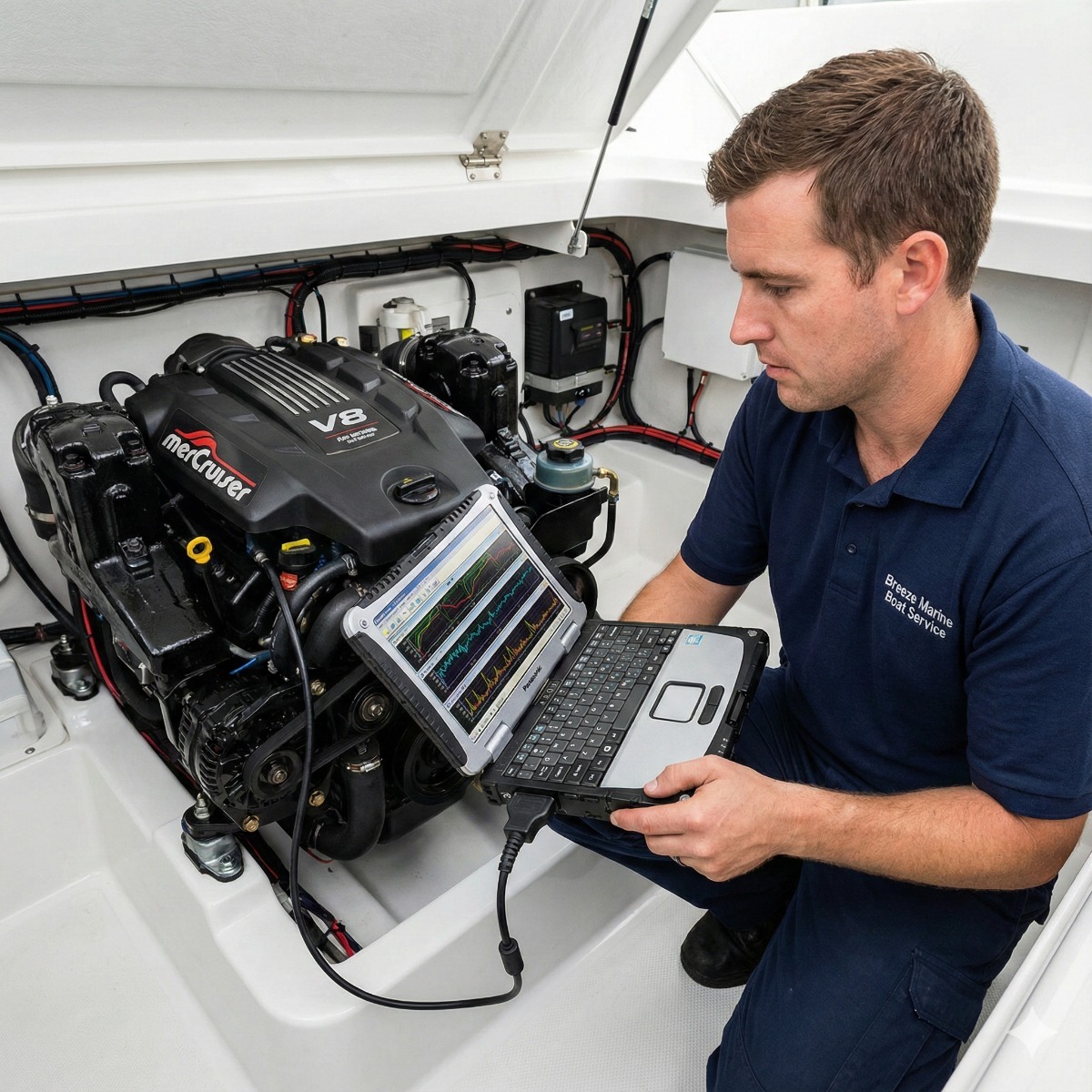
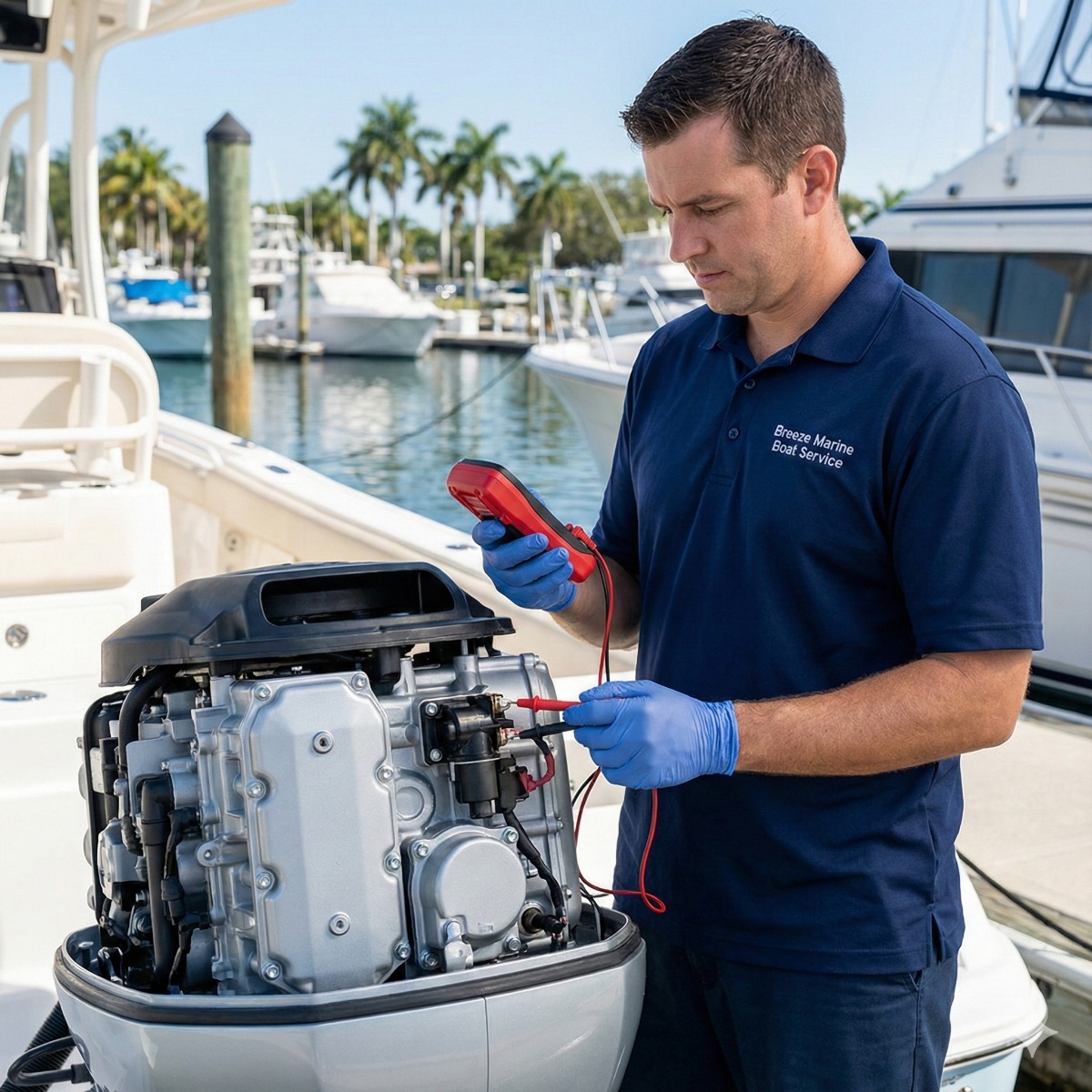
Performance restoration starts with testing: checking for spark at each cylinder, testing coil output, checking voltage at the ignition components and reading any stored codes. Only then do we replace or repair parts.
When a full overhaul makes sense
If the plugs, wires and coils are all of a similar age and the engine shows several symptoms, a full ignition system overhaul can be more reliable than replacing one part at a time, because worn parts tend to fail one after another. After the repair we run the engine and check starting, idle and engine performance across the rev range.
Marine parts, not car parts
We use marine ignition components rather than automotive parts. Electrical parts in a gasoline engine compartment should be ignition protected so they cannot ignite fuel vapors, and many car parts are not built that way.
Frequently asked questions about ignition system repair
My engine starts but misfires at higher RPM. Is that the ignition?
It can be. Weak coils, worn plugs or leaking ignition wires often show up under load. Fuel delivery problems can cause similar symptoms, which is why we test before replacing anything.
Does a diesel engine need ignition system repair?
No. Diesel engines ignite fuel by compression and have no spark plugs or ignition coils. Starting problems on a diesel usually come from the starter, batteries, fuel system or glow plugs.
What should I tell you when I book?
The engine make, model, year and hours, whether it is an inboard or outboard, when the problem appears (cold start, warm engine or under load), and any recent work on the engine. Also tell us where the boat is kept (marina, dock and slip).
Reviews
Questions 6


Related Posts
-


 Product Reviews and Tests: Trusted Insights for Smarter Boating Gear Choices Choosing the right marine equipment can make all the difference in your boating experience. From engines to electronics,...
 -
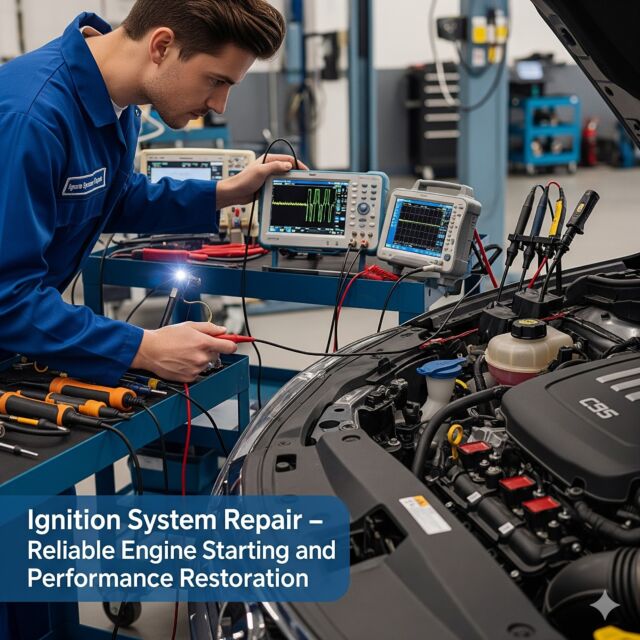
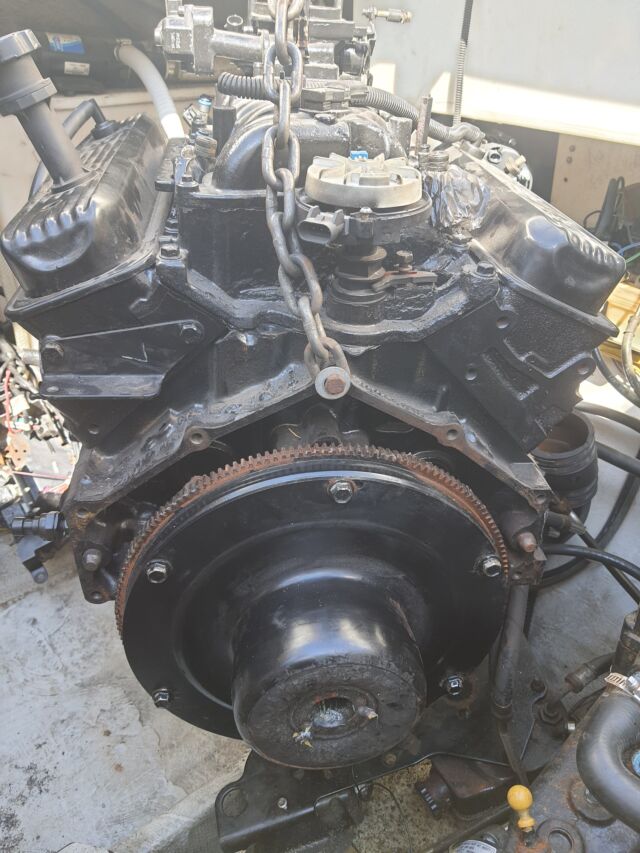 Ignition System Repair – Reliable Engine Starting and Performance Restoration The ignition system is the heart of your boat’s engine start-up and overall performance. When ignition components...
 -
 Stumbling, bucking and hard starting often point to the ignition system. See how coils, wires and kill switch faults behave and what an owner can safely check.