You turn the key and hear a single click, a rapid chatter or nothing at all. It is one of the most common reasons boats stay at the dock, and it is easy to assume the starter has died. In practice the fault is often somewhere else in the starting circuit: a tired battery, a corroded cable or a failing solenoid. Understanding how the circuit works helps you avoid replacing expensive parts that were never the problem.
How the Starting Circuit Works
The key switch sends a small current to the solenoid. The solenoid is a heavy-duty relay: when energized, it closes contacts that connect the battery's full current to the starter motor. On many engines the solenoid also pushes the starter drive gear into the flywheel. Because the starter draws a very large current, every connection between the battery and the starter must be clean and tight. Even a small amount of resistance can stop the engine cranking.
What the Sounds Tell You
- Rapid clicking or chattering: usually low battery voltage; the solenoid engages, voltage collapses, and it drops out again
- One solid click, no crank: the solenoid is getting a signal but power is not reaching the starter, often worn solenoid contacts or a bad cable connection
- No sound at all: a problem upstream, such as a dead battery, battery switch off, blown fuse, neutral safety switch or key switch
- Slow, labored cranking: weak battery, undersized or corroded cables, or a starter drawing excessive current
- Whirring without engaging: starter drive or gear problem
When the engine won't turn over, starting with these clues narrows the search considerably.
Start With the Battery
A weak battery can mimic almost every starting fault. Fully charged, a healthy 12V battery reads about 12.6V at rest. More importantly, it must hold voltage under load. A load test checks whether the battery can still deliver its rated cold cranking amps. Batteries that have been deeply discharged, or are several seasons old, often show a good resting voltage but collapse when asked to crank.
Battery Cable Corrosion
Battery cable corrosion is one of the most common hidden causes of starting trouble. Salt and moisture creep under the insulation, turning copper strands dark or green. The terminal may look clean on the outside while the cable inside is badly corroded. The ground cable is as important as the positive: a poor engine ground forces starting current to find another path, sometimes through control cables or wiring that was never designed for it.
The Voltage Drop Test
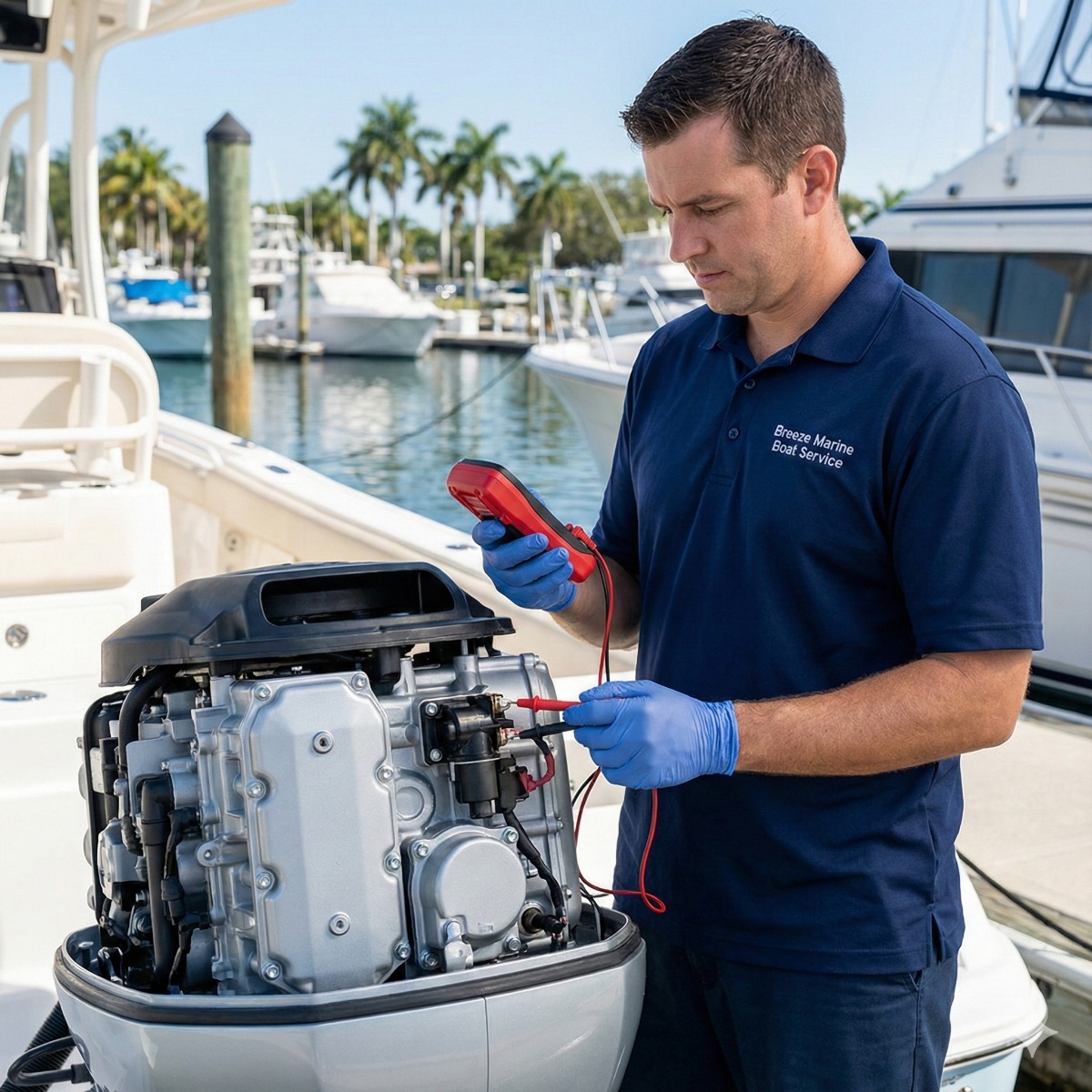
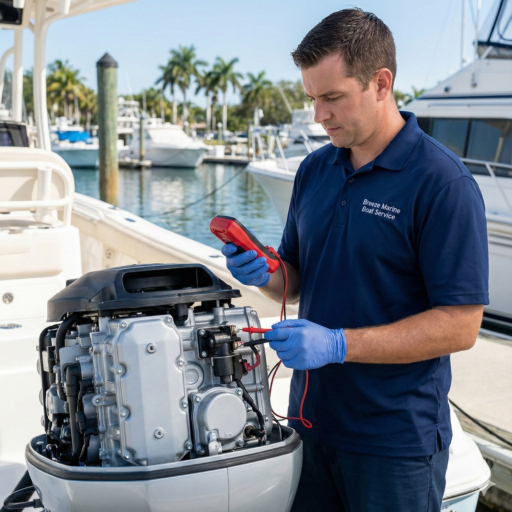
The most reliable way to find resistance is a voltage drop test. With the engine cranking, a technician measures the voltage across each section of the circuit: positive cable, solenoid contacts, ground cable and connections. A healthy connection shows very little drop. A significant reading across one section identifies exactly where power is lost. This takes the guesswork out and avoids replacing a good starter.
When It Really Is the Solenoid
Solenoid contacts burn and pit with use. When they wear enough, the solenoid clicks but passes little or no current. A quick check is to measure voltage at the solenoid's input and output terminals while someone turns the key. Power in but not out means the solenoid has failed. Starter solenoid replacement is typically a far smaller job than replacing the whole starter, although on some engines the solenoid is mounted on the starter and replaced as part of it.
Why Marine Parts Matter
Any replacement marine starter solenoid, like the starter and alternator, must be ignition protected. These parts can spark internally, and in an enclosed engine compartment with fuel vapor present, an automotive solenoid can cause a fire or explosion. Using the correct marine part is not optional.
What Owners Can Check Safely
- Is the battery switch on and set to the correct battery?
- Is the shifter fully in neutral? The neutral safety switch blocks cranking otherwise
- Are battery terminals tight, clean and free of white or green deposits?
- Does the battery read at least 12.4V at rest?
- Are there any blown fuses or tripped breakers in the ignition circuit?
Avoid bypassing the solenoid with a screwdriver. It can produce large sparks near fuel vapor and cause the engine to crank unexpectedly.
When to Call for Help
If the battery is healthy, the connections look clean and you still get a click but no crank, it is time for professional boat electrical repair. The same goes for melted cable insulation, a hot starter or cables, or a starter that keeps running after the key is released. That last symptom means a stuck solenoid and should be dealt with immediately. A boat starter problem found early is usually a simple fix. Our starter solenoid replacement and wiring check is available for boats in San Pedro, Long Beach and Los Angeles County.
Starting Problems FAQ
Can a bad ground cause a click but no crank?
Yes. The solenoid may still receive enough current to click, but the starter cannot draw the heavy current it needs through a corroded ground.
Is my starter or my solenoid bad?
Measure voltage at both solenoid terminals while cranking. If full voltage comes out of the solenoid but the starter does not turn, the starter motor is likely at fault.
Why does my engine crank slowly when hot?
Heat increases electrical resistance and some engines are harder to turn when hot. A marginal battery, cable or starter often shows up first in this condition.