The swim platform takes more abuse than almost any other part of a boat. It is the first thing to meet a piling when backing into a slip, it carries people climbing out of the water, and it is where tenders, paddleboards and coolers get loaded. Whether yours is damaged or simply too small for how you use the boat, it helps to understand the options before asking for a quote.
Signs your swim platform needs attention
- Cracks at corners, around brackets or where the platform meets the hull.
- Soft or flexing spots when you stand on it, which can mean a wet or delaminated core.
- Rust stains or weeping around bolts and brackets.
- Crushed edges from impact with docks or pilings.
- Loose ladders, cleats or grab handles.
Stress cracks in gelcoat may be cosmetic, but cracks near mounting points can mean the structure underneath is moving. That distinction is the first thing a technician checks.
What swim platform repair involves
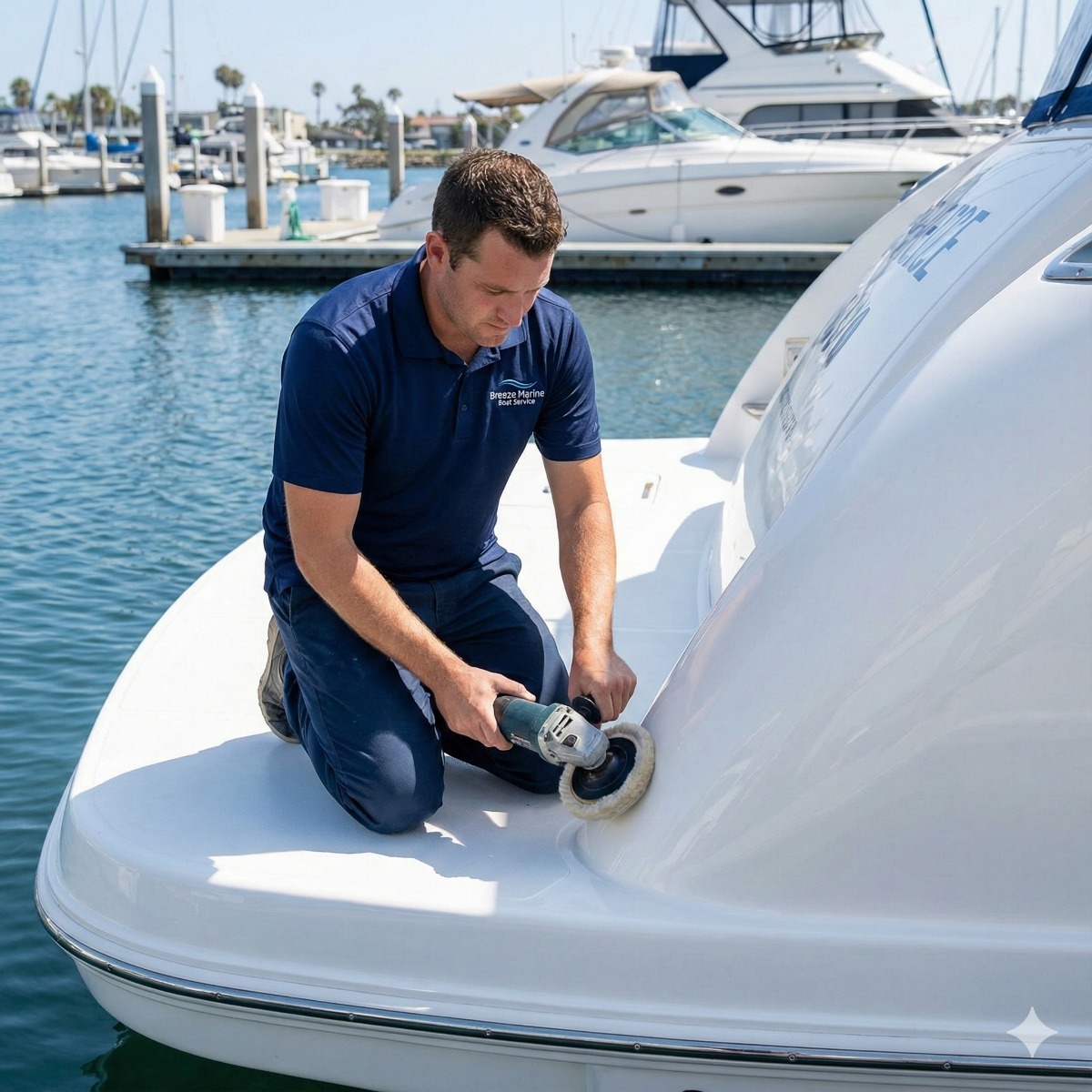
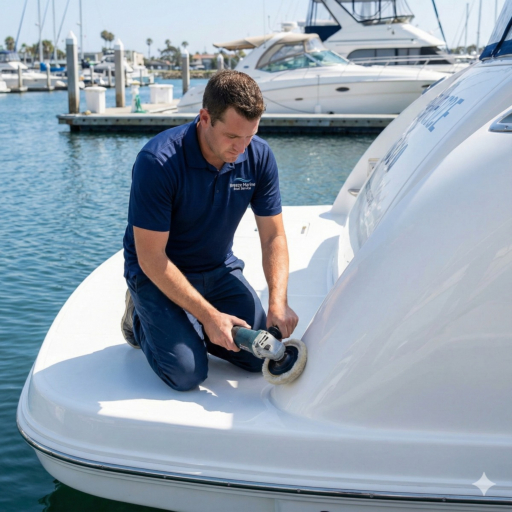
For impact damage, swim platform repair usually starts by grinding back to sound laminate, checking whether the core is dry and solid, and rebuilding with fiberglass cloth and resin. If water has soaked into a foam or wood core, the wet section is removed and replaced, because a saturated core will keep delaminating. The repair is faired smooth, then finished with color-matched gelcoat so it blends with the rest of the boat. Matching older gelcoat is part art and part science, since the original color has usually faded.
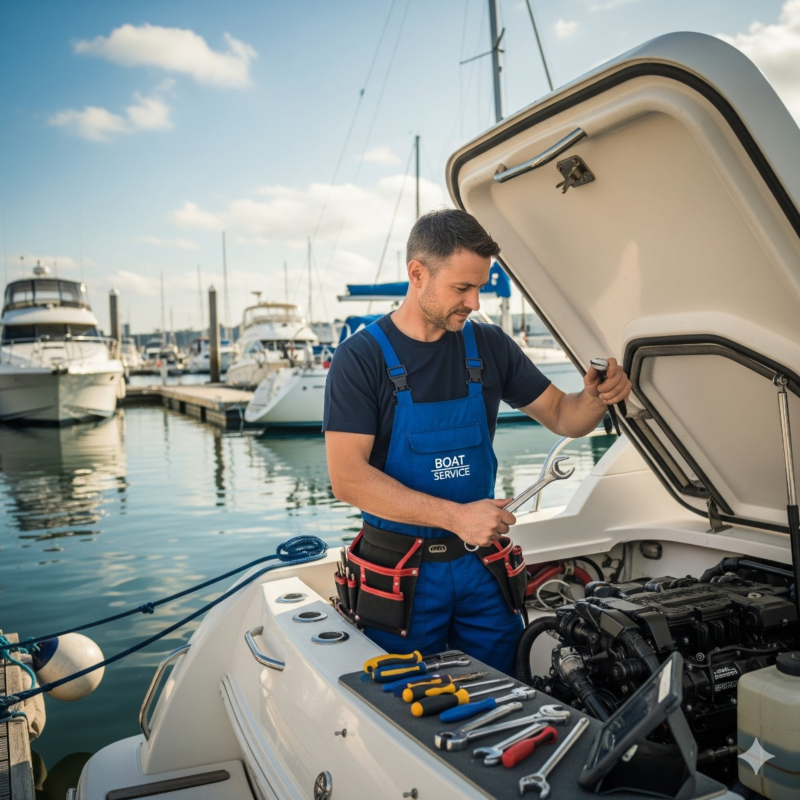
Bolted-on platforms add another check: the brackets and through-bolts. Corroded fasteners are replaced, and the holes through the transom are sealed properly to keep water out of the transom core.
Adding space with an extension
A swim platform extension adds depth behind the existing platform or transom. On many boats, a swim step extension of even 18 to 30 inches makes boarding easier and gives room for a tender or gear. The main design questions are:
- Load: it must support several adults, a cooler or a small tender.
- Mounting: bracket spacing and backing on the transom must spread loads.
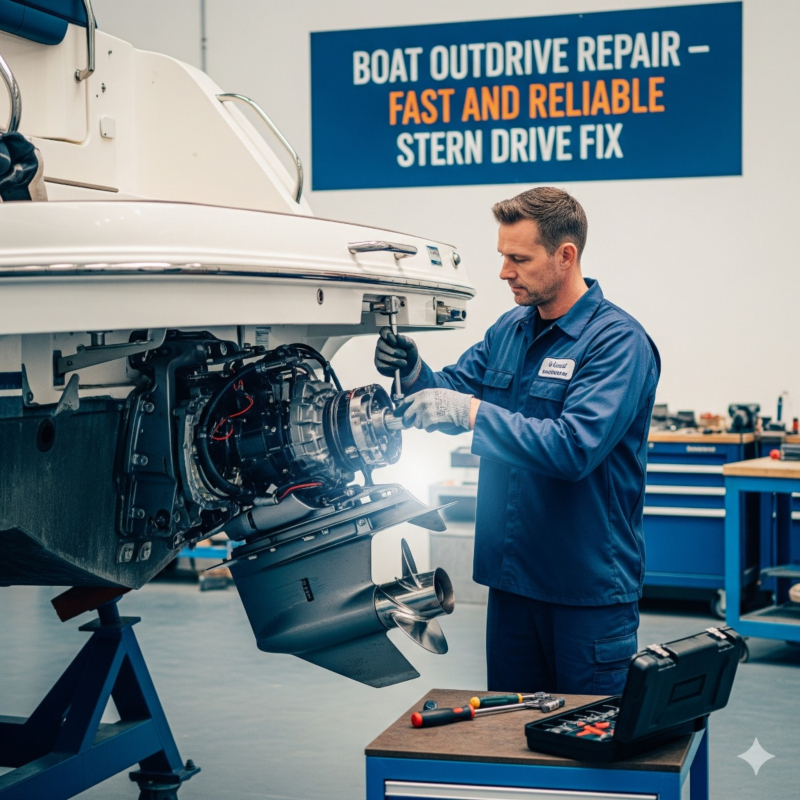
- Clearance: the extension must not interfere with outboards, drives, trim tabs or exhaust.
- Handling: added length and weight at the stern can affect trim and slip fit.
How swim platform fabrication is done
Custom work begins with a template of the transom shape so the new piece fits closely. Swim platform fabrication usually uses a closed-cell foam core with fiberglass skins, which gives stiffness without the rot risk of wood. The piece is shaped, laminated, faired and gelcoated, and then mounted with stainless brackets and through-bolts bedded in marine sealant. A well-made custom swim platform should look as if it came with the boat.
This kind of marine fabrication differs from a simple bolt-on accessory platform. The fit, the finish and the way loads are carried into the hull are what separate a lasting upgrade from one that cracks at the brackets after a season.
Choosing a deck surface
- Molded non-skid pattern: matching the existing diamond or stipple pattern keeps the factory look and is durable.
- EVA foam decking: soft underfoot, cooler in the sun and quiet, but it needs a clean surface and good adhesive to stay down.
- Teak: traditional and attractive, but heavier and more maintenance.
EVA foam decking is popular on platforms because wet, bare feet are the norm there, and it can be cut to shape with custom logos or borders.
What about lifts?
A hydraulic swim platform raises and lowers to carry a tender or personal watercraft and to make boarding easier. It is a larger project with hydraulic pumps, rams and structural transom work. Owners who mainly want more space and easier boarding often find a fixed extension simpler to maintain, while those who carry a tender or jet ski every trip may find the lift worth the extra complexity and upkeep.
Keeping a platform in good shape
Rinse the platform with fresh water after use, check bracket bolts for tightness and staining each season, and fix gelcoat chips before water reaches the core. Small repairs done early keep a platform from turning into a full rebuild.
For impact repairs, extensions and refinishing options, see swim platform extension and repair from Breeze Marine.
Swim platform FAQ
Is a cracked swim platform dangerous?
Cosmetic gelcoat cracks are not, but cracks near brackets, soft spots or movement when loaded can mean structural damage and should be inspected before the platform carries people again.
Will an extension affect how the boat handles?
Extra weight at the stern can change trim slightly. A lightweight foam-cored design and proper placement keep the effect small, and it should be considered at the design stage.
Can the new surface match my deck?
Yes. Molded non-skid can be replicated from the existing deck, and gelcoat can be tinted to match faded original color closely.