
For many owners, fresh water is the thing that ends a trip early. Tanks run low, showers get rationed and the plan for a week at anchor shrinks to a weekend. A watermaker changes that by turning seawater into drinking water on board. Before choosing one, though, it helps to understand how the system works, how much water you actually need and what the installation involves, because the right unit for one boat can be a poor fit for another.
How a Watermaker Works
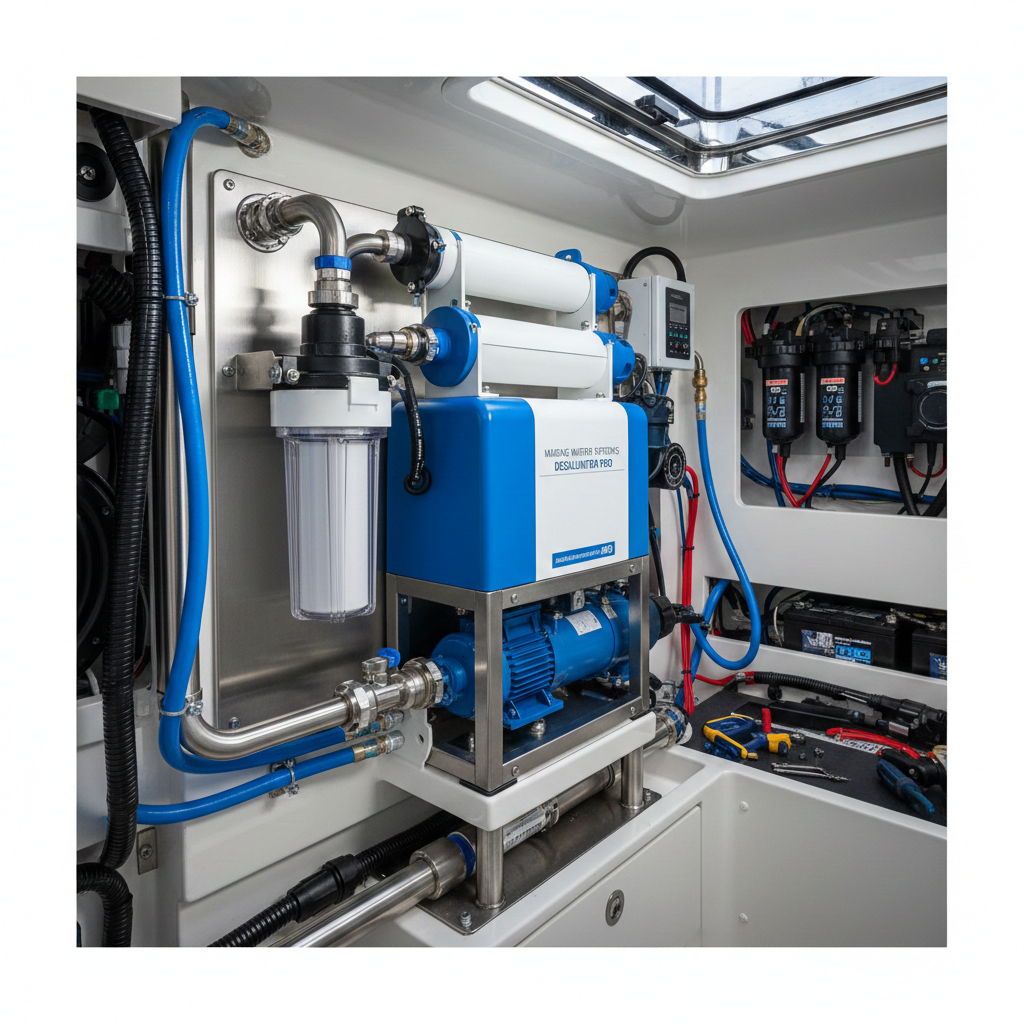
Almost all modern marine desalinators use reverse osmosis. Seawater is drawn in through a dedicated intake, passed through a strainer and pre-filters, then pushed at high pressure against semi-permeable reverse osmosis membranes. Fresh water passes through the membrane; the salt stays behind and is flushed overboard as brine. The product water goes through a salinity check and, if it is good, into the tanks. If it is not yet pure enough, it is diverted overboard until quality improves.
Step One: Estimate Your Daily Water Use
Output is quoted in gallons per hour, so start with how much water the crew uses in a day. Typical uses on board include:
- Drinking and cooking: roughly a gallon per person per day.
- Dishes and cleaning: several gallons per day, depending on habits.
- Showers: usually the largest single use, especially with a comfortable boat shower rather than a quick rinse.
- Washdowns: rinsing salt off the deck, gear and windows after a crossing.
Multiply by the number of people, then decide how many hours per day you are willing to run the unit. That gives the minimum output. Many owners size up slightly so the system can refill the tanks in a shorter run.
Step Two: Match the Unit to Your Power
A boat watermaker is one of the larger loads on board, so power often decides which type fits:
- AC units: higher output, typically run while a generator is on. Good for larger boats that run a generator daily anyway.
- DC units: lower output but much lower draw, often using energy recovery to reduce the pump load. They pair well with solar and a healthy battery bank on boats that avoid running a generator at anchor.
- Engine-driven units: less common, making water while the main engine runs.
Check the battery bank and charging sources before choosing a DC unit, since long runs will draw it down.
Step Three: Plan the Installation
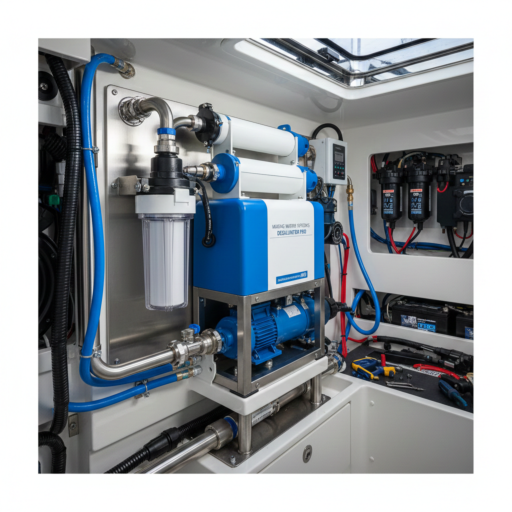
Marine watermaker installation involves more than bolting in a box. A typical system includes a sea strainer, low-pressure feed pump, pre-filters, a high-pressure pump, the membrane housings, a control panel and a product water valve. Planning covers:
- Water intake: a dedicated intake or shared thru-hull fittings, positioned low enough to stay submerged when the boat rolls and away from discharges such as the head.
- Brine discharge: an overboard outlet above or near the waterline.
- Component location: dry, accessible spaces for the pumps and membranes, with room to change filters.
- Tank connection: product water fed into boat water tanks through a separate fitting or tee in the fill line.
- Electrical supply: correctly sized wire and circuit protection for the pump motors.
High pressure is unforgiving, so hoses must be rated for the pressures involved, and every connection should be properly clamped. Integration with the existing fresh water plumbing also needs care so the product water does not back-feed or contaminate the system. For a sense of how a professional desalinator installation is handled from sizing to sea trial, see the page on marine watermaker and desalinator installation.
Looking After the System
A watermaker rewards regular use. Membranes prefer to be run often; leaving seawater sitting in the system encourages biological growth. Good habits include:
- Running the unit every few days while the boat is in use, or fresh-water flushing after each run.
- Changing pre-filters when the pressure gauge shows a rising drop across them.
- Keeping the sea strainer clean, especially in harbors with heavy growth.
- Avoiding production in dirty harbor water or near fuel sheens, which foul membranes.
- Pickling, which means filling the membrane with a preserving solution, before any long lay-up.
Signs Something Needs Attention
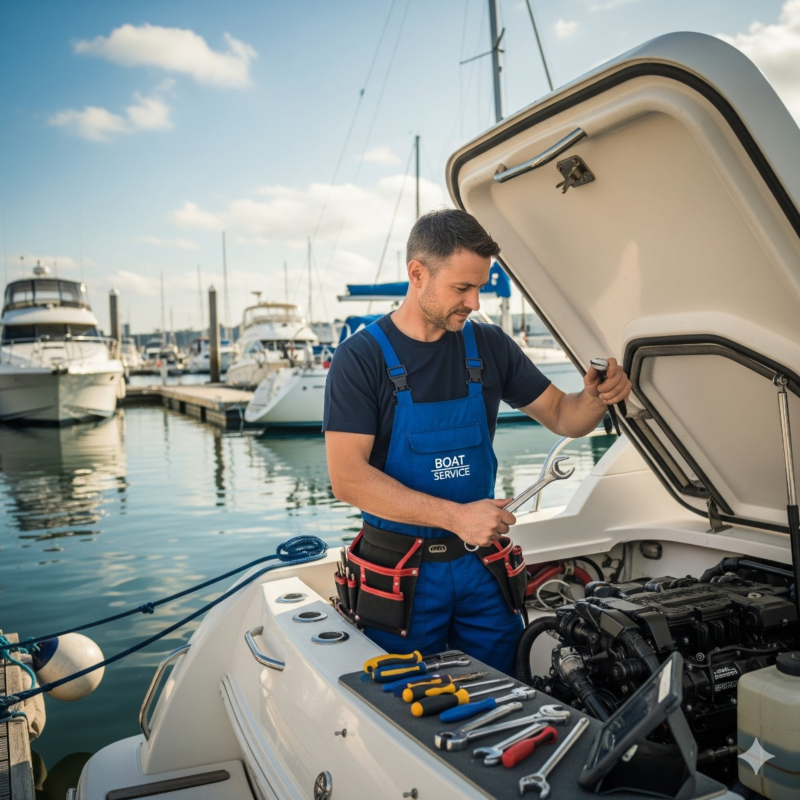
Call a technician if output drops noticeably, if salinity readings stay high after a normal start-up, if the high-pressure pump becomes noisy, or if you see leaks around the membrane housings. Falling output with normal pressure often points to fouled membranes; low pressure points to the pumps, filters or intake.
Watermaker FAQ
Is watermaker water safe to drink?
A properly working reverse osmosis system produces water with very low salt content, and the salinity monitor diverts poor-quality water. Keeping tanks clean matters just as much as the watermaker itself.
Can I run a watermaker in the marina?
It is generally best not to. Harbor water often carries oil, sediment and pollutants that foul pre-filters and membranes. Make water offshore or at a clean anchorage.
Does a watermaker replace my tanks?
No. It keeps the tanks topped up, so the tank level stops deciding when you head back to the dock.