





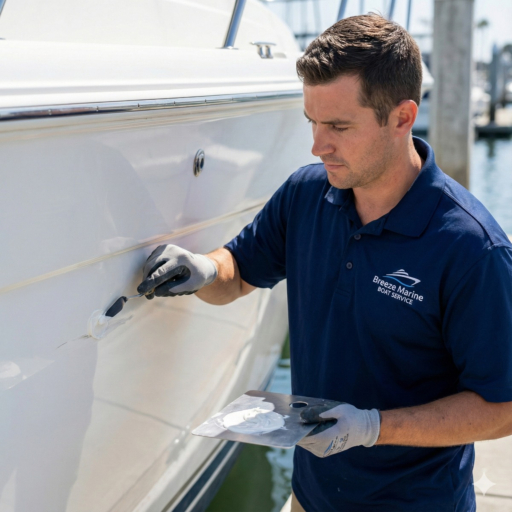
Almost every boat picks up dock rash sooner or later. A gust while backing into the slip, a fender that slipped, a piling that was closer than it looked, and suddenly there is a scuff or a gouge along the side of the hull. Some of these marks polish out in minutes. Others go through the gelcoat and need proper repair to keep water out. Here is how to tell the difference and what the work involves.
Surface Scuff, Scratch or Gouge?
Gelcoat is the colored outer skin of a fiberglass boat, typically only a fraction of an inch thick. How far the damage goes into that skin decides the fix:
- Transfer marks and scuffs: rubber, paint or dirt left on the surface. These usually clean off with a mild cleaner or a light polish.
- Light scratches: you can see them but barely feel them with a fingernail. Wet sanding and a compound polish usually remove them.
- Deep scratches: your fingernail catches, and the color at the bottom of the scratch looks different. These go well into the gelcoat and need filling.
- Gouges and chips: material is missing, and you may see gray or tan fibers. The fiberglass laminate is exposed and needs sealing soon.
Why Deeper Damage Should Not Wait
Gelcoat is the waterproof barrier for the hull. Once a gouge breaks through it, water can wick along the glass fibers into the laminate. Above the waterline this is usually slow, but repeated wetting, sun and salt make the edges crack and grow. Near the waterline, on the bow or around chines, exposed laminate stays wet much of the time. Sealing the damage promptly keeps a small cosmetic repair from becoming a structural one.
What an Owner Can Check
- Fingernail test: if the nail catches, polishing alone will not remove it.
- Look for fibers: any visible glass strands mean the laminate is open.
- Check for cracks: spider cracks radiating from an impact point suggest the panel flexed and may need more than cosmetic work.
- Try a test polish: on a small area, a quality marine compound shows quickly whether a mark is in the surface or deeper.
The Color Matching Challenge
White is not just white. Manufacturers use dozens of shades, and years of sun fade and oxidation shift the color further. That is why gelcoat color matching is the part of the job that separates a hidden repair from an obvious patch. A technician compares the repair area to the surrounding hull, not the factory color code, and adjusts the mix with small amounts of pigment. This custom tinting is done in daylight and tested on a card before it goes on the boat. Colored hulls and stripes are more demanding than white and may take several adjustments.
What the Repair Involves
Good boat scratch repair follows a consistent sequence:
- Prep: the scratch is opened into a shallow V with a grinder or burr so loose material is removed and the filler has a clean edge to bond to.
- Fill: tinted gelcoat paste is applied slightly proud of the surface and cured, often under film to keep air off it.
- Fair: the repair is block-sanded flush, then wet-sanded through progressively finer grits.
- Finish: compounding and polishing bring the gloss back and blend the edges into the surrounding gelcoat.
Damage on textured decks is handled differently. Non-skid repair uses a flexible mold taken from an undamaged area to recreate the pattern, so the repaired patch grips and looks like the rest of the deck.
Repair or Full Restoration?
If the whole hull is chalky and dull, a spot repair will stand out because the new gelcoat is glossier than the rest. In that case, gelcoat restoration of the surrounding area, meaning a full cut and polish, gives a better overall result, and it also makes color matching easier because the old surface returns closer to its true shade. Boats with several areas of damage often benefit from both at once. For dock rash repair that blends into the hull, the page on gelcoat color matching and scratch restoration describes the process in more detail, and owners looking for gelcoat repair Long Beach boaters can book at the slip will find the service described there.
Preventing the Next Scratch
Most dock rash comes from docking under pressure. Well-placed fenders at the widest point of the hull, fender boards against pilings, properly adjusted dock lines and dock-edge protection on your slip all help. Waxing twice a season also makes the gelcoat more resistant to scuffs and easier to clean.
Gelcoat Scratch FAQ
Can I fix scratches with a DIY gelcoat kit?
Small chips can be filled with a kit, but getting the color, texture and gloss to blend takes practice. For visible areas, a professional match usually looks better.
Will the repair ever be completely invisible?
On a well-maintained hull a careful repair can be very hard to find. On heavily faded boats, a perfect match is harder and restoration of the surrounding area helps.
Does gelcoat damage affect resale value?
Yes. Buyers and surveyors notice scratches and gouges, and open damage raises questions about water in the laminate.


