
Fuel-injected marine engines are smoother, easier to start and more efficient than the carbureted engines they replaced, but they also depend on a computer and a web of sensors. When something goes wrong, the result is often a warning buzzer, a boat check engine light on the gauge or display, or an engine that suddenly refuses to go above a low RPM. This guide explains how multi-port injection (MPI) and other EFI systems work, what the most common faults are, and why proper diagnostics save time compared with swapping parts.
How Marine EFI Works
An engine control module (ECM) reads a stream of data from marine sensors: coolant temperature, manifold air temperature and pressure, throttle position, crankshaft and camshaft position, oil pressure and, on some engines, knock and oxygen sensors. It uses that information to decide how long to open each injector and when to fire each spark plug. The fuel system supplies the injectors at a pressure held steady by a regulator, and an idle air control (IAC) valve manages airflow at idle.
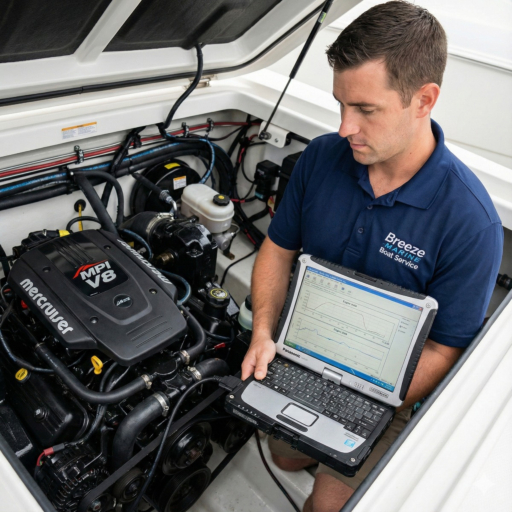
Engines such as the MerCruiser MPI V8s use multi-port injection, with one injector per cylinder, while earlier throttle-body systems spray fuel into a single throttle body. The diagnostic logic is similar for both.
Common Faults and What They Feel Like
Sensor failures
Boat sensors live with heat, vibration and salt air, and their connectors corrode. A failed temperature sensor can make the engine hard to start or run rich; a faulty throttle position sensor causes hesitation; a bad crank position sensor can stop the engine outright. Often the sensor is fine and the real problem is a green, corroded pin in the connector.
Fuel delivery problems
Low fuel pressure from a weak pump, a clogged filter or a failing regulator causes stumbling under load and loss of top speed. Marine fuel regulators can also leak internally, sending fuel into the vacuum line and making the engine run rich. Many engines use a fuel cooling module that combines the pump, regulator and a small cooler, and its filters and water separator are among the marine fuel system parts that most need regular attention.
Injector problems
Ethanol fuel that sits for months leaves varnish that partly clogs injector nozzles, causing uneven fueling between cylinders, rough running and misfires. Professional fuel injector cleaning on a flow bench measures each injector, cleans it ultrasonically and confirms the spray pattern, which is far more effective than an additive poured into the tank.
Idle problems
An engine that stalls when shifting into gear, hunts at idle or needs throttle to stay running often has a sticky or failed IAC valve. Sometimes cleaning restores it; in other cases IAC valve replacement is required. Vacuum leaks from cracked hoses produce similar symptoms and should be ruled out first.
Understanding Limp Mode
Most marine ECMs include a protection strategy often called guardian or limp mode. When the computer detects a condition that could damage the engine, such as overheating, low oil pressure or overspeed, it cuts power and may cap RPM at a low level. That is the engine protecting itself, not a failure in its own right. A limp mode reset without fixing the cause simply sends the engine back into danger; the stored fault code and live data show which condition triggered the reduction.
What Owners Can Check
- Note exactly when the warning appears: at start-up, at idle, under load or only when hot.
- Check the oil level and, on closed-cooled engines, the coolant level, and confirm raw water is flowing out of the exhaust or tell-tale.
- Inspect the water-separating fuel filter and replace it if it is due.
- Look for loose or corroded connectors on the engine harness and at the battery terminals, since low voltage can confuse the ECM.
- Make sure the fuel is fresh and the tank vent is not blocked.
Why Proper Marine EFI Diagnostics Matter
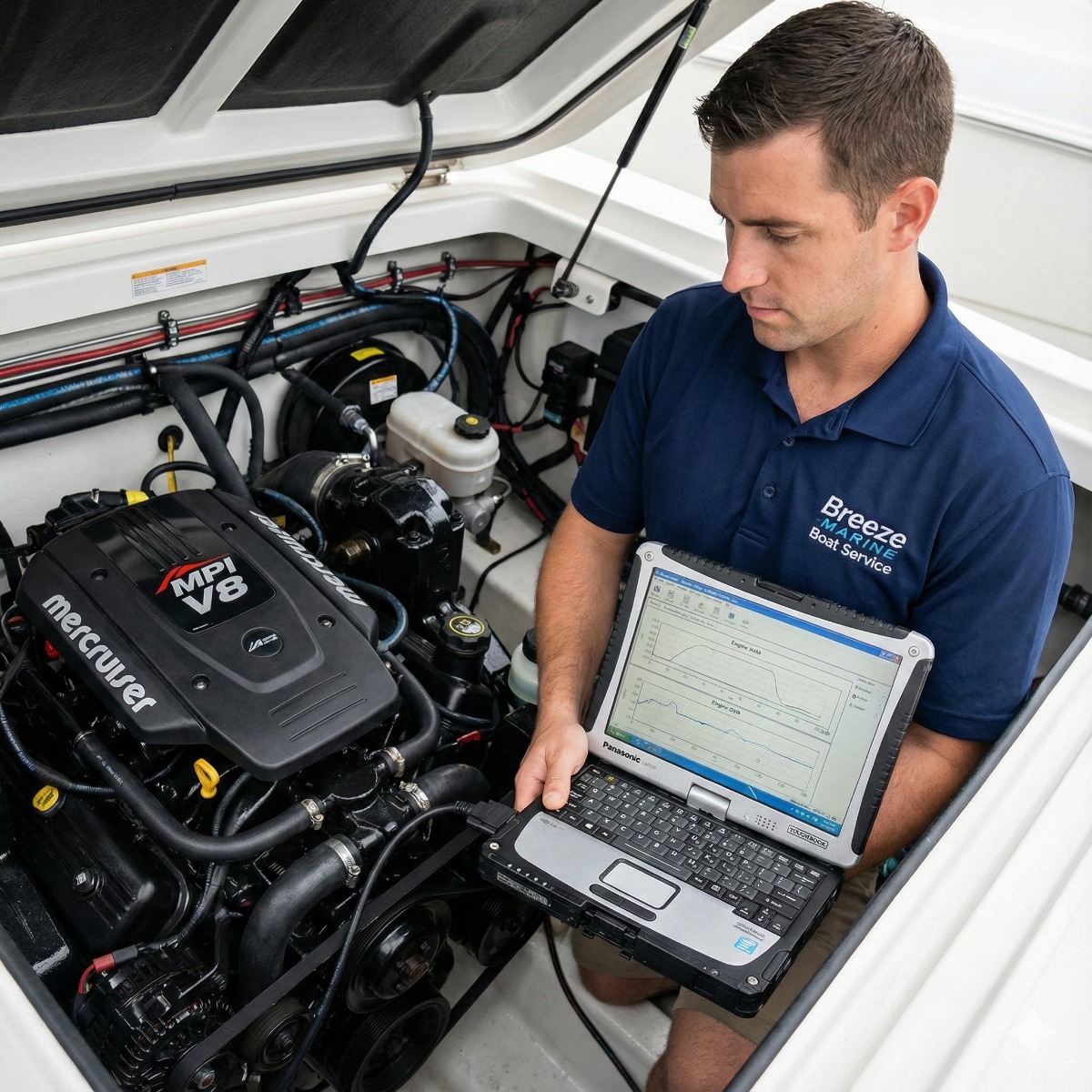
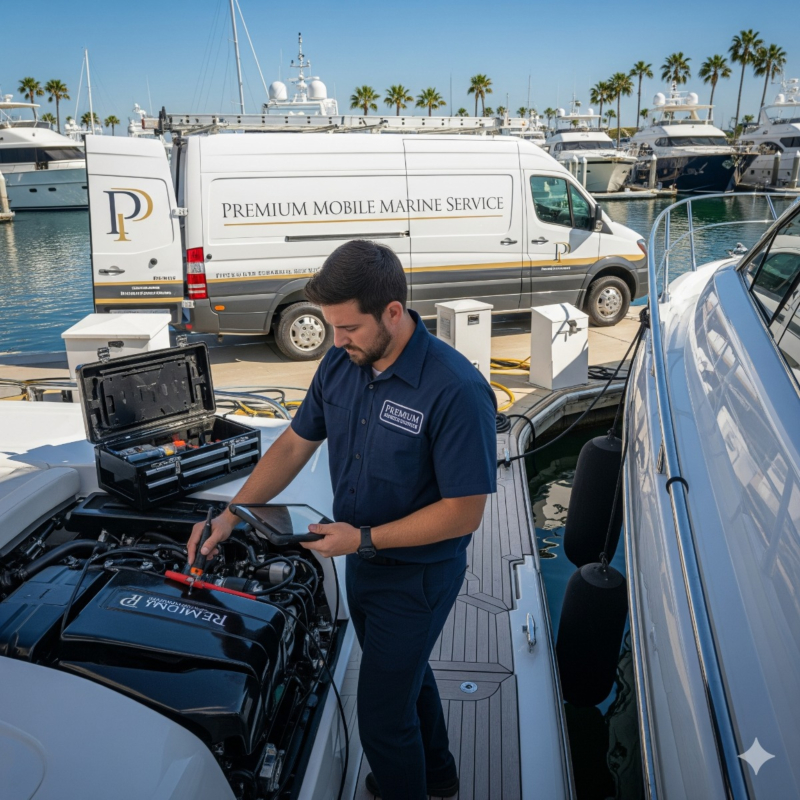
Modern engines store fault codes that tell a technician which circuit the ECM believes is at fault and under what conditions. Marine EFI diagnostics go further than reading a code: a technician connects a scan tool that shows live data from every sensor while the engine runs, compares readings against specification, runs actuator tests on injectors and the IAC, and checks fuel pressure with a gauge. A code for a sensor circuit may mean a failed sensor, a broken wire or a fault inside the ECM, and only testing tells them apart.
When to Call a Technician
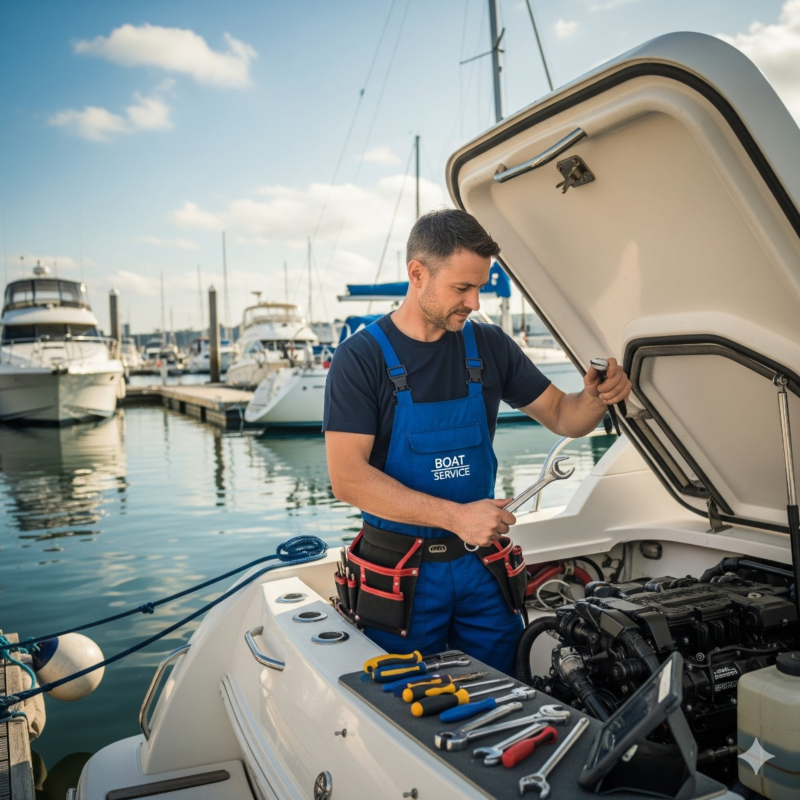
If the warning returns after basic checks, if the engine goes into reduced power, or if it misfires or stalls, have it scanned before the next trip. Continuing to run with an active warning can turn a minor sensor fault into engine damage. Our MPI and EFI system diagnostics service connects to your engine's computer, reads codes and live data, and tracks the fault to the part that has actually failed.
EFI Diagnostics FAQ
Will disconnecting the battery clear the boat check engine light?
It may clear some stored codes temporarily, but it does not fix the cause and it erases information that helps a technician find the fault. Active faults will return.
Can I use an automotive code reader?
Most marine engines do not use the automotive OBD-II connector or protocols, so a car scanner usually cannot talk to them. Marine diagnostic software and cables are required.
How often should injectors be cleaned?
There is no fixed schedule. Boats that sit with untreated ethanol fuel benefit from periodic flow testing, especially once a rough idle or misfires appear.