Trailer bunks do a quiet but critical job: they carry the full weight of the boat on the road and guide the hull on and off the trailer at the ramp. Because they sit underneath the boat, they are also the part of the rig owners look at least. This guide covers how bunks wear out, what to check, whether to recarpet boat trailer bunks or replace the boards, and what a proper job involves.
How Trailer Bunks Wear Out
A bunk is a simple assembly: a wooden board, a wrap of carpet, staples holding the carpet on, and brackets and bolts tying it to the trailer frame. Each part fails in its own way.
- Carpet: every launch and every retrieve drags the hull across the fabric. The ends of the bunks wear first, and sun and salt water break the fibers down.
- Boards: wood that stays wet under the carpet or against a bracket can rot from the inside while the outside still looks solid.
- Hardware: ordinary steel staples and bolts rust quickly in salt water, stain the carpet and eventually let it come loose.
- Brackets: trailer bunk brackets can corrode, bend or loosen, which changes the angle at which the bunk meets the hull.
Warning Signs to Look For
With the boat off the trailer, or by sighting along the bunks with a flashlight, check for:
- Trailer bunk carpet that is worn through, torn or peeling away at the ends.
- Bolt heads or staples you can feel through the fabric.
- Boards that feel soft when pressed with a screwdriver, that have split, or that sag between brackets.
- Scratches or long gouges on the bottom of the hull that line up with the bunks.
- A boat that sits crooked on the trailer or has become harder to center when loading.
Hull marks are the costliest symptom, because a single exposed bolt can scratch the gelcoat on every launch and retrieve.
Recarpet or Replace the Boards?
If the wood is sound, you can recarpet boat trailer bunks and reuse the boards. That works when the carpet has simply worn out and the boards are firm, straight and free of dark, soft areas around the bolt holes. Once rot has started, new carpet only hides the problem, and the board can crack under load while the boat is on the road. In that case full boat trailer bunk replacement is the safer choice, and it is the right moment to check brackets and hardware as well.
Choosing Materials That Last
Boards
Pressure-treated bunk boards are the usual choice for trailers that go into salt water, because they resist rot far better than untreated lumber. The boards should be cut to suit the hull, long enough to support it where the builder intended, and set so they contact the hull along their full length rather than on one edge.
Carpet
Marine bunk carpet is made to get soaked and dry out again. Without a rubber backing, water drains straight through it instead of sitting against the wood. Household outdoor carpet with a rubber back holds moisture against the board and speeds up rot.
Fasteners
Use marine fasteners throughout: stainless or Monel staples for the carpet and stainless bolts for the brackets. Bolt heads belong below the surface of the board, never where the hull can reach them once the carpet compresses with age.
Plastic slicks
Plastic bunk slicks reduce friction, which makes launching and loading easier on shallow ramps. The trade-off is that the boat can slide more freely on the trailer, so the winch strap and bow stop need to be secure before you pull away. Many owners of fiberglass boats stay with carpet for a more controlled feel.
What the Replacement Job Involves
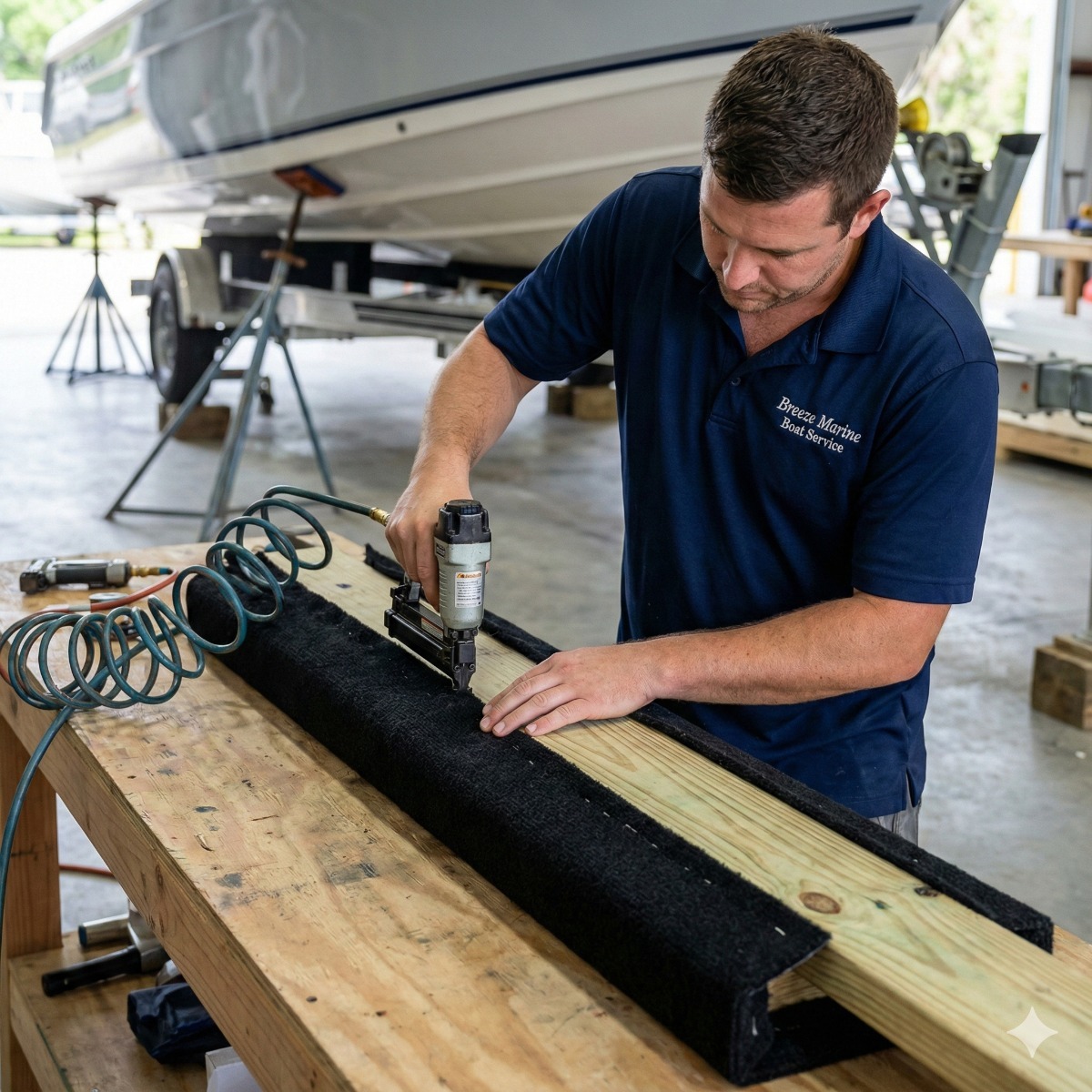
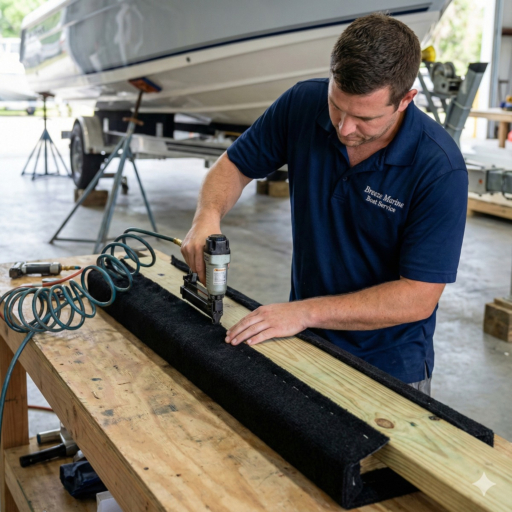
The hard part is not the bunks, it is the boat. The hull has to come off the bunks and be supported safely on stands or jacks, with its weight carried by the keel and the strong points of the hull. The old boards are unbolted, the brackets are inspected for rust and straightened or replaced, and new boards are cut, wrapped and stapled. The bunks are then bolted back, their height and angle are adjusted to the hull, and the boat is lowered so the fit can be checked along the whole length. This is why many owners prefer to have trailer bunk board and carpet replacement done by a crew with the right stands and lifting equipment.
Bunks in Your Boat Trailer Maintenance Routine
A few minutes of boat trailer maintenance after each season keeps small problems small. Rinse the bunks with fresh water after launching in salt water around Long Beach or Newport Beach, look along the bunk ends for wear, and tighten any loose bracket bolts. Checking the bunks at the same time as wheel bearings, tires and lights means nothing under the boat gets forgotten.
Trailer Bunks FAQ
How often should trailer bunk carpet be replaced?
There is no fixed interval. It depends on how often you launch, whether the trailer goes into salt water and how much sun it gets. Replace it as soon as it is worn through anywhere the hull touches, or when fasteners start to show.
Can I recarpet bunks without removing the boat?
Not properly. The carpet wraps around the board, so the board has to come off the trailer, and that means lifting the hull and supporting it safely first.
Are plastic bunk slicks better than carpet?
They are different rather than better. Slicks make loading and launching easier, while carpet gives more grip and a gentler surface for gelcoat. The right choice depends on your boat, your ramp and how you load.