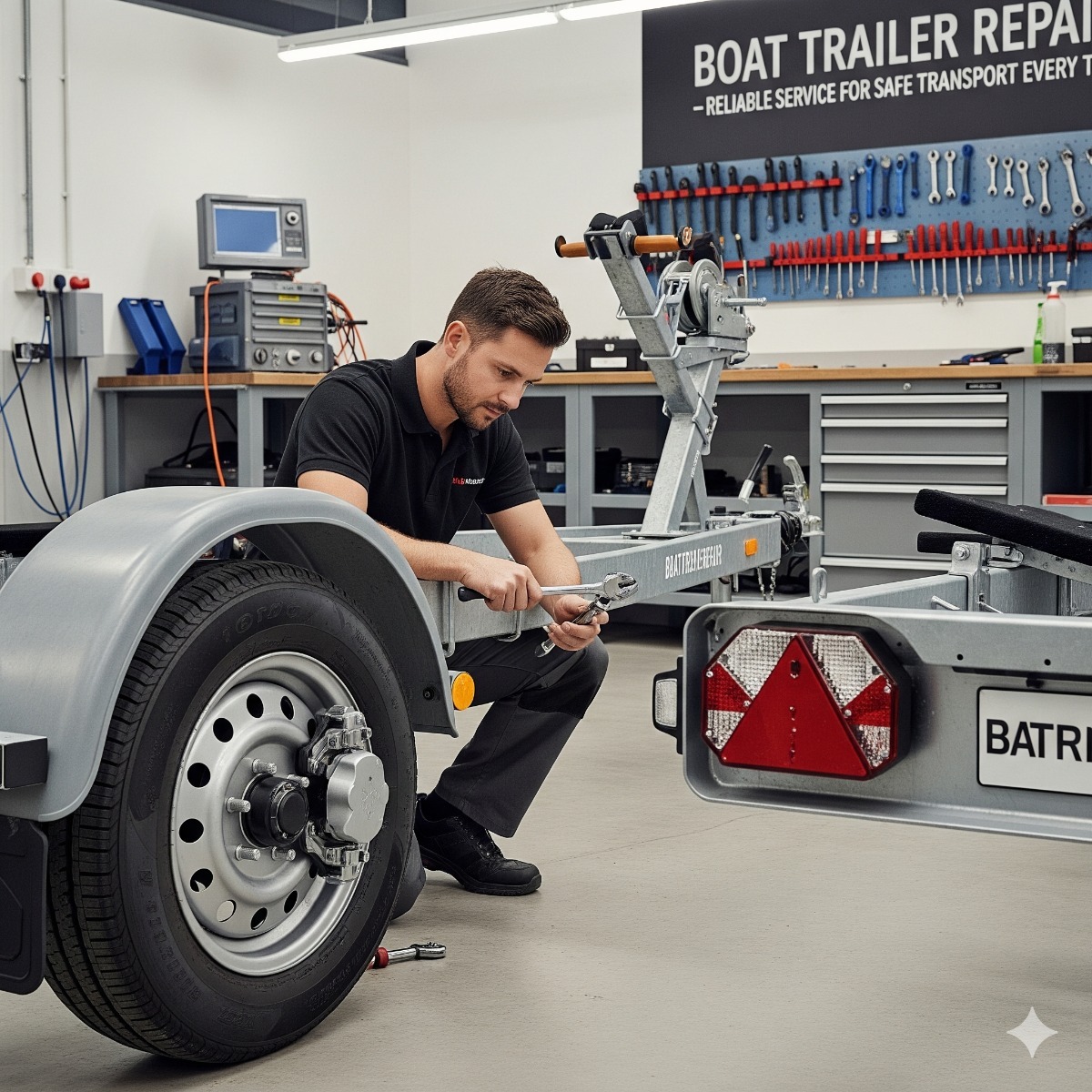
A boat trailer spends most of its life parked, then suddenly carries thousands of pounds at highway speed and gets dunked in saltwater at the ramp. That combination is hard on hardware, and most trailer failures give some warning beforehand. A ten-minute check before each trip catches the majority of problems while they are still simple to fix.
Why saltwater trailers wear faster
Hot hubs that are backed into cold water pull water past the seals as they cool. Salt then sits in the grease, on brake components and inside light sockets. Trailers that launch in saltwater every weekend need more frequent boat trailer maintenance than those used a few times a year in fresh water, and a freshwater rinse after every launch is the single cheapest habit that extends trailer life.
Hubs and wheel bearings
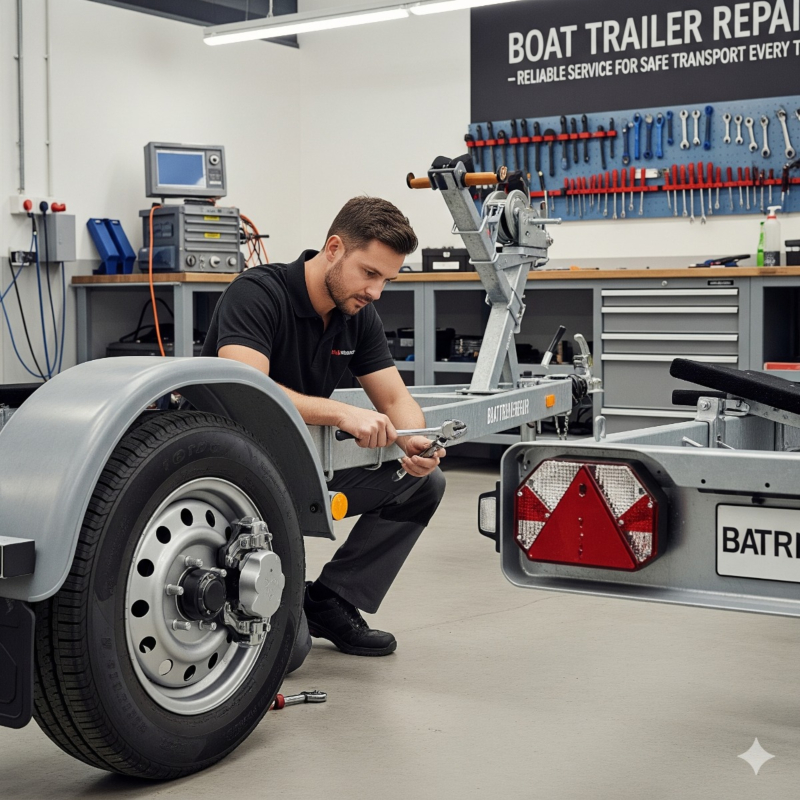
Boat trailer bearings cause more roadside breakdowns than any other trailer part. The warning signs are easy to spot if you know what to look for.
- Heat: after a few miles of driving, carefully touch each hub with the back of your hand. One hub much hotter than the others suggests a dry or failing bearing or a dragging brake.
- Play: jack the wheel off the ground and rock it top to bottom. Noticeable movement means the bearings need adjustment or replacement.
- Noise: spin the wheel and listen for grinding or rumbling.
- Grease: grease slung onto the inside of the rim often means a failed rear seal.
Bearing protectors keep grease under light pressure, but overfilling them can blow out the rear seal. Repacking or replacing wheel bearings every season, and after any long storage, is standard practice for saltwater trailers.
Boat trailer brakes
Most boat trailers use hydraulic surge brakes, where the coupler pushes fluid to the wheels when the tow vehicle slows. Common problems include:
- Seized calipers or rusted drum components that drag, heat the hub and wear tires.
- Low or contaminated fluid in the actuator reservoir.
- Rusted brake lines, especially steel lines near the axle.
- A reverse lockout solenoid that fails, making it hard to back up a ramp.
Check the reservoir level and look at each wheel for fresh fluid or rust streaks. If the trailer pulls to one side or feels like it is pushing the tow vehicle when stopping, have the boat trailer brakes inspected before the next trip.
Lights and trailer wiring
Lighting faults are the most common reason a trailer gets pulled over. Before leaving, connect the plug and have someone confirm running lights, brake lights and both turn signals. Flickering lights or lamps that only work when the trailer is bumped usually point to corrosion in the plug or a poor ground rather than a bad bulb. Sealed LED lamps and tinned wiring hold up better in saltwater, and a dab of dielectric grease in the plug helps keep corrosion out of the trailer wiring.
Tires, coupler and safety chains
- Tires: check pressure cold against the sidewall rating and look for cracks, bulges and uneven wear. Trailer tires often age out before the tread wears down.
- Coupler: make sure the latch closes fully over the ball, the ball size matches the coupler and the locking pin is in place.
- Safety chains: cross them under the tongue so they can catch it if the coupler separates, leave enough slack for turns and make sure they do not drag on the road.
- Winch and strap: inspect the strap for fraying and confirm the bow is secured with a safety chain at the bow eye as well.
- Tie-downs: use transom straps so the boat cannot bounce on the bunks.
When to call a professional
Some jobs are straightforward for a handy owner; others benefit from a boat trailer mechanic with the right tools and parts. Book a boat trailer service when you find:
- Bearing play, noise or a hub that runs hot after adjustment.
- Brakes that drag, pull or do not engage.
- Rust flaking from the frame, crossmembers or spring hangers.
- Broken leaf springs or worn shackles and bushings.
- Lighting faults you cannot trace to the plug or bulbs.
Owners searching for boat trailer repair near me should ask whether the work covers bearings, brakes, lights and frame together, since these systems often fail in combination on saltwater trailers. Our trailer service for bearings, brakes, lights and frames describes what a full inspection includes.
Trailer check FAQ
How often should trailer bearings be serviced?
At least once a season and after long storage. Trailers dunked in saltwater regularly benefit from more frequent checks, and any hot or noisy hub should be looked at before the next tow.
Should I rinse the trailer after every launch?
Yes. Flushing the brakes, hubs and frame with fresh water removes salt before it starts corroding components.
Is a small amount of rust on the frame a problem?
Surface rust is common. Flaking, swelling or holes in the frame, crossmembers or spring hangers are structural concerns that need boat trailer repair before towing.