On gasoline inboard and stern drive engines with a distributor, the humble tune-up still matters. Spark plugs, distributor cap and rotor are wear parts, and the salt air around a boat speeds up their decline. The good news is that these parts also act as a window into engine health. Knowing how to read them helps you understand what a marine tune-up should include and when a problem goes deeper than routine maintenance.
Why Marine Plugs Are Different
Marine spark plugs are often specified with corrosion-resistant plating and specific heat ranges suited to the steady, high-load running that boats demand. Unlike a car, a boat engine spends much of its time under load, climbing onto plane and holding cruise. A plug with the wrong heat range can foul at low speed or overheat under load. Always use the plug type specified for your engine, and set the spark plug gap exactly to specification rather than trusting the out-of-box gap.
Reading Spark Plugs
Pulling boat spark plugs and lining them up in cylinder order tells a story:
- Light tan or gray deposits: healthy combustion
- Dry black soot: rich mixture, excessive idling, clogged flame arrestor or weak spark
- Wet and oily: oil entering the cylinder through worn rings or valve seals
- White, blistered insulator: overheating, lean mixture or overly advanced ignition timing, a serious warning
- Rust or water droplets: water entering the cylinder, which needs immediate investigation
- Worn, rounded electrodes: simply due for replacement
If one plug looks very different from the others, that cylinder deserves a closer look.
Distributor Cap and Rotor
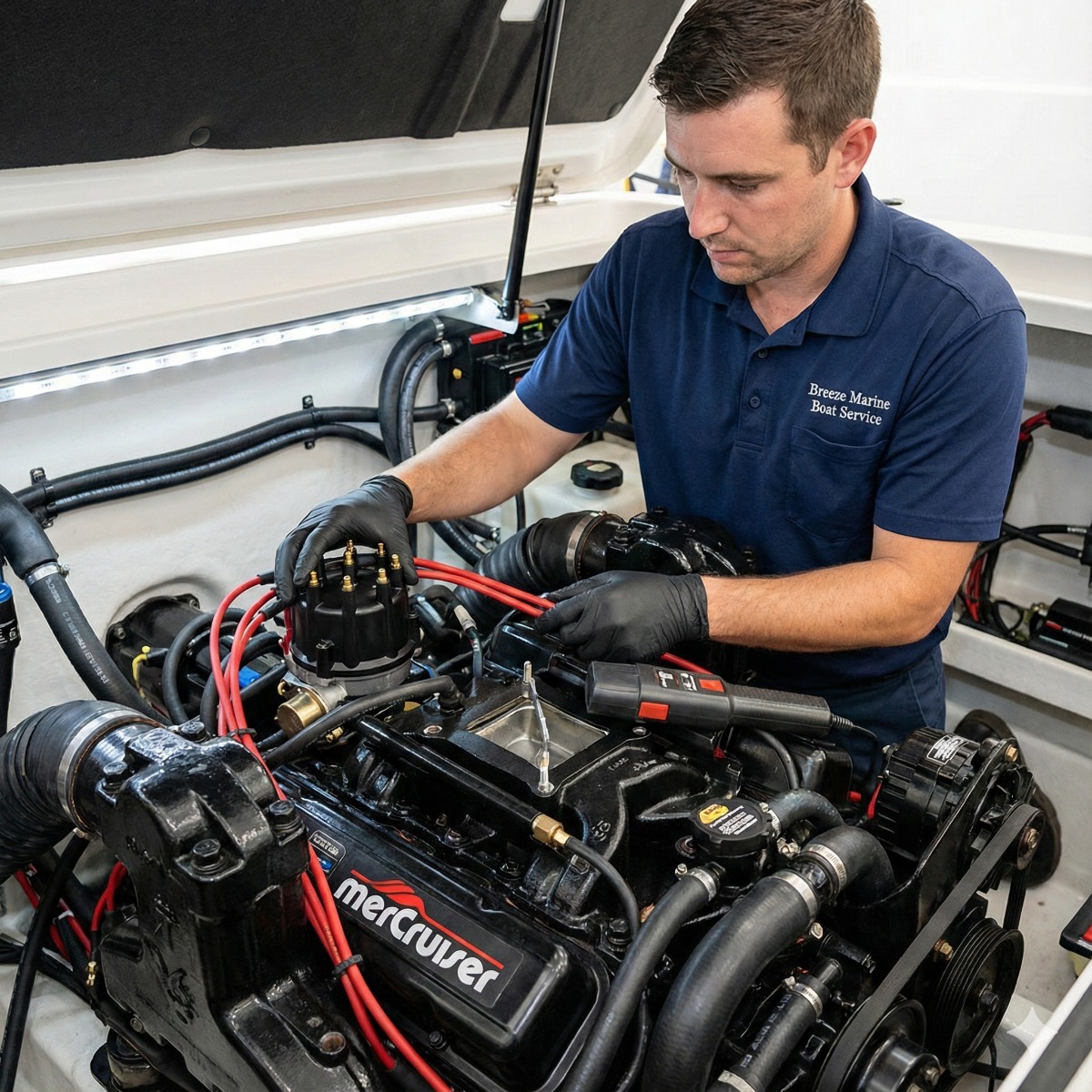
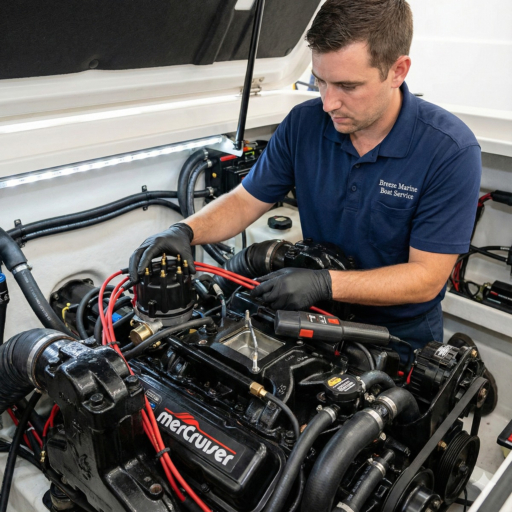
The distributor cap and rotor route high voltage from the coil to each plug wire in turn. Inside the cap, the rotor tip passes very close to each terminal, and over time both wear. Look for these problems when the cap comes off:
Carbon tracking
Carbon tracking appears as thin dark lines running across the inside of the cap between terminals. They are paths where spark has leaked and burned a conductive trail. Once a track forms, spark can jump to the wrong cylinder or to ground, causing a misfire that often gets worse in damp weather.
Verdigris corrosion
Verdigris corrosion is the green or white crust that forms on brass or copper terminals in salty, humid air. It adds resistance and weakens spark. Light deposits can sometimes be cleaned, but heavily corroded terminals mean distributor cap replacement is the reliable fix.
Worn rotor and cracks
A burned or eroded rotor tip increases the gap to each terminal and weakens spark. Hairline cracks in the cap let moisture in. Both are reasons to replace the cap and rotor together.
Symptoms That Point to a Tune-Up
- A boat engine misfire under load or when accelerating
- Hard starting, especially on damp mornings
- Rough idle and stalling when coming off plane
- Reduced top speed or higher fuel use
- Stumbling after the boat has sat for a while
What a Marine Tune-Up Covers
A proper tune-up for a distributor-equipped engine typically includes new plugs set to the correct gap, a new distributor cap and rotor, inspection or replacement of plug wires, checking the coil, cleaning the flame arrestor, inspecting fuel filters and checking and setting ignition timing with a timing light. Timing that has drifted, or was set incorrectly after previous work, costs power and can risk engine damage. Many technicians also check the base idle and look over the throttle and shift linkages.
A tune-up is a good moment to review the whole ignition system, including grounds and connections to the coil, since weak connections can undo the benefit of new parts.
What Owners Can Do
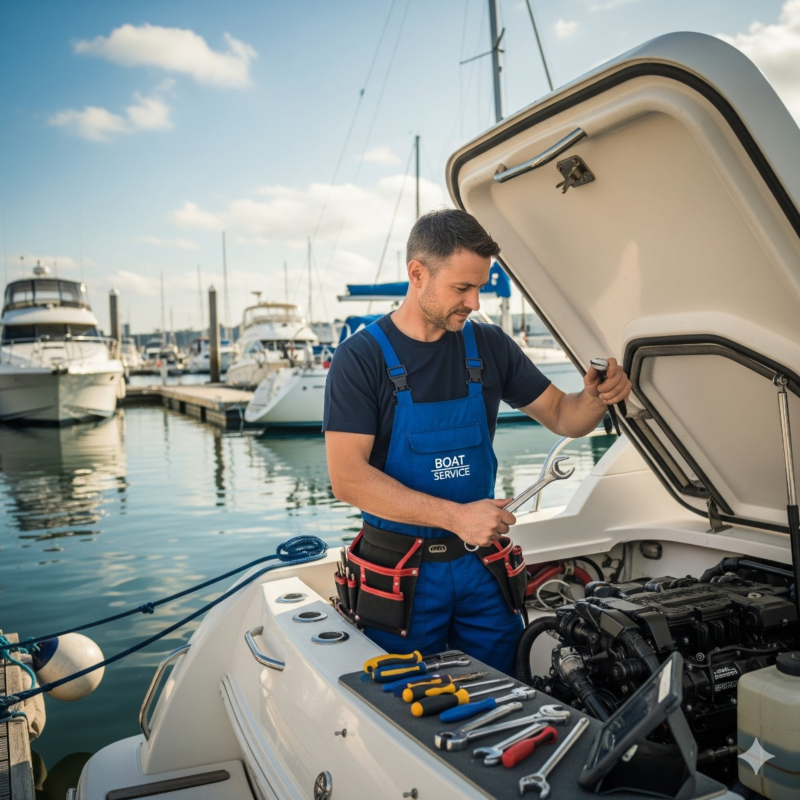
Many owners can replace plugs themselves. Use the correct marine plug, gap it, apply the right torque and avoid cross-threading aluminum heads. Replace plugs and wires one cylinder at a time to keep the firing order correct. If you find white blistered insulators, oily plugs or water, stop and have the engine checked rather than just installing new plugs.
When to Call a Technician
If misfires persist after new plugs, if timing needs adjustment, or if plug readings suggest overheating or water intrusion, professional help is the safer route. Our distributor cap, rotor and spark plug replacement service covers boats in San Pedro, Long Beach and Los Angeles County.
Marine Tune-Up FAQ
How often should the distributor cap be replaced?
Many owners replace the cap and rotor along with the plugs at regular tune-up intervals. Inspect them sooner if you see corrosion or tracking.
Can I use automotive spark plugs?
Use the plug your engine manufacturer specifies. Marine versions often have corrosion-resistant plating and suitable heat ranges.
Does damp weather really affect ignition?
Yes. Moisture helps spark leak through cracks, carbon tracks and corroded terminals, which is why many ignition faults show up on foggy mornings.