A boat generator is a small engine that often works harder than the main engines. It may run for hours at anchor carrying air conditioning, a water heater and the galley, usually in a hot, cramped compartment. Because it runs out of sight and without a throttle, owners tend to forget it until the air conditioning quits in the middle of a warm evening. Regular scheduled maintenance prevents most of those surprises.
What the 100-hour service means
Most generator manufacturers set a basic maintenance interval of 100 hours or one year, whichever comes first. The 100-hour service is the routine visit that covers the consumables and wear items. On a generator used only on summer weekends, the calendar limit arrives first; on a liveaboard or charter boat running the generator daily, the hour limit may arrive every few weeks.
What a proper service includes
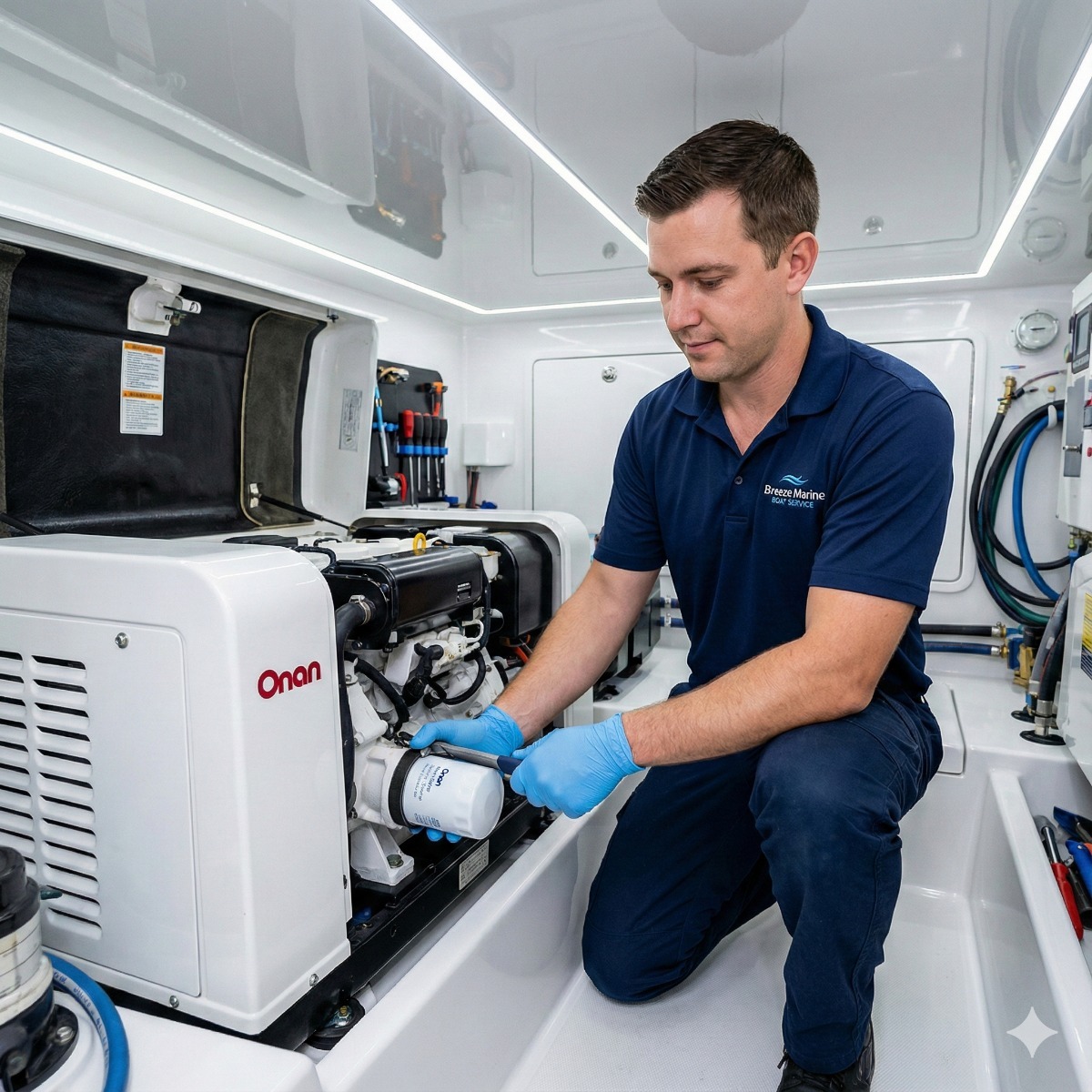
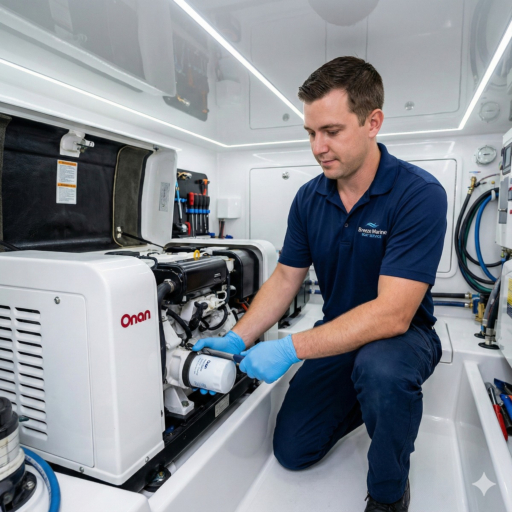
- Oil and oil filter: the engine is warmed up so contaminants are suspended, then the oil is extracted with a vacuum pump and replaced with the grade specified by the manufacturer.
- Fuel filters: both the primary water-separating filter and the secondary on-engine filter are replaced. Diesel generators are very sensitive to water and debris in fuel.
- Raw water impeller: the rubber impeller in the seawater pump is replaced, and the pump housing and cam are inspected.
- Pencil zincs: the sacrificial anodes in the heat exchanger are checked and replaced to protect metal cooling passages from corrosion.
- Belts, hoses and clamps: inspected for cracks, softness and leaks.
- Air intake and exhaust: the intake silencer is checked and the exhaust elbow and water-lift muffler are looked at for leaks and carbon buildup.
- Load test: the generator is run with real loads such as air conditioning and the stove, while output voltage, frequency and temperature are checked.
Using proper marine filters matters. Automotive parts may fit, but marine filters and fuel filtration are designed for the vibration, moisture and fuel quality found aboard.
Why an unused generator still needs service
It is tempting to skip service when the hour meter barely moved. Rubber impellers take a set, harden and crack with time even when they never turn. Oil absorbs moisture and acids. Zincs keep corroding whenever the heat exchanger holds seawater. A raw water impeller that has sat for a year is one of the most common reasons a generator overheats on its first long run of the season.
Warning signs between services
- Generator shutting down after a period of running, especially under air conditioning load. The usual suspects are low cooling water flow or a clogged fuel filter.
- Weak or no water from the exhaust outlet when the generator starts.
- Black smoke, which can indicate overload or fuel and air problems.
- Voltage or frequency that sags when a large load switches on.
- Hard starting or long cranking.
- Oil or coolant leaks under the unit, or a fuel smell in the compartment.
What owners can safely check
Before starting, check the oil level on the dipstick and the coolant level in the recovery tank. Make sure the raw water seacock is open and the strainer is clean. After starting, confirm water is coming out of the exhaust within a few seconds; if it is not, shut down immediately to protect the impeller and exhaust hose. Keep a simple log of hours at each service. These small habits make it obvious when the 100-hour service is due and give a technician useful history if something goes wrong.
Brand-specific notes
Onan, Kohler and Westerbeke all follow similar principles, but filter types, impeller pumps and zinc locations differ. For a Kohler marine generator service, for example, the model and hour reading determine the exact parts list. Having the model plate photographed before a visit helps the right parts arrive the first time. Good marine diesel generator maintenance is mostly about three things: clean oil, clean fuel and steady cooling water.
When service turns into repair
If the load test shows low output, the unit overheats even with a new impeller, or the engine smokes or knocks, the job moves beyond maintenance into marine generator repair. Common findings include scaled heat exchangers, failing exhaust elbows, worn injectors and voltage regulation faults. Owners looking for generator maintenance Long Beach boaters can schedule around the season can find the details of our routine service on our marine generator oil, filter and impeller service page. Booking the marine generator service before summer leaves time to fix anything the load test uncovers.
Generator service FAQ
How often should a boat generator be serviced?
Every 100 hours or once a year, whichever comes first. Heavy users may need service several times a season.
Should I run my generator when the boat is not in use?
Running it under load for 30 minutes to an hour each month keeps seals lubricated and moisture out, and it reveals problems before a trip.
Can I change the impeller myself?
Many owners can, but access is often tight. Make sure all broken impeller pieces are recovered, since fragments can block the heat exchanger.