Draining the gear lube from a stern drive is one of the most informative five minutes in boat maintenance. Clean lube that looks like fresh honey means the seals are doing their job. Lube that comes out milky, grey or tan, or that carries a sparkle of metal, is an early warning that something below the waterline needs attention before it becomes a much larger bill.
What milky gear lube actually means
Gear lube turns milky when water mixes with it. The gears churn the two together into an emulsion that looks like a chocolate milkshake. A small amount of water may only show as a lighter color or a few droplets at the bottom of the drain pan; a lot of water can come out first as a clear or cloudy stream before any oil appears.
Water in the lower unit is a problem for two reasons. It reduces the lubricating film between gears and bearings, and it causes rust on steel components as soon as the boat sits. A drive that sits for a few weeks with water in it can develop pitted bearings and gear teeth even if it never runs.
Where the water gets in
- Prop shaft seals: the most common entry point. Fishing line wrapped behind the propeller cuts into the seal lip, and the damage is invisible until the prop comes off.
- Drive shaft and shift shaft seals: these wear with age and heat and can leak water in as the drive cools and draws a slight vacuum.
- Drain and vent screw gaskets: a missing or reused sealing washer is an easy, cheap cause to rule out first.
- Cracked housing: an impact with debris or the bottom can crack the gearcase or skeg area and let water through.
What metal in the lube tells you
A fine grey haze on the drain plug magnet is normal wear. Chips, slivers or a heavy paste of metal are not. Larger particles usually point to chipped gear teeth or a failing bearing, and that calls for teardown rather than another gear lube change. If the lube smells burnt, the drive has likely been run low or overheated.
How a technician confirms a leak
Guessing which seal leaks wastes money. The standard approach in any marine outdrive repair is a pressure and vacuum test. The drive is drained, a fitting is installed in the vent or fill hole and the housing is pressurized to the manufacturer's specification, often around 10 to 15 psi. If the gauge drops, soapy water sprayed on the seals shows where air escapes. A vacuum test follows, because some seals hold pressure but leak under vacuum. Only once the drive holds both is fresh lube added.
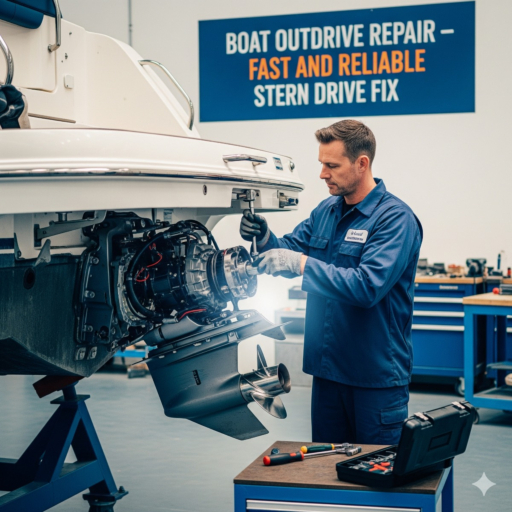
During the same visit, a technician will usually pull the propeller to look for line behind the thrust washer, inspect the anodes, check the bellows and gimbal bearing area and look at the skeg for impact damage. On a MerCruiser Alpha One, Bravo series drive or one of the Volvo Penta outdrives, the specific seal kits and procedures differ, but the diagnostic logic is the same.
What owners can check between services
- Look at the gear lube monitor bottle in the engine compartment if your drive has one. A dropping level, or water at the bottom of the bottle, is an early sign.
- After each outing, glance at the propeller hub for wrapped fishing line or kelp.
- Watch for oil sheen near the drive while the boat is in the slip.
- Note any new whining, clunking when shifting or vibration that changes with speed.
Seal replacement or full rebuild?
If the lube is milky but the gears and bearings look sound, replacing the leaking seals, changing the lube and retesting is often enough. If water has been in the drive for a long time, or metal is present, the drive may need to be disassembled to inspect bearings, gears and shims. That is where sterndrive repair becomes a larger job, and where a clear assessment of rebuild versus exchange unit matters. A reputable shop will show you the lube, the magnet and any damaged parts before recommending the heavier path.
Keeping the problem from coming back
An annual outdrive service that includes a lube change, a pressure test and prop removal catches most seal problems early. Drives kept in the water year-round in local harbors see faster wear on seals, anodes and bellows, so owners booking stern drive service in Long Beach or San Pedro often plan it around the start of the season. For a complete look at what the annual work includes, see our stern drive and outdrive service details.
If the lube is clean at every change and the drive runs quietly, you are in good shape. If it is milky, treat it as an early and relatively affordable signal, not something to watch for another season. Addressing a seal now usually prevents a far larger stern drive repair later.
Gear lube FAQ
Can I keep running a drive with milky lube?
It is best not to. A short run back to the dock is usually acceptable, but continued use and especially storage with water inside can rust bearings and gears quickly. Change the lube and have the drive pressure tested soon.
How often should gear lube be changed?
Most manufacturers call for a change every 100 hours or once a year. Many owners also change it before winter storage so no moisture sits in the drive.
Is a tiny bit of water normal?
No. A drive with healthy seals should not have visible water in the lube. Even a small amount is a reason for a pressure test.