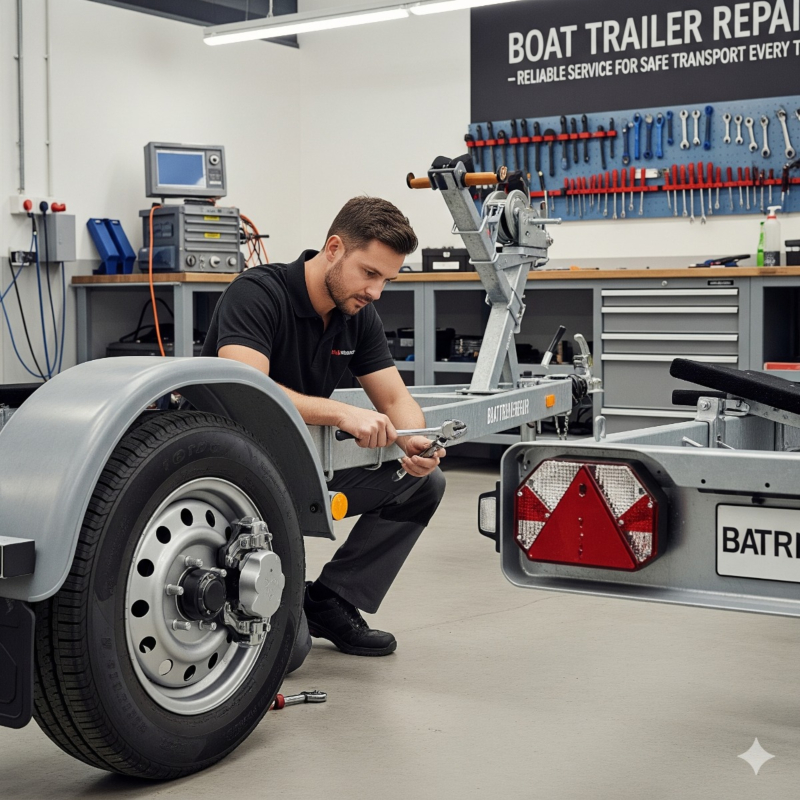
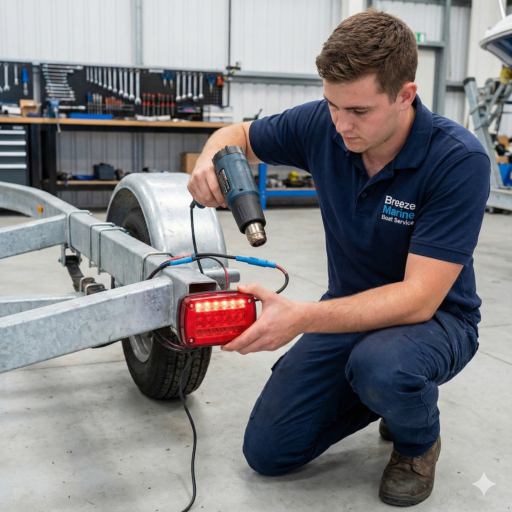
Almost every trailer boater has done the pre-trip light check, found a dead turn signal and spent twenty minutes tapping on lamps and wiggling plugs. Boat trailer lights have a harder life than any other vehicle lighting: they are dunked in salt water, hauled out hot and left to sit wet. Understanding why they fail makes it clear why replacing one bulb at a time rarely ends the problem.
Why trailer lighting fails on boat trailers
Hot bulbs and cold water
Traditional incandescent lamps get hot on the drive to the ramp. Backing into cool water shocks the glass, and bulbs crack or filaments fail. Water that seeps into the housing then corrodes the socket.
Poor grounds
The most common cause of dim, flickering or crossed-over lights is a weak ground. Many trailers rely on the frame, or even the hitch ball, to carry the ground back to the vehicle. Rust and paint between frame parts, and a coupler that sits loosely on the ball, make that path unreliable. The result can be odd symptoms like brake lights that make the turn signal flash, or lights that work only when the trailer is hitched at a certain angle.
Corroded wire and splices
Plain copper wire wicks salt water inside the insulation, turning green and brittle far from any visible damage. Splices wrapped in electrical tape or crimped without a seal are common failure points. Over time boat trailer wiring can be corroded along its full length even if the outer insulation looks fine.
Chafed harnesses
Wiring run along the outside of the frame gets hit by road debris, pinched by bunks or rubbed on sharp edges. A trailer wiring harness that is routed through the frame and clipped properly lasts far longer.
How to trace a lighting fault
- Test the tow vehicle's socket first with a tester, so you know the vehicle side is good.
- Inspect the plug and socket for green corrosion and clean or replace as needed.
- Run a temporary ground wire from the vehicle to a light housing. If the light starts working, the fault is the ground path.
- Check each splice and connector along the harness, especially near the axle and the tongue.
- Look inside lamp housings for water, rust and burned contacts.
What a lasting fix looks like
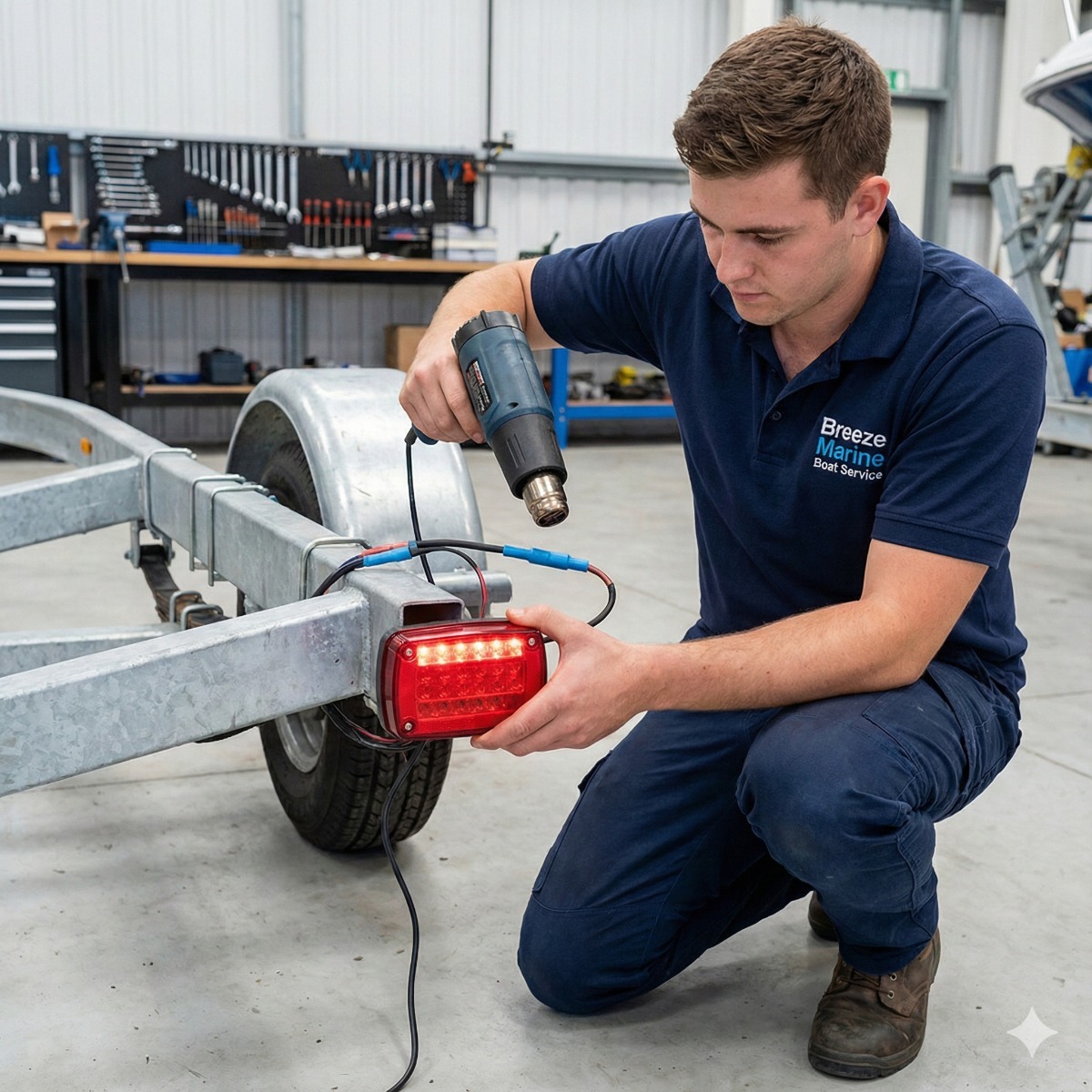
LED trailer lights solve the heat-shock problem because they run cool, and they draw far less current. The key is choosing true submersible trailer lights, where the circuit board is sealed or potted so water cannot reach the electronics. Many submersible LED kits include lamps, a harness and mounting hardware sized for boat trailers.
Replacing lamps without addressing the wiring, though, often leads back to the same problem. A full trailer light rewiring usually involves:
- Removing the old harness, clips and any taped splices.
- Running new tinned copper wiring, which resists corrosion along its length much better than plain copper.
- Routing the harness inside the frame where possible and securing it away from bunks and moving parts.
- Running a dedicated ground wire to each lamp instead of relying on the frame.
- Making every connection with adhesive-lined heat shrink butt connectors, which seal the joint against water when heated.
- Replacing the plug at the tongue and adding dielectric grease to the contacts.
After the rewire, each circuit is tested for running lights, brake lights and both turn signals, and side marker lights are checked as well.
Habits that help
- Unplug the trailer from the vehicle before backing into the water, so lamps are not powered when submerged.
- Rinse the trailer, including lamps and connectors, with fresh water after each launch.
- Store the plug off the ground and covered.
- Check lights before every trip, not just at the ramp.
Working lights are also a legal requirement on the road, and a trailer that cannot signal is a hazard to everyone behind it. If your lights keep failing despite new lamps, a complete LED trailer light rewiring and submersible upgrade addresses the wiring and grounds rather than just the bulbs. It is often the most useful boat trailer repair you can make for reliability.
Trailer lighting FAQ
Are LED lights really waterproof?
Only if they are rated as submersible. Some LED lamps are merely water-resistant. Look for fully sealed units designed for boat trailers.
Why do my lights flicker when I go over bumps?
That usually points to a loose ground or a corroded connection. A dedicated ground wire and sealed connectors normally cure it.
Should I rewire the whole trailer or just fix one light?
If the wiring is old, corroded or taped in several places, a full rewire is usually more reliable than chasing individual faults.