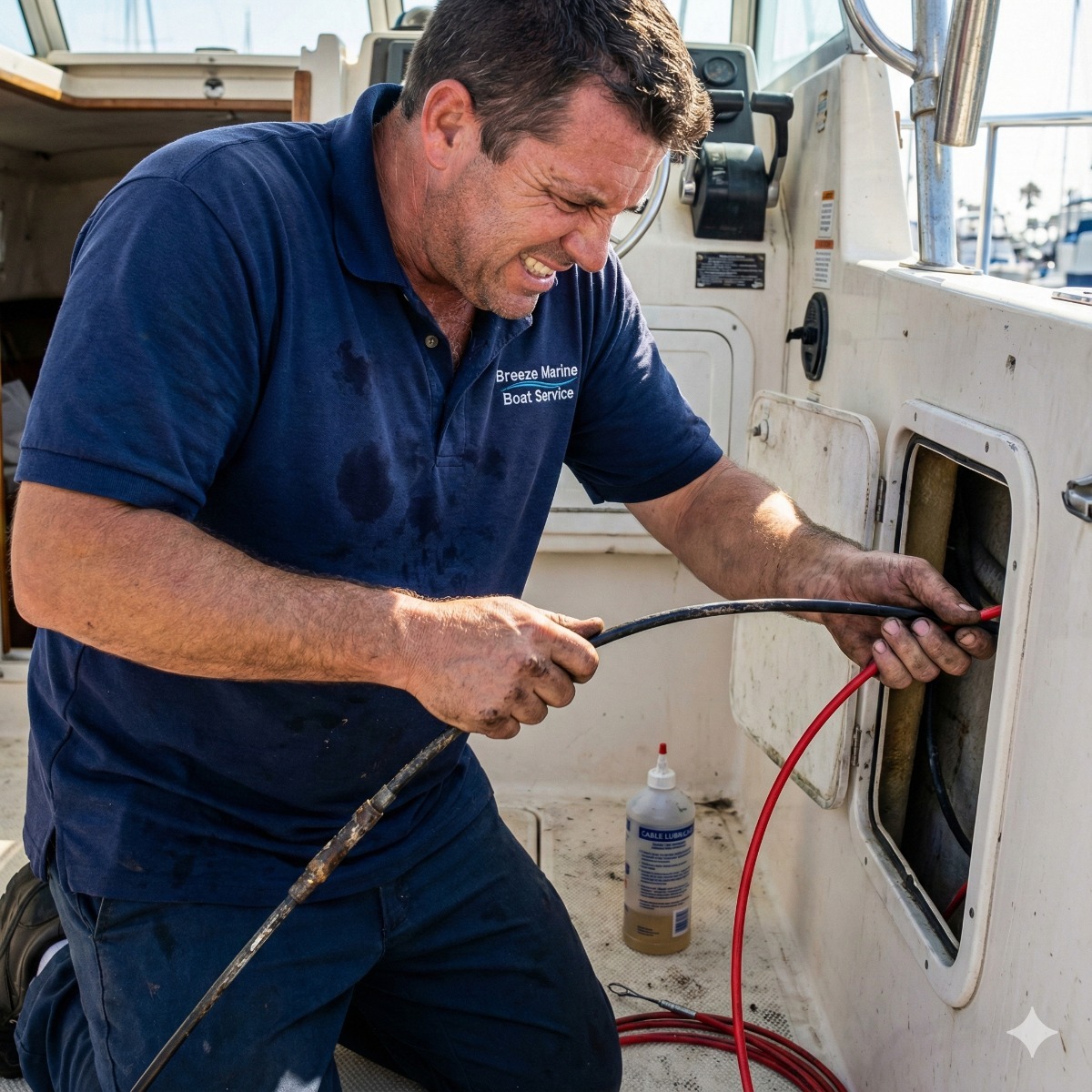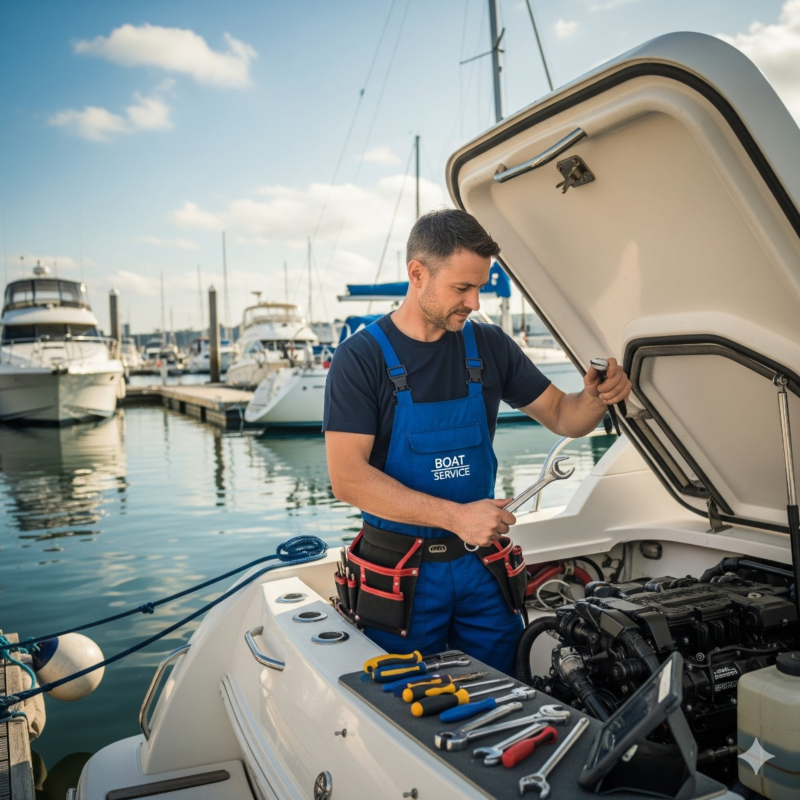
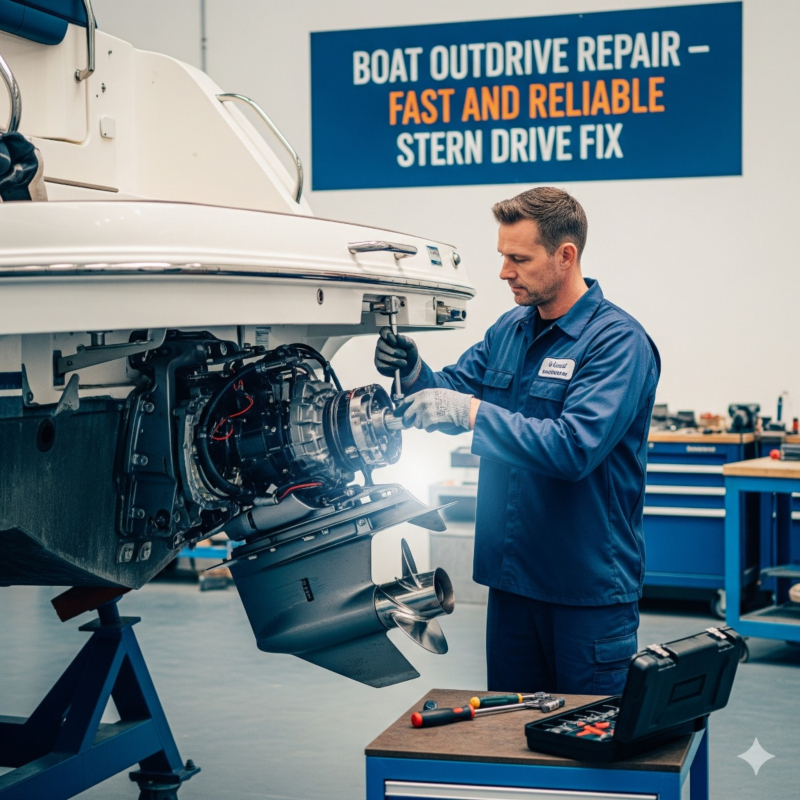
Mechanical throttle and shift cables connect your hands at the helm to the engine and gearbox. Because they run hidden under consoles and through gunwales, most owners never look at them until something goes wrong, usually at the worst moment, such as coming alongside a dock. The good news is that cables almost always give warning signs. A short inspection each season can catch them before a cable binds or breaks.
How Push-Pull Cables Work
A marine control cable is a solid or stranded inner core that slides inside a lined conduit, protected by an outer jacket. The control head at the helm pushes and pulls the core, which moves the throttle arm or shift lever at the engine. Smooth operation depends on a clean, dry liner, gentle bends and correct adjustment at both ends. Better-quality control cables use low-friction liners and designs that tolerate longer runs with more bends.
Why Cables Fail
- Corrosion. Salt water gets past the end seals or through a cracked jacket and rusts the core, which then drags against the liner.
- Jacket damage. UV exposure, chafe against sharp edges and heat from exhaust components crack the outer jacket.
- Tight bends. Routing with a small bend radius increases friction and wears the liner.
- Age. Liners wear out gradually, even on well-routed cables.
Warning Signs at the Helm
- A stiff throttle that needs noticeably more effort than it used to.
- Jerky or notchy lever movement rather than smooth travel.
- Difficulty finding neutral, or the neutral detents feel vague.
- The engine does not reach full RPM because the throttle arm is not reaching its stop.
- Gear engagement that is slow, incomplete or noisy.
- Rust stains or a swollen jacket near the cable ends.
A stiff lever is sometimes blamed on the cable when the control head itself needs lubrication or repair. Disconnecting the cable at the engine end and moving the lever helps separate the two: if the lever is still stiff with the cable free, the control box is the likely issue.
A Simple Owner Inspection
- With the engine off, move the throttle and shift through full travel and note any stiffness or roughness.
- At the engine, confirm the throttle arm reaches both idle and wide-open stops and that the shift lever reaches its full detent in forward and reverse.
- Inspect the visible jacket for cracks, chafe, kinks and swelling, especially where it passes through bulkheads.
- Check that cable ends, clips and anchor points are secure and that cotter pins or retaining clips are present.
- Look for signs of water in the console or rigging tube where cables pass.
Never lubricate a modern lined cable with heavy grease or penetrating oil down the core unless the manufacturer recommends it; it can swell the liner and make things worse.
What Replacement Involves
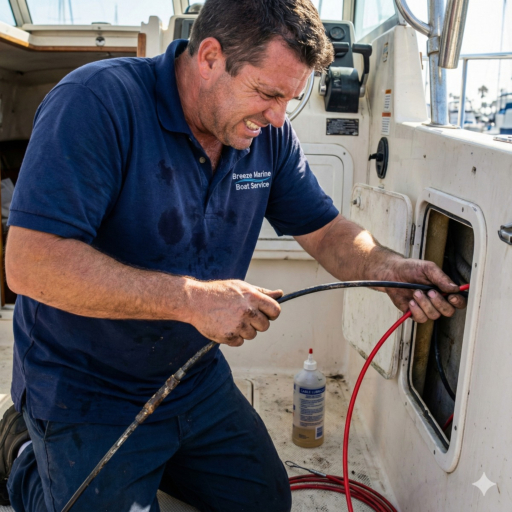
A proper boat throttle cable replacement starts by measuring the existing cable, because length matters. Too short and it will be under tension; too long and it forms loops that add friction. The old cable is often used to pull the new one through the rigging tube, which requires care when the tube is packed with wiring. The best results come from rerouting where possible to widen bends and keep cables away from heat. Once installed, each end is adjusted so the gearbox fully engages in both directions, the lever sits centered in its neutral position and the throttle reaches full travel. Shift cable replacement follows the same logic, with extra attention to making sure the gearbox is not left partially engaged.
Boats with two helms
Boats with dual-station controls, such as a flybridge and lower helm, have longer runs and extra connection points, often through a transfer or selector mechanism. Stiffness at one station can come from a cable feeding the other. Replacing and adjusting these systems takes time and is best done as a complete set so both stations feel matched.
When to Call a Technician
Stop using the boat and call for help if a lever sticks, a cable feels like it is catching, or the engine does not return to idle when you pull back. Those are safety issues, not comfort issues. Our throttle and shift control cable replacement service covers marine control cable replacement on single and dual-station marine control systems, including routing and adjustment. If your boat throttle cable has never been replaced and the boat has many seasons behind it, an inspection is worthwhile.
Throttle and Shift Cables FAQ
How long do boat control cables last?
It depends on routing, exposure and use. Many last a number of seasons, but corrosion can shorten that. Inspection is more reliable than age alone.
Should I replace throttle and shift cables together?
Often it is sensible, since they are the same age and share the same route. Doing both at once saves duplicate labor.
Can a bad cable damage my gearbox?
Yes. A cable that leaves the gearbox partly engaged can cause slipping and clutch wear.